Lawrence Berkeley National Laboratory masthead A-Z Index Berkeley Lab masthead U.S. Department of Energy logo Phone Book Jobs Search
Search the News Center:
  Follow:   YouTube Flickr Twitter Facebook
Posts Tagged ‘accelerators’

Beams are Back in the Large Hadron Collider

November 20, 2009

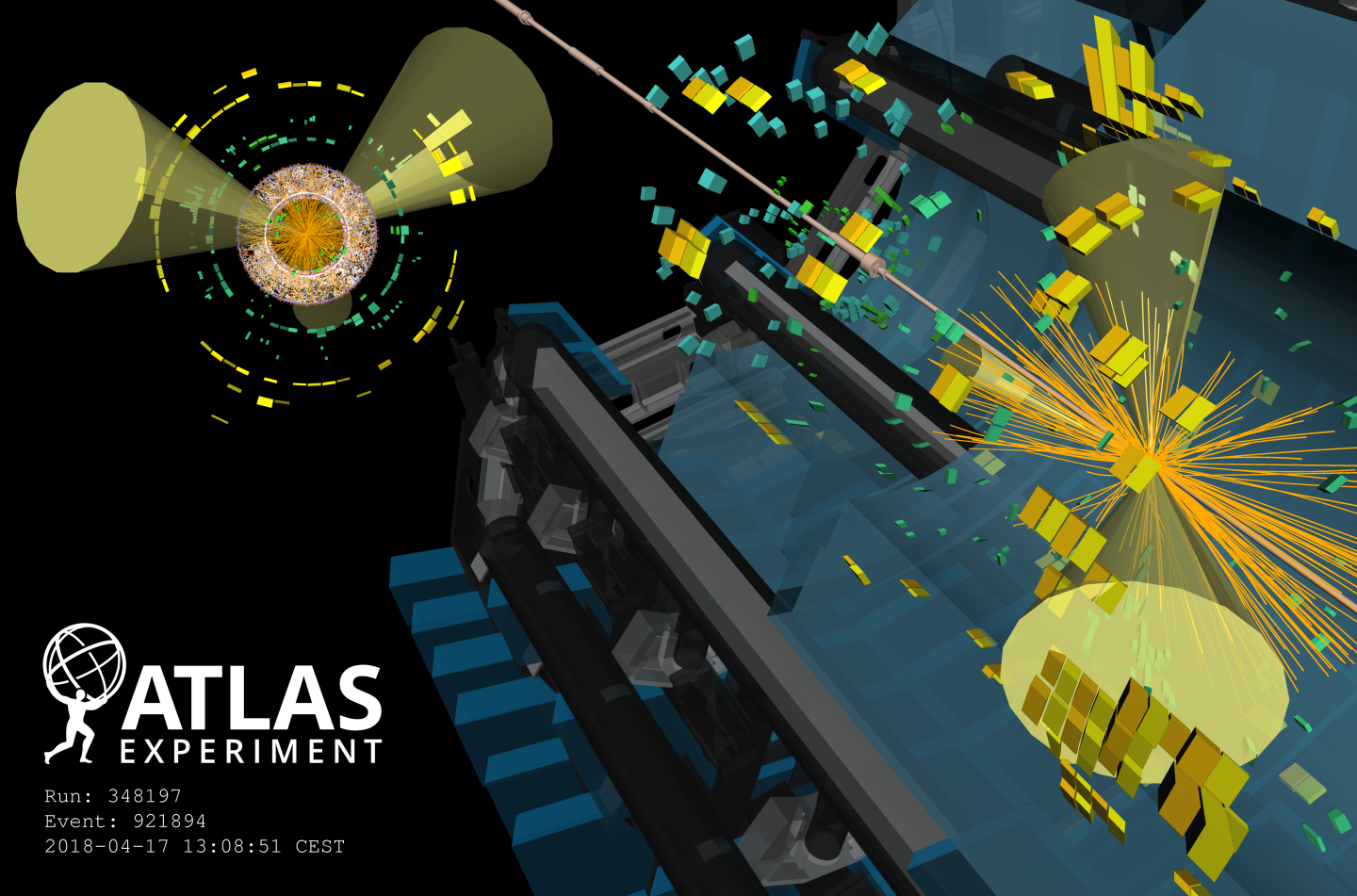
After more than a year of repairs, the Large Hadron Collider located at the CERN laboratory near Geneva, Switzerland is back on track to create high-energy particle collisions that may yield extraordinary insights into the nature of the physical universe.

Read More>

Accelerators for America’s Future: An Exercise in Integration

October 16, 2009

A symposium in Washington organized by the Office of High Energy Physics will break new ground in integrating research and development of many kinds of accelerators in many fields.

Read More>

On the Road to Fusion Energy, an Accelerator to Study Warm Dense Matter

October 14, 2009

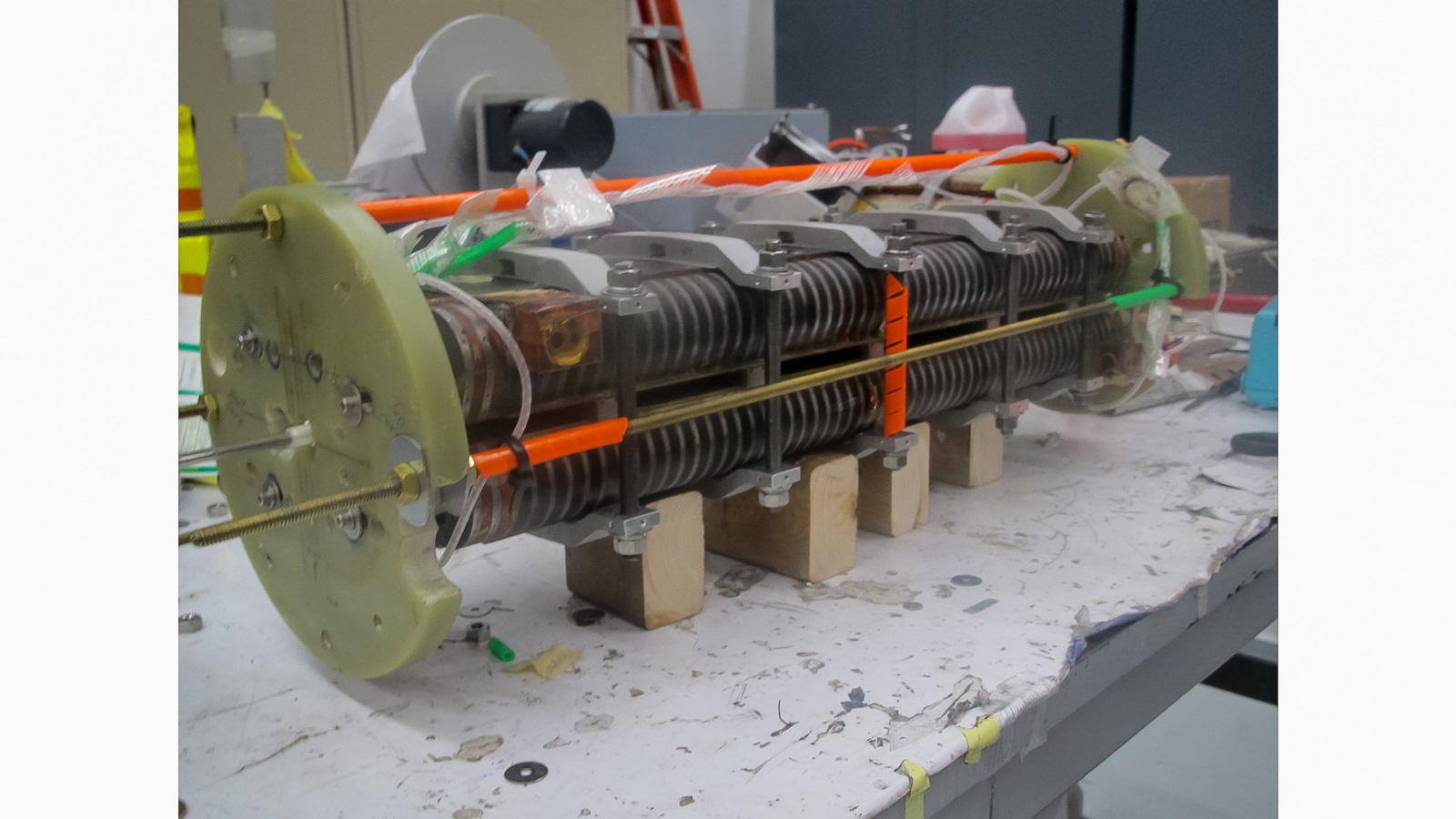
Warm dense matter exists in the cores of gas giant planets and the preliminary stages of nuclear fusion, among other inaccessible places. With an accelerator built at Berkeley Lab by physicists and engineers in the Heavy Ion Fusion Science Virtual National Laboratory, a collaboration of Berkeley Lab, Livermore, and Princeton, scientists will soon be able to study it in the laboratory.

Read More>

Berkeley Lab and the University of Incheon Anticipate Scientific Collaboration

September 23, 2009

George Smoot of the Physics Division represented Berkeley Lab at the signing of an agreement with representatives of South Korea’s University of Incheon to explore the potential for joint scientific research in energy, biology, accelerators, cosmology, and space. The agreement calls for investigation of possible collaborations in which the University of Incheon would provide facilities and Berkeley Lab would provide research programs.

Read More>

Gunning for Free Electrons

September 9, 2009

Tomorrow’s free electron lasers will use superconducting linear accelerators to accelerate a million or more electron bunches a second. Key to high brightness and high repetition rates is the accelerator’s electron injector. Berkeley Lab scientists are building a revolutionary injector prototype of the kind the new generation of light sources will require.

Read More>

Michigan Builds up to Rare Isotope Beams

June 11, 2009

Generations of Berkeley Lab nuclear scientists have contributed to FRIB, the Facility for Rare Isotope Beams, a $550 million heavy-ion accelerator to study rare nuclear processes that will be built at Michigan State University. Crucial components of FRIB are its ion source, based on the 88-Inch Cyclotron’s record-breaking VENUS, and GRETA, the gamma-ray detector designed and now under construction here. Nuclear Science Division Director James Symons participates in the launch of the new accelerator.

Read More>

Angels, Demons, and Antihydrogen

May 5, 2009

There’s nothing fictional about antimatter. It’s all around us, all the time. Researchers know how to create and store antiparticles, and members of Berkeley Lab’s Accelerator and Fusion Research Division have even helped make antihydrogen atoms at CERN. But gathering enough to fuel a rocket or make a bomb would take so much energy that no one (including the Vatican) needs to worry.

Read More>

Closing in on the Higgs Boson Mass

March 16, 2009

The Higgs boson, the last undiscovered fundamental particle of the Standard Model and the one that accounts for the masses of all the others, is still in hiding. But new results from Fermilab mean the race to find it is getting closer.

Read More>

Synchronize Your Accelerators

December 3, 2008

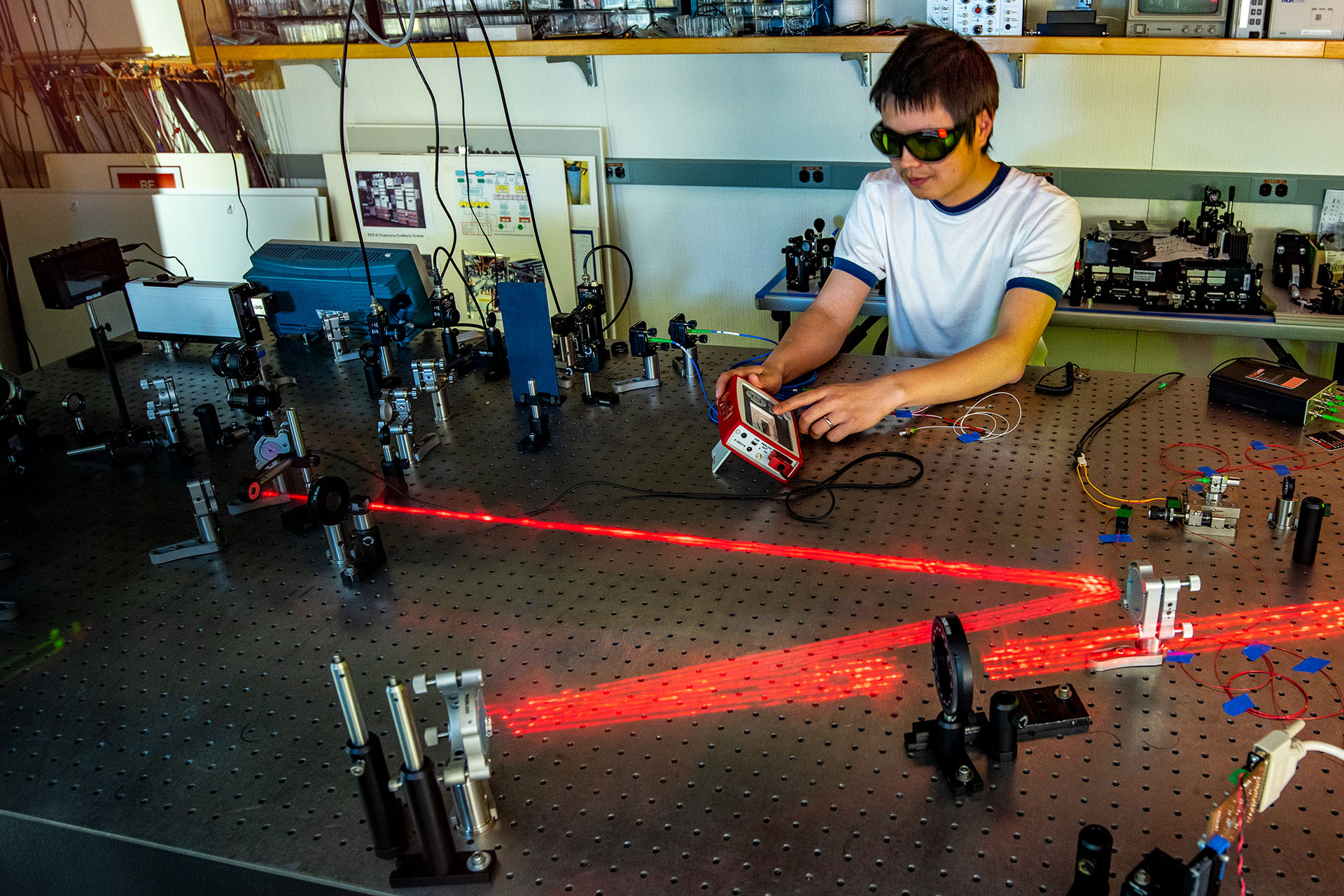
In work for the next-generation FERMI@Elettra free electron laser facility in Trieste, Berkeley Lab accelerator scientists and engineers are applying their unique expertise to devising timing and synchronization systems that will keep far-flung components in step to within a few quadrillionths of a second.

Read More>

First Beam for Large Hadron Collider

September 10, 2008

At 1:25 a.m. Pacific Time an international collaboration of scientists in Switzerland sent the first beam of protons zooming at nearly the speed of light around the world’s most powerful particle accelerator, CERN’s Large Hadron Collider. Berkeley Lab scientists and engineers were among the contributors to the giant machine.

Read More>

Top
A U.S. Department of Energy National Laboratory Operated by the University of California
UC logo    Office of Science logo
Questions & Comments · Privacy & Security Notice