LBNL Masthead A-Z Index Berkeley Lab masthead U.S. Department of Energy logo Phone Book Jobs Search
Search the News Center:
Posts Tagged ‘accelerators’

Berkeley Lab and the University of Incheon Anticipate Scientific Collaboration

September 23, 2009

George Smoot of the Physics Division represented Berkeley Lab at the signing of an agreement with representatives of South Korea’s University of Incheon to explore the potential for joint scientific research in energy, biology, accelerators, cosmology, and space. The agreement calls for investigation of possible collaborations in which the University of Incheon would provide facilities and Berkeley Lab would provide research programs.

MORE>

Gunning for Free Electrons

September 9, 2009

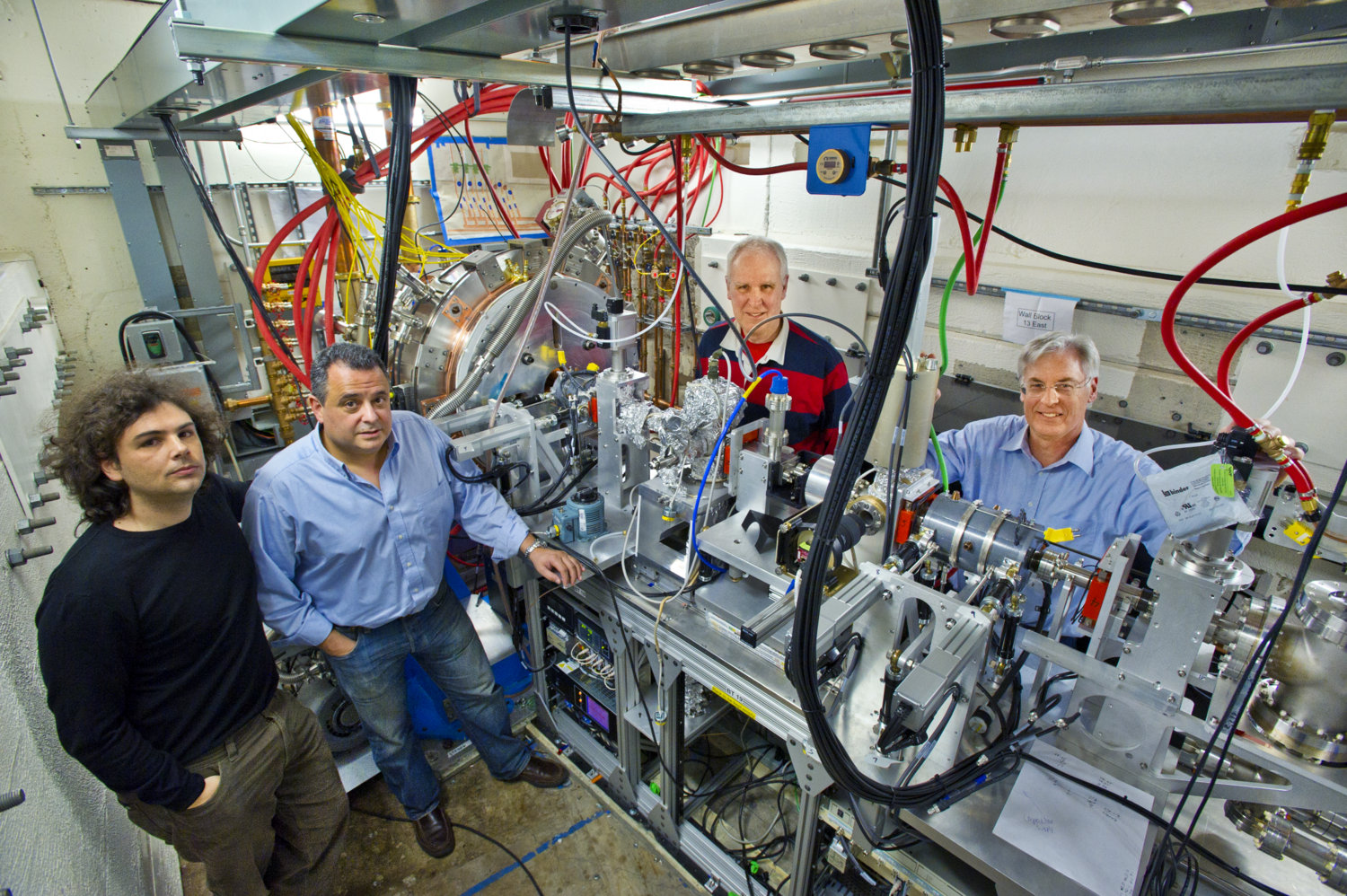
Tomorrow’s free electron lasers will use superconducting linear accelerators to accelerate a million or more electron bunches a second. Key to high brightness and high repetition rates is the accelerator’s electron injector. Berkeley Lab scientists are building a revolutionary injector prototype of the kind the new generation of light sources will require.

MORE>

Michigan Builds up to Rare Isotope Beams

June 11, 2009

Generations of Berkeley Lab nuclear scientists have contributed to FRIB, the Facility for Rare Isotope Beams, a $550 million heavy-ion accelerator to study rare nuclear processes that will be built at Michigan State University. Crucial components of FRIB are its ion source, based on the 88-Inch Cyclotron’s record-breaking VENUS, and GRETA, the gamma-ray detector designed and now under construction here. Nuclear Science Division Director James Symons participates in the launch of the new accelerator.

MORE>

Angels, Demons, and Antihydrogen

May 5, 2009

There’s nothing fictional about antimatter. It’s all around us, all the time. Researchers know how to create and store antiparticles, and members of Berkeley Lab’s Accelerator and Fusion Research Division have even helped make antihydrogen atoms at CERN. But gathering enough to fuel a rocket or make a bomb would take so much energy that no one (including the Vatican) needs to worry.

MORE>

Closing in on the Higgs Boson Mass

March 16, 2009

The Higgs boson, the last undiscovered fundamental particle of the Standard Model and the one that accounts for the masses of all the others, is still in hiding. But new results from Fermilab mean the race to find it is getting closer.

MORE>

Synchronize Your Accelerators

December 3, 2008

In work for the next-generation FERMI@Elettra free electron laser facility in Trieste, Berkeley Lab accelerator scientists and engineers are applying their unique expertise to devising timing and synchronization systems that will keep far-flung components in step to within a few quadrillionths of a second.

MORE>

First Beam for Large Hadron Collider

September 10, 2008

At 1:25 a.m. Pacific Time an international collaboration of scientists in Switzerland sent the first beam of protons zooming at nearly the speed of light around the world’s most powerful particle accelerator, CERN’s Large Hadron Collider. Berkeley Lab scientists and engineers were among the contributors to the giant machine.

MORE>

Accelerating Into the Future: Zero to 1 GeV in a Few Centimeters

July 22, 2008

Accelerating Into the Future: From 0 to 1 GeV in Centimeters

July 22, 2008

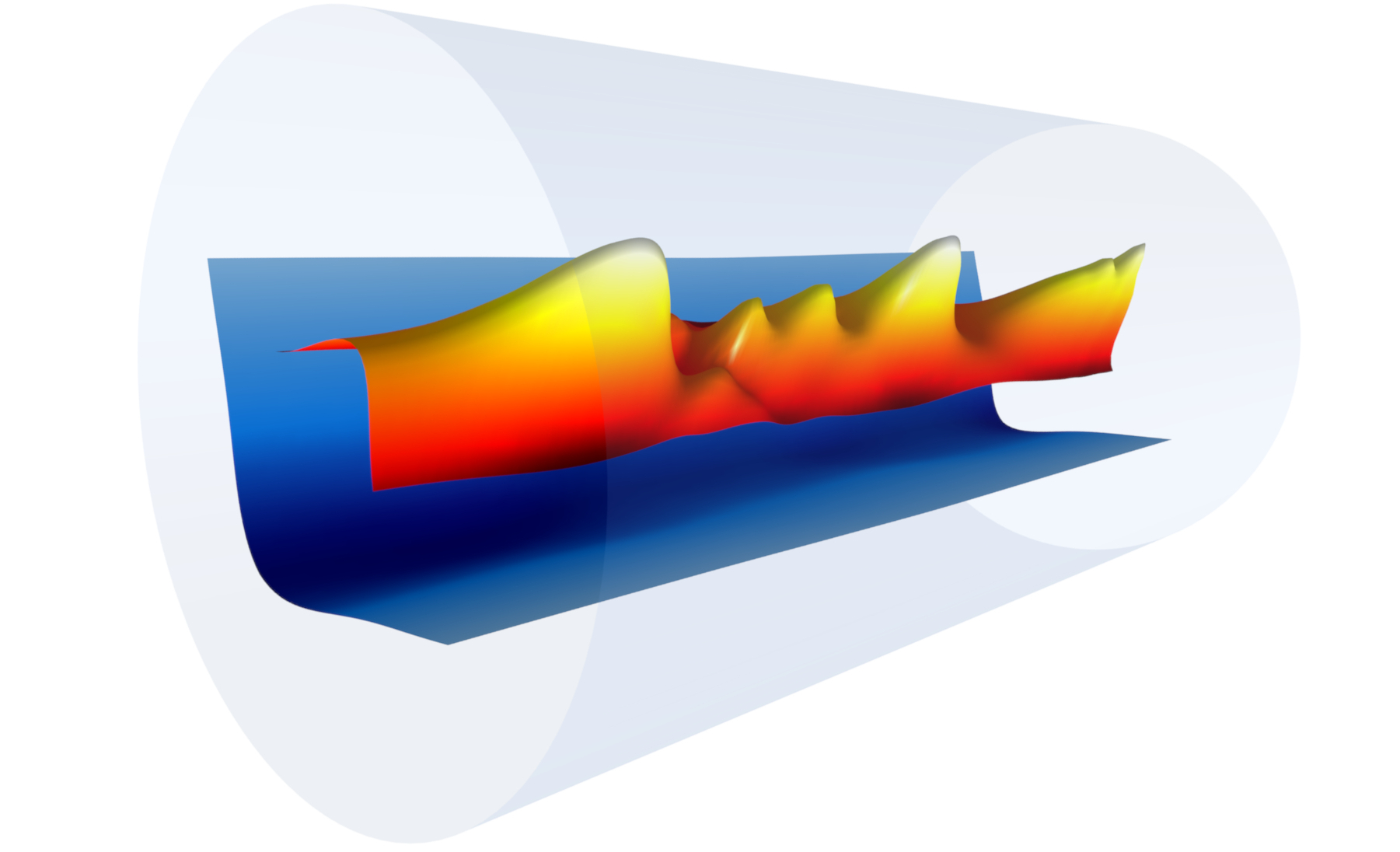
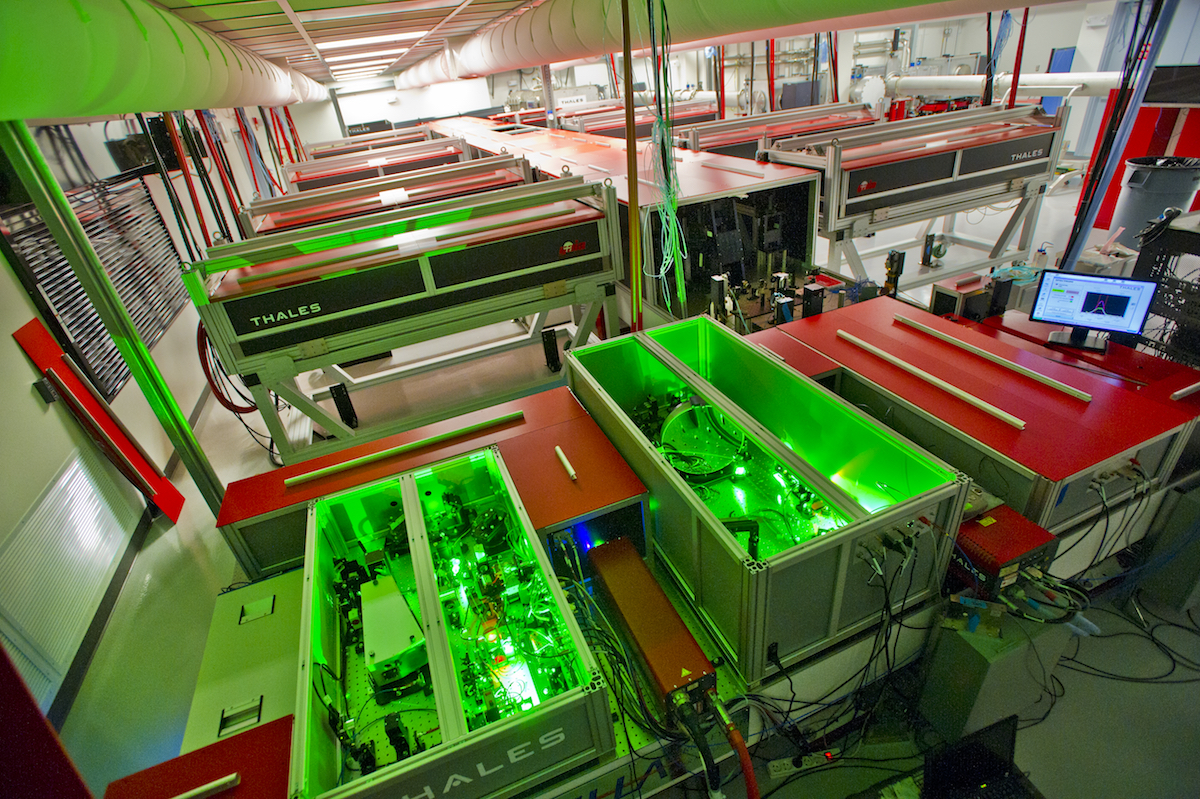
By exciting electric fields in plasma-based waveguides, lasers accelerate electrons in a fraction of the distance conventional accelerators require. The Accelerator and Fusion Research Division’s LOASIS program, headed by Wim Leemans, has used 40-trillion-watt laser pulses to deliver billion-electron-volt (1 GeV) electron beams within centimeters. Leemans looks ahead to BELLA, 10-GeV accelerating modules that could power a future linear collider.

( Download Podcast | Presentation )

[audio:http://newscenter.lbl.gov/wp-content/uploads/2008/07/berk_sls_leemans.mp3]

BELLA: The Next Stage in Laser Wakefield Acceleration

April 15, 2008

Contact: Paul Preuss
For over a year, the LOASIS group led by Wim Leemans, of Berkeley Lab’s Accelerator and Fusion Research Division (AFRD), has held the world record for laser-wakefield acceleration, accelerating high-quality electron beams to energies exceeding 1 GeV, a billion electron volts, in a distance of just three centimeters. Now Leemans and his colleagues are [...]

MORE>

A U.S. Department of Energy National Laboratory Operated by the University of California
UC logo
Questions & CommentsPrivacy & Security Notice