LBNL Masthead A-Z Index Berkeley Lab masthead U.S. Department of Energy logo Phone Book Jobs Search
Search the News Center:
Posts Tagged ‘biofuels’

Clearing a Potential Road Block to Bisabolane

January 9, 2012

Joint BioEnergy Institute (JBEI) researchers have determined the three-dimensional crystal structure of a protein that is key to boosting the microbial-based production of bisabolane as a clean, green and renewable biosynthetic alternative to D2 diesel fuel.

MORE>

E. Coli Bacteria Engineered to Eat Switchgrass and Make Transportation Fuels

November 29, 2011

Strains of E. coli bacteria were engineered to digest switchgrass biomass and synthesize its sugars into gasoline, diesel and jet fuel. The switchgrass, which is among the most highly touted of the potential feedstocks for advanced biofuels, was pre-treated with ionic liquid, a key to the success of this study.

MORE>

A Corny Turn for Biofuels from Switchgrass:

November 18, 2011

Introducing a special corn gene into switchgrass was found to significantly boost the viability of the switchgrass biomass as a feedstock crop for advanced biofuels. The gene, a variant of the Corngrass1 gene, holds the switchgrass in a perpetual juvenile state, more than doubling its starch content and making it easier to convert its polysaccharides into fermentable sugars.

MORE>

Genome-scale Network of Rice Genes to Speed the Development of Biofuel Crops

November 2, 2011

Researchers at the Joint BioEnergy Institute have developed the first genome-scale model for predicting the functions of genes and gene networks in a grass species. Called RiceNet, this systems-level model of rice gene interactions should help speed the development of new crops for the production of advanced biofuels, as well as help boost the production and improve the quality of one of the world’s most important food staples.

MORE>

How Energy Analysis Can Create More Bang For the Energy Research Buck

November 1, 2011

Scientists at Lawrence Berkeley National Laboratory (Berkeley Lab) are working on a wide variety of clean energy technologies—from biofuels to batteries to solar energy—but now these disparate efforts are being tied together with an in-depth and innovative analytical approach that will show which technologies are the most beneficial to pursue. The analysis will also give feedback to scientists before a technology hits the marketplace, allowing them to adjust and refine the technology so as to maximize its economic and environmental impact.

MORE>

Berkeley Lab to Share in Three New ARPA-E Energy Projects

October 3, 2011

Berkeley Lab researchers will play major roles in three new cutting-edge energy research projects being funded by the U.S. Department of Energy (DOE)’s Advanced Research Projects Agency-Energy (ARPA-E). These three projects entail the development of tobacco as a source of biofuels, creation of a personalized system for reducing customer demands for electrical power when the grid is congested, and development of a commercial process for extracting biofuels from the resin of pine trees.

MORE>

Joint BioEnergy Institute Scientists Identify New Microbe-Produced Advanced Biofuel as an Alternative to Diesel Fuel

September 27, 2011

Joint BioEnergy Institute researchers have identified a terpene called bisabolane as a potential biofuel for replacing diesel fuel. The researchers have also engineered two strains of microbes – a bacteria and a yeast – that can be used in the biosynthetic production of this clean, green, renewable and domestic alternative to diesel fuel.

MORE>

CSI: Microbial Version without PCR

September 21, 2011

Berkeley Lab researchers have developed PCR-free techniques for identifying the most active microbial populations in samples based on the PhyloChip, the Lab’s award-winning, high-density DNA microarray. These new techniques will be used in a wide variety of applications including the development of advanced biofuels.

MORE>

Berkeley Lab Opens Advanced Biofuels Facility

August 18, 2011

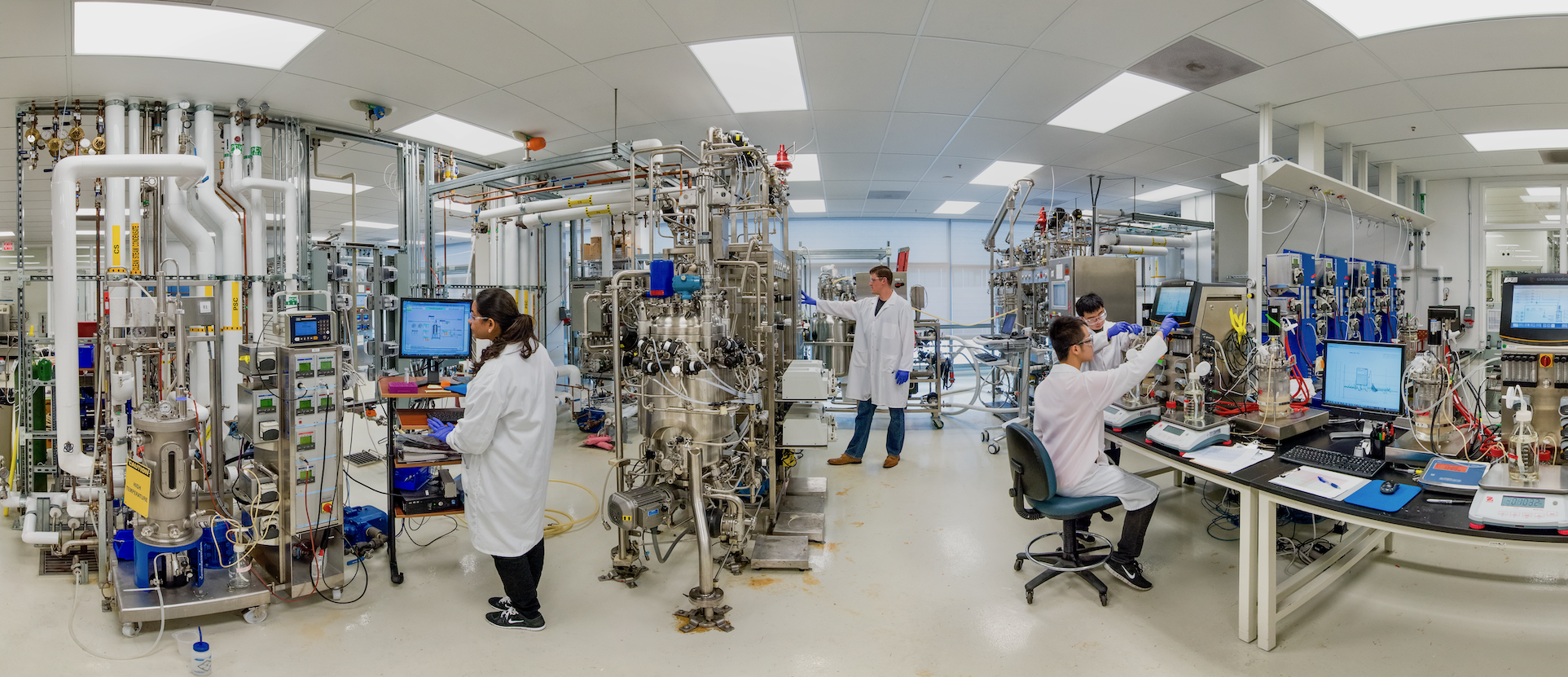
Berkeley Lab has opened the Advanced Biofuels Process Demonstration Unit (ABPDU), a state-of-the art facility, designed to help expedite the commercialization of advanced next-generation biofuels by providing industry-scale test beds for discoveries made in the laboratory.

MORE>

DNA Construction Software Saves Time, Resources and Money

August 16, 2011

Berkeley Lab scientists have developed the first software package for automating DNA construction that not only makes the process faster and more efficient but – with an eye on the economics of scientific discovery – also identifies which construction strategy would be the most cost-effective.

MORE>

A U.S. Department of Energy National Laboratory Operated by the University of California
UC logo
Questions & CommentsPrivacy & Security Notice