LBNL Masthead A-Z Index Berkeley Lab masthead U.S. Department of Energy logo Phone Book Jobs Search
Search the News Center:
Posts Tagged ‘cancer’

Berkeley Lab Discoveries Open New Hope for MMP Cancer Therapies

May 2, 2013

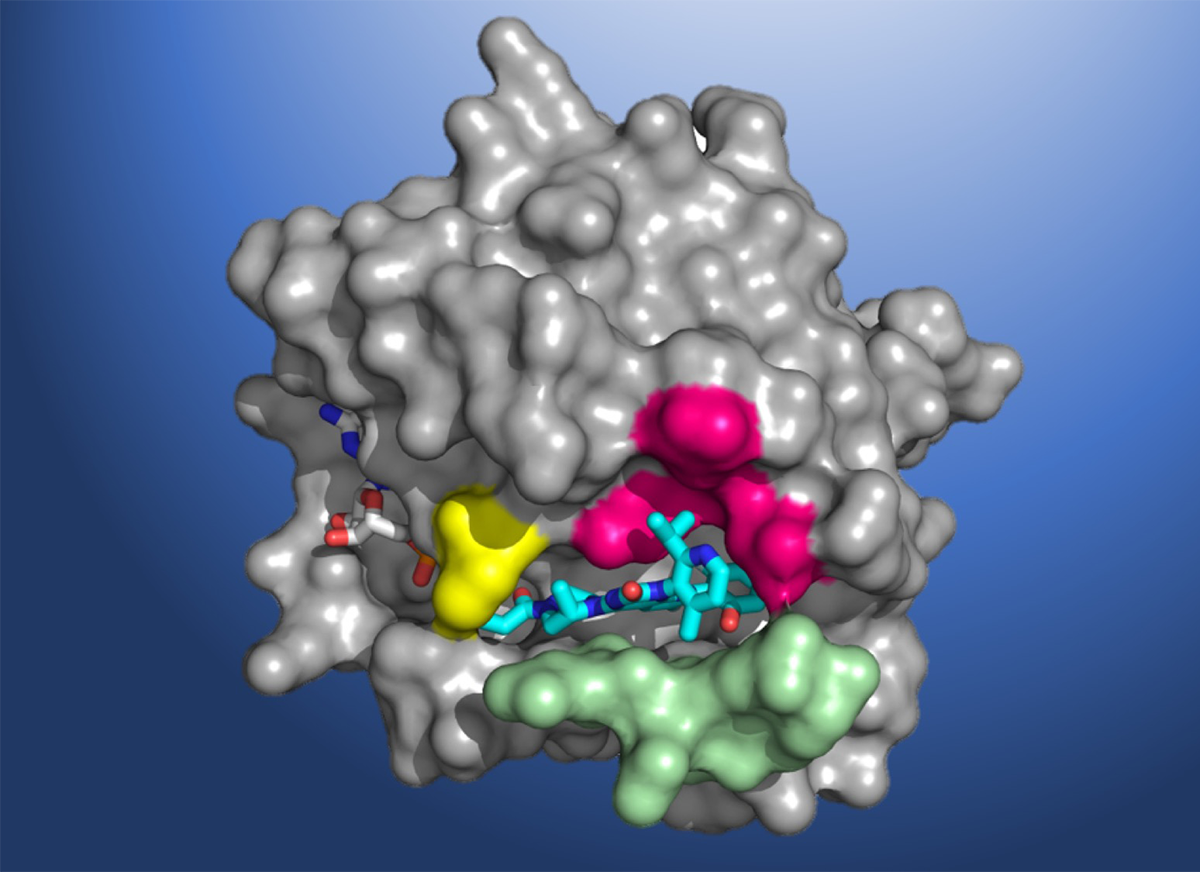
New evidence supports earlier findings that cancer therapy drugs based on a family of enzymes called metalloproteinases (MMPs) failed in clinical trials because they were aimed at the wrong target.

MORE>

Berkeley Lab Researchers Find New Clue to Clinical Trial Failures of MMP Cancer Therapies

February 11, 2013

Failure of Highly Touted MMP Cancer Therapies May Be Explained

MORE>

New Details on the Molecular Machinery of Cancer

February 11, 2013

New details into the activation of a cell surface protein that has been strongly linked to a large number of cancers and is a major target of cancer therapies have been reported by Berkeley Lab researchers.

MORE>

Protein Linked to Therapy Resistance in Breast Cancer

September 11, 2012

Berkeley Lab researchers have identified the FAM83A protein as a possible new oncogene and linked it to therapy resistance in breast cancer. This discovery helps explain the clinical correlation between a high expression of FAM83A and a poor prognosis for breast cancer patients, and may also provide a new target for future therapies.

MORE>

Aging and Breast Cancer

June 4, 2012

A big step towards understanding the cellular basis for why women over the age of 50 are much more vulnerable to breast cancer has been taken by Berkeley Lab researchers. They determined that aging causes an increase in a type of adult stem cell believed to be at the root of many breast cancers, and a decrease in cells believed to serve as tumor suppressors.

MORE>

New Findings in Breast Cancer

April 18, 2012

A Berkeley Lab-University of Copenhagen collaboration found that luminal-like breast cancer cells with no detectable stem cell qualities can generate larger tumors than their basal-like counterparts. This contradicts prevailing beliefs and could impact future breast cancer diagnosis and treatment.

MORE>

Berkeley Lab Researchers Discover a Rotational Motion of Cells that Plays a Critical Role in Their Normal Development

January 26, 2012

Berkeley Lab researchers have discovered a rotational motion that plays a critical role in the ability of breast cells to form the spherical structures in the mammary gland known as acini. This rotation, called “CAMo,” for coherent angular motion, is necessary for the cells to form spheres. Otherwise, cells undergo random motion, leading to loss of structure and malignancy.

MORE>

New Take on Impacts of Low Dose Radiation

December 20, 2011

Working with a special line of human breast cells, Berkeley Lab researchers have shown that for low dose levels of ionizing radiation, cancer risks may not be directly proportional to dose. This contradicts the standard model for predicting biological damage from ionizing radiation, which holds that risk is directly proportional to dose at all levels of irradiation.

MORE>

How Key Genes Cooperate to Make Healthy Skin

September 20, 2011

An essential relationship among leading genes and proteins that control the health of the skin has been revealed by a multinational research team. The protein p63 is the “master regulator” for skin’s uppermost layers, the epidermis. It does much of its work by directly controlling the chromatin-remodeling protein Satb1, discovered at Berkeley Lab over a decade ago and already known for critical roles in the immune system and aggressive breast cancer.

MORE>

Ovarian Cancer Genome Mapped, Opens Door to Personalized Medicine

June 29, 2011

Scientists have developed the first comprehensive catalog of the genetic aberrations responsible for an aggressive type of ovarian cancer that accounts for 70 percent of all ovarian cancer deaths. Hundreds of researchers from more than 80 institutions, including scientists from Berkeley Lab, deciphered the genome structure and gene expression patterns in high-grade serous ovarian adenocarcinomas from almost 500 patients. The result is the most expansive genomic analysis of any cancer to date and a major step toward the personalized treatment of ovarian cancer.

MORE>

A U.S. Department of Energy National Laboratory Operated by the University of California
UC logo
Questions & CommentsPrivacy & Security Notice