LBNL Masthead A-Z Index Berkeley Lab masthead U.S. Department of Energy logo Phone Book Jobs Search
Search the News Center:
Posts Tagged ‘computing’

Ferroelectricity on the Nanoscale

July 10, 2012

A research effort led by Berkeley Lab scientists has brought some clarity to the here-to-fore confusing physics of ferroelectric nanomaterials, pointing the way to multi-terabyte- per-square-inch of non-volatile computer memory chips.

MORE>

Berkeley Lab Scientists Help Define the Healthy Human Microbiome

June 13, 2012

A National Institutes of Health (NIH)-organized consortium that includes Berkeley Lab scientists has for the first time mapped the normal microbial make-up of humans. Berkeley Lab’s role in mapping the human microbiome revolves around big data, both analyzing it and making it available for scientists to use worldwide. The research will help scientists understand how our microbiome keeps us healthy. It’ll also shed light on our microbiome’s role in many diseases.

MORE>

Four Berkeley Lab Researchers Named to National Academy of Sciences

May 1, 2012

Four Lawrence Berkeley National Laboratory (Berkeley Lab) researchers were elected members or foreign associates to the National Academy of Sciences (NAS), today. The four make up a class of 84 new members and 21 foreign associates this year. The election recognizes their distinguished careers and research achievements.
The NAS membership is one of the highest honors [...]

MORE>

Berkeley Lab-led Institute to Help Solve Data-intensive Science Challenges

March 29, 2012

Today Energy Secretary Steven Chu announced a $25 million five-year initiative to help scientists better extract insights from today’s increasingly massive research datasets, the Scalable Data Management, Analysis, and Visualization (SDAV) Institute. SDAV will be funded through DOE’s Scientific Discovery through Advanced Computing program and led by Arie Shoshani of Lawrence Berkeley National Laboratory.

MORE>

Berkeley Lab Mathematicians Win Cozzarelli Prize

February 21, 2012

Berkeley Lab mathematicians James Sethian and Robert Saye have won the 2011 Cozzarelli Prize for the best scientific paper in the category of Engineering and Applied Sciences. Their winning paper was titled “The Voronoi Implicit Interface Method for computing multiphase physics.”

MORE>

Closest Type Ia Supernova in Decades Solves a Cosmic Mystery

December 14, 2011

Even as the “supernova of a generation” came into view in backyards across the northern hemisphere last August, physicists and astronomers who had caught its earliest moments were developing a surprising and much clearer picture of what happens during a titanic Type Ia explosion. Now they have announced the closest, most detailed look ever at one of the universe’s brightest “standard candles,” the celestial mileposts that led to the discovery of dark energy.

MORE>

A Better Way to ID Extreme Weather Events in Climate Models

December 6, 2011

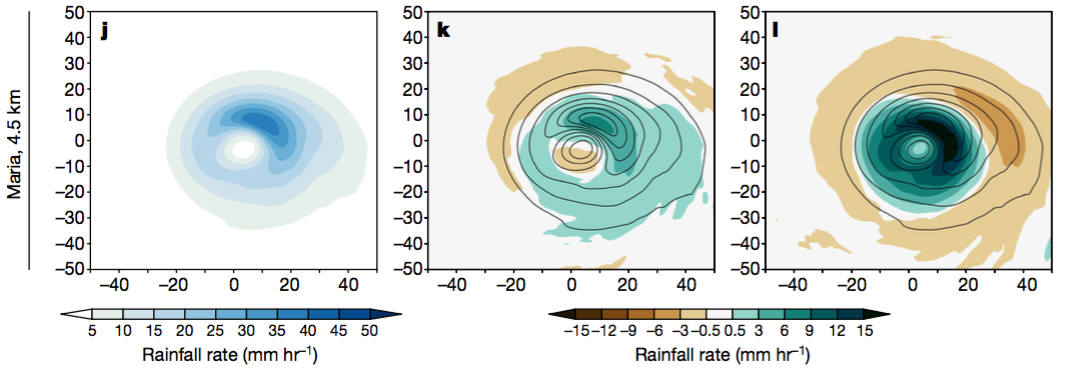
A team of researchers that includes Berkeley Lab scientists are using state-of-the-art methods in data mining and high-performance computing to quantify extreme weather phenomena in the very large datasets generated by today’s climate models. Their work will help scientists predict how climate change impact the frequency of extreme weather events.

MORE>

Today’s Severe Drought, Tomorrow’s Normal

December 5, 2011

While the worst drought since the Dust Bowl of the 1930s grips Oklahoma and Texas, scientists are warning that what we consider severe drought conditions in North America today may be normal for the continent by the mid-21st century, due to a warming planet. A team of scientists from Berkeley Lab and elsewhere came to this conclusion after analyzing 19 different state-of-the-art climate models.

MORE>

Berkeley Scientists Discover an “Instant Cosmic Classic” Supernova

August 25, 2011

A supernova discovered yesterday is closer to Earth — approximately 21 million light-years away — than any other of its kind in a generation. Astronomers at Berkeley Lab and UC Berkeley who made the discovery predict that it will be a target for research for the next decade, making it one of the most-studied supernova in history.

MORE>

Berkeley Lab Scientists Unveil an X-ray Technique Called HARPES

August 24, 2011

Berkeley Lab researchers led the development of a technique called HARPES, for Hard x-ray Angle-Resolved PhotoEmission Spectroscopy, that enables the study of electronic structures deep below material surfaces, including the buried layers and interfaces in nanoscale devices. This could pave the way for smaller logic elements in electronics, novel memory architectures in spintronics, and more efficient energy conversion in photovoltaic cells.

MORE>

A U.S. Department of Energy National Laboratory Operated by the University of California
UC logo
Questions & CommentsPrivacy & Security Notice