LBNL Masthead A-Z Index Berkeley Lab masthead U.S. Department of Energy logo Phone Book Jobs Search
Search the News Center:
Posts Tagged ‘energy efficiency’

Berkeley Lab Awarded $12.5 Million to Lead a U.S.-China Clean Energy Research Center

October 7, 2010

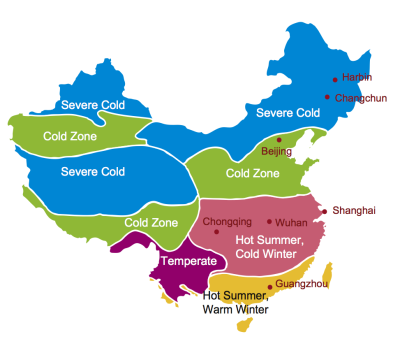
The U.S. Department of Energy’s Lawrence Berkeley National Laboratory has been chosen to lead a consortium for a U.S.-China Clean Energy Research Center on Building Energy Efficiency. The Center will develop technologies for low-energy residential and commercial buildings, as well as work on commercialization of those technologies and research how human behavior affects building energy use. The Clean Energy Resource Center (CERC) will receive $12.5 million over five years.

MORE>

Berkeley Lab Creates New Energy Model For Chinese Cities

September 29, 2010

To tally the energy consumption of a city, the usual method is to add up all the energy used by residents—when they drive their car or turn on the air-conditioning—plus all the energy consumed by commercial buildings and industries in their day-to-day operations. But how should one account for the energy that went into building the office park where people work or paving the roads that people drive? And what about the energy required to make the clothes they are wearing? Scientists at Lawrence Berkeley National Laboratory have created a new energy model for Chinese cities that takes such factors into account.

MORE>

Global Model Confirms: Cool Roofs Can Offset Carbon Dioxide Emissions and Mitigate Global Warming

July 19, 2010

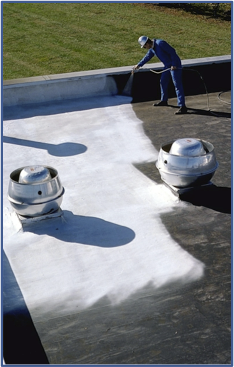
Can light-colored rooftops and roads really curb carbon emissions and combat global climate change? The idea has been around for years, but now, a new study by researchers at Lawrence Berkeley National Laboratory that is the first to use a global model to study the question has found that implementing cool roofs and cool pavements in cities around the world can not only help cities stay cooler, they can also cool the world, with the potential of canceling the heating effect of up to two years of worldwide carbon dioxide emissions.

MORE>

An energy-saving magnetic fridge? Perhaps, but first some basic research

July 2, 2010

Forget the magnets on your fridge. How about a magnet in your fridge, one that keeps your leftover pizza cold while consuming less energy than today’s refrigerators? Someday perhaps. But first scientists at the Advanced Light Source and elsewhere must learn a few things about the magnetocaloric effect.

MORE>

Electricity Regulators from India Learn from California

June 11, 2010

Three solid days of talks on feed-in tariffs, decoupling and demand-side management may not sound like exciting stuff to most people, but to certain a group of visitors from India, such topics could not be more welcome. This week, a 20-member delegation, including representatives of electricity regulatory commissions of 13 of India’s 28 states, visited Lawrence Berkeley National Laboratory to learn about California’s leading efforts on energy efficiency and renewable energy.

MORE>

Berkeley Lab Report: Simple Energy Efficiency Measures Can Eliminate Electricity Shortage in India

May 25, 2010

Electricity in India can be a dicey proposition. Half the population lacks access or is too poor to afford it. The other half is using so much that demand far outstrips supply, resulting in daily power outages. And with a growing middle class buying more TVs, air conditioners and the like, the situation will only get worse. As chaotic as things are, there is a solution: simple energy efficiency measures, according to a new report from Berkeley Lab, can eliminate the electricity deficit as early as 2013.

MORE>

Berkeley Lab Study Finds Energy Efficiency Workforce Training Needs to Ramp Up to Meet Coming Demand

April 7, 2010

A new study by Berkeley Lab examines the workforce needs of the energy efficiency services sector, and finds that the speed with which employment will grow will depend in part on how effectively the nation deploys training and education programs for the energy efficiency workforce.

MORE>

Berkeley Researchers Light Up White OLEDs

April 5, 2010

Researchers at Berkeley Lab’s Molecular Foundry and UC Berkeley have developed a new way to process white organic light-emitting diodes (OLEDs) for solid state lighting. Replacing conventional lighting in buildings with white OLEDs could significantly reduce electricity use. Buildings account for more than 40 percent of carbon emissions in the United States

MORE>

“The Rosenfeld” Named After California’s Godfather of Energy Efficiency

March 9, 2010

A group of scientists propose today in a refereed article in Environmental Research Letters to define the Rosenfeld as a unit for electricity savings, after the man seen by many people as the godfather of energy efficiency, Arthur Rosenfeld.

MORE>

New Transmission Investment Would Reduce Costs of Meeting Hypothetical 33% Renewable Energy Target in the West

February 26, 2010

A new analysis by Berkeley Lab scientists for the Western Governor’s Association explores renewable resource decisions in the West. The report’s “sensitivity analysis” examines how decisions about which renewable sources are chosen, and how transmission lines are expanded, are affected by changes in policies and other uncertainties.

MORE>

A U.S. Department of Energy National Laboratory Operated by the University of California
UC logo
Questions & CommentsPrivacy & Security Notice