LBNL Masthead A-Z Index Berkeley Lab masthead U.S. Department of Energy logo Phone Book Jobs Search
Search the News Center:
Posts Tagged ‘imaging’

Partnership for Progress in Electronics Strengthened by New Lab-Industry Investment

December 5, 2011

Through the Center for X-Ray Optics, Berkeley Lab and leading semiconductor manufacturers have mutually invested in major new facilities at the Advanced Light Source for advanced extreme-ultraviolet lithography, including clean rooms, wafer processing facilities, and microlithography test tools too costly for individual manufacturers.

MORE>

A SHARP New Microscope for the Next Generation of Microchips

October 28, 2011

Scientists at Berkeley Lab’s Advanced Light Source and Center for X-Ray Optics are working with colleagues at leading semiconductor manufacturers to build SHARP, the world’s most advanced extreme-ultraviolet-light microscope, to study and design the photolithography masks, materials, patterns, and mask architectures essential to producing the next generation of integrated circuits.

MORE>

Berkeley Lab Researchers Make First Perovskite-based Superlens for the Infrared

March 29, 2011

Berkeley Lab researchers have fabricated superlenses from perovskite oxides that are ideal for capturing light in the mid-infrared range, opening the door to highly sensitive biomedical detection and imaging. It may also be possible to turn the superlensing effect on/off, opening the door to highly dense data writing and storage.

MORE>

Shipping Out to Boston for ACS Meeting: Berkeley Lab researchers present on medicine, energy, the environment and more – Part 3

September 2, 2010

Berkeley Lab scientists delivered nearly 100 presentations at the American Chemical Society’s Fall 2010 national meeting in Boston, August 22-26, 2010. This post features reports on two unique approaches to environmental studies, one employing medical imaging technologies such as PET and SPECT, the other employing synchrotron light from Berkeley Lab’s Advanced Light Source.

MORE>

Correcting a trick of the light brings molecules into view

July 14, 2010

Secretary of Energy and former Berkeley Lab director Steven Chu led the development of a technique that enables the use of optical microscopy to image objects or the distance between them with resolutions as small as 0.5 nanometers – one-half of one billionth of a meter, or an order of magnitude smaller than the previous best. This super-resolution technique has the potential to revolutionize biological imaging, Secretary Chu says.

MORE>

Following the Sugar Right From the Start: Berkeley Researchers Image Glycans on Embryonic Cells Hours After Fertilization

May 28, 2010

Berkeley researchers successfully attached imaging probes to glycans – the sugar molecules that are abundant on the surfaces of living cells – in the embryos of zebrafish less than seven hours after fertilization. This new technique enables scientists to study the physiological changes cells undergo during embryogenesis without invading and doing damage to the embryos.

MORE>

Lensless Imaging of Whole Biological Cells with Soft X-Rays

April 27, 2010

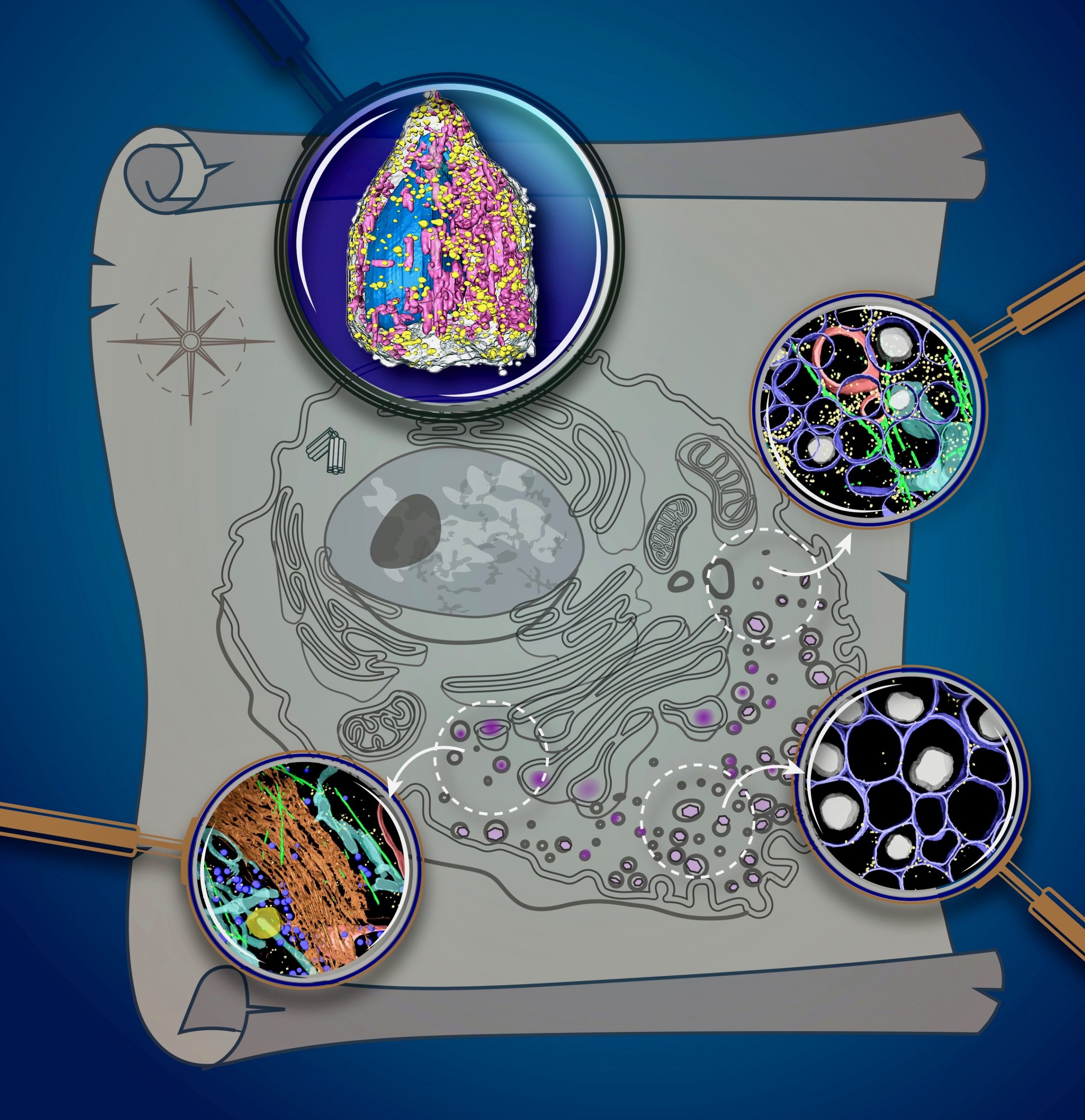
Doing away with lenses is the secret to very high resolution images of the internal structures of biological specimens and complex materials. To prove the principle, the best such images yet of whole cells have been achieved using a beam of coherent soft x-rays at the Advanced Light Source’s beamline 9.0.1.

MORE>

A Little Less Force: Making Atomic Force Microscopy Work for Cells

April 20, 2010

Scientists with Berkeley Lab’s Molecular Foundry have developed a nanowire-based imaging technique by which atomic force microscopy could be used to study biological cells and other soft materials in their natural, liquid environment without tearing apart or deforming the samples. This could provide scientists with the long coveted non-destructive means of dynamically probing soft matter.

MORE>

Watching Proteins Direct Crystal Growth One Step at a Time

December 15, 2009

Scientists at Berkeley Lab’s Molecular Foundry imaged the growth of protein-studded mineral surfaces with unprecedented resolution and provided a glimpse into how living systems engineer key structural materials.

MORE>

Silence of the Genes

October 12, 2009

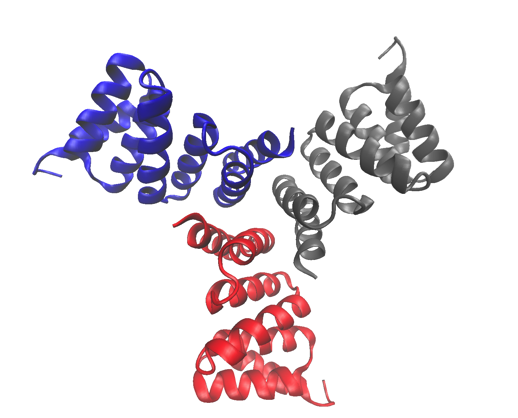
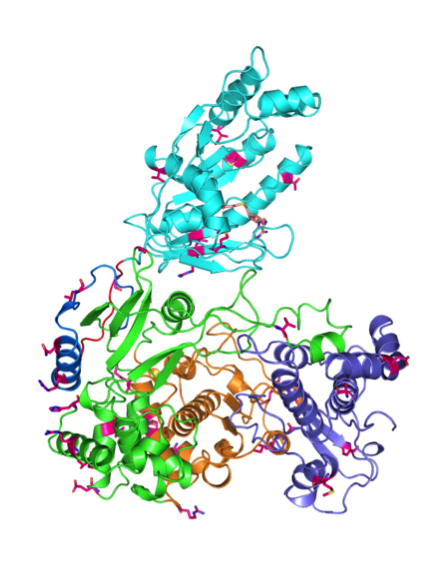
The human RISC-loading complex is a packet of proteins that helps determine the fate of human cells by controlling whether genetic messages – such as “turn cancerous” – are silenced or expressed. Berkeley Lab researchers now know what this critical complex looks like.

MORE>

A U.S. Department of Energy National Laboratory Operated by the University of California
UC logo
Questions & CommentsPrivacy & Security Notice