LBNL Masthead A-Z Index Berkeley Lab masthead U.S. Department of Energy logo Phone Book Jobs Search
Search the News Center:
Posts Tagged ‘Nuclear Science’

How do You Know if You Ran Through a Wall?

January 4, 2013

Researchers from Canada, California, and Poland have devised a straightforward way to test an intriguing idea about the nature of dark energy and dark matter. A global array of atomic magnetometers – small laboratory devices that can sense minute changes in magnetic fields – could signal when Earth passes through fractures in space known as [...]

MORE>

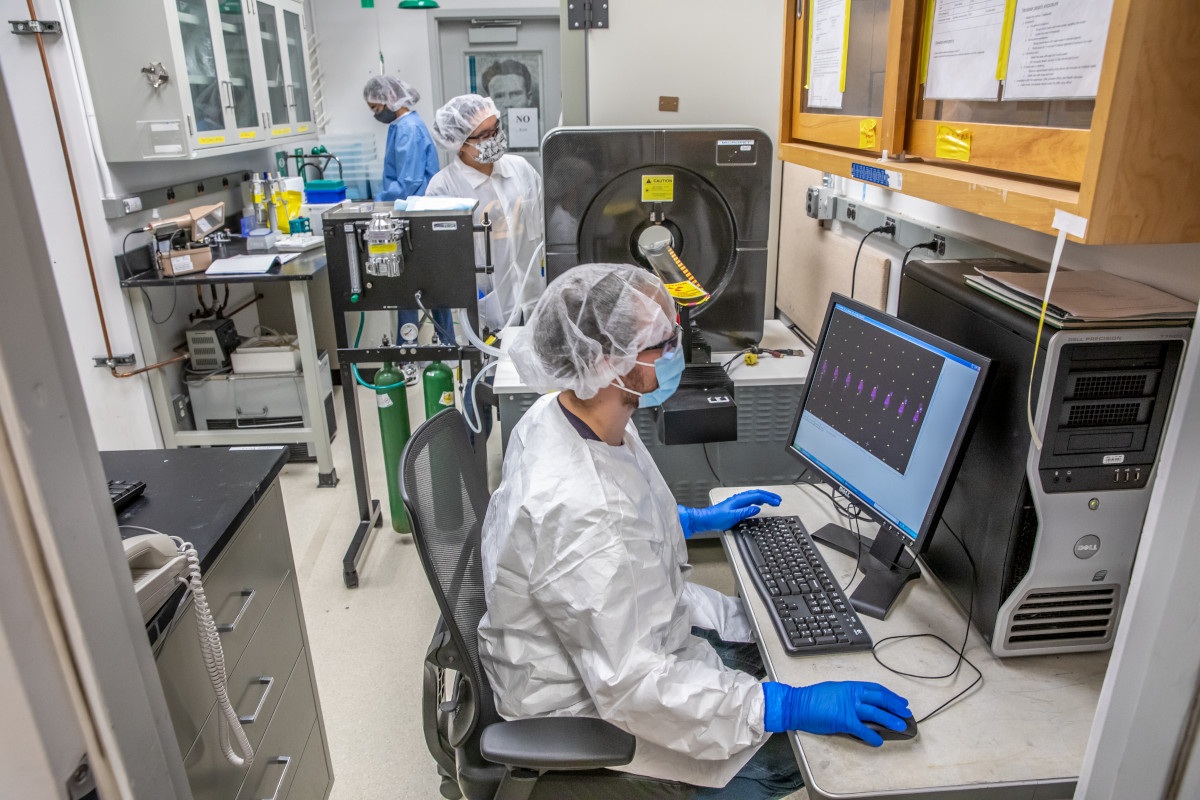
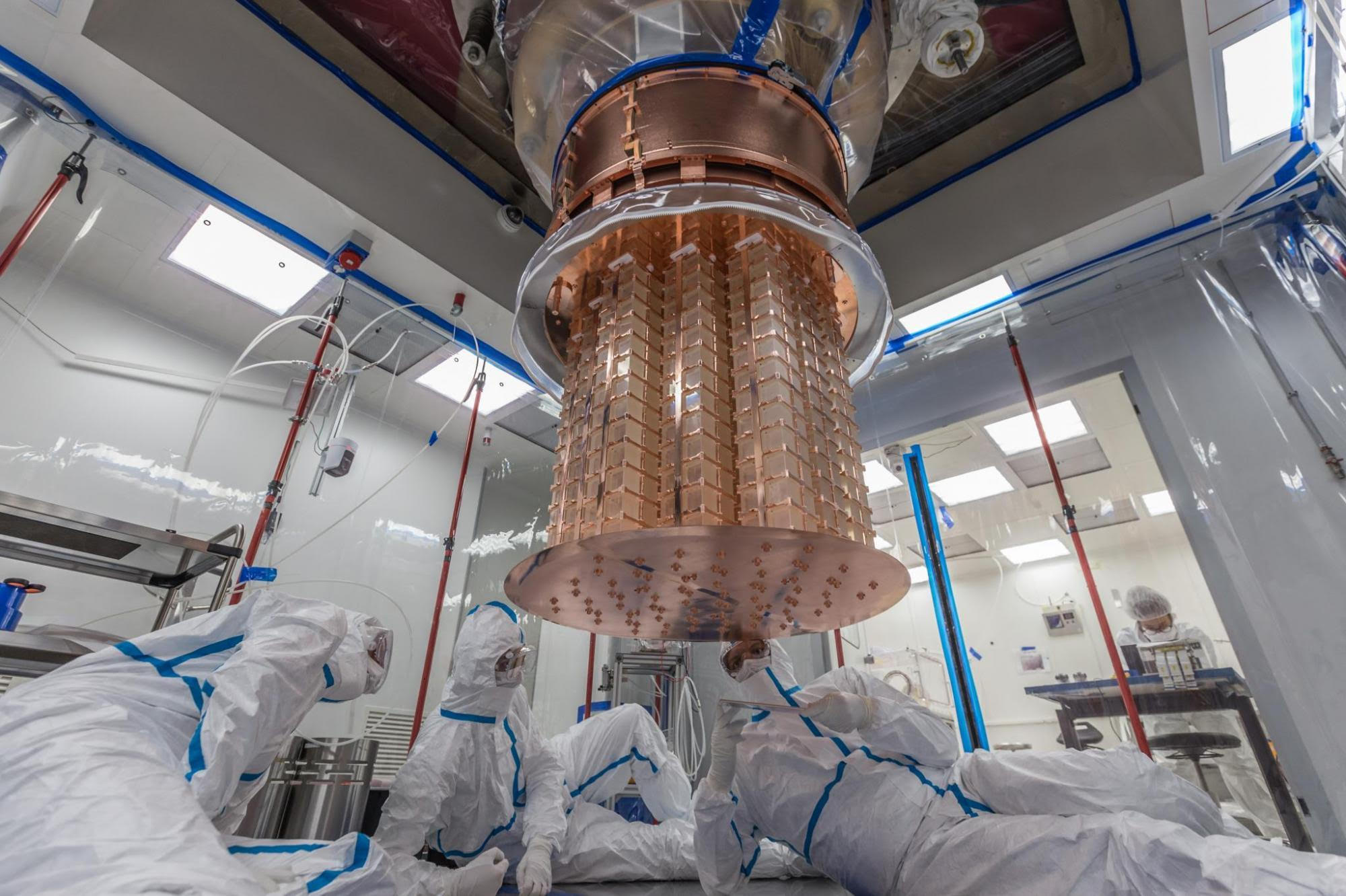
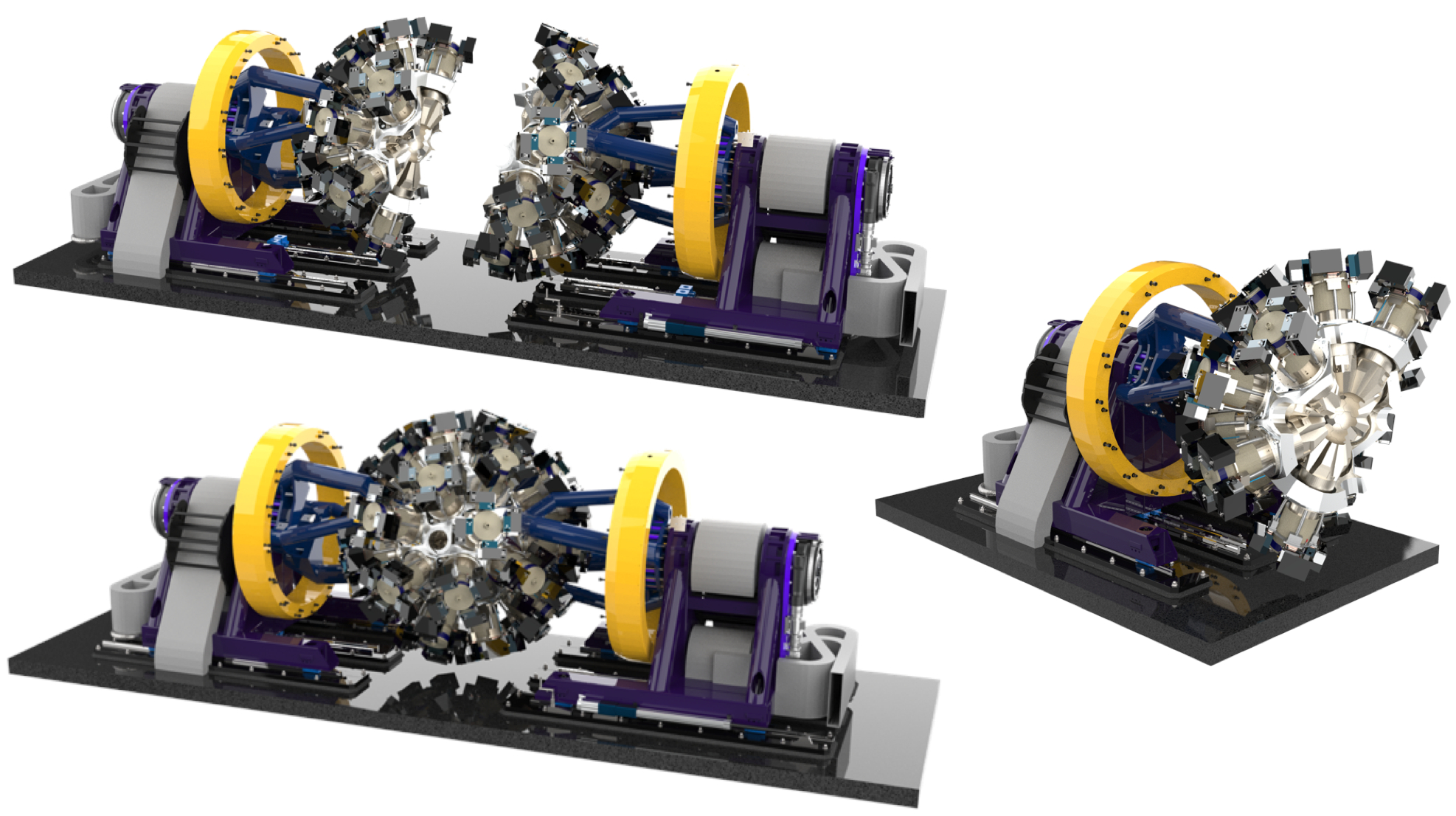
Assembling the First Detector Units of the MAJORANA DEMONSTRATOR

December 19, 2012

MAJORANA DEMONSTRATOR’s First Detector Units

MORE>

In Memoriam: Stuart Freedman, Renowned Nuclear Physicist

November 16, 2012

Stuart Jay Freedman, a physicist in Berkeley Lab’s Nuclear Science Division and professor of physics at the University of California at Berkeley, died November 9, 2012, at the age of 68. Freedman was a world-renowned investigator of fundamental physical laws whose many accomplishments include unique contributions to the study of neutrinos and the weak interaction.
MORE>

Advancing Underground Science at South Dakota’s Sanford Lab

June 7, 2012

On Wednesday, May 30, the Sanford Underground Research Facility officially opened its Davis Campus, almost a mile deep in the former Homestake gold mine in the Black Hills of South Dakota. The event brought over 60 visitors including officials from federal and state government, scientists from universities and national laboratories, and local and national media. Berkeley Lab is the U.S. Department of Energy’s lead institution for this marked advance in underground science.

MORE>

Lying in Wait for WIMPs

May 23, 2012

The LUX Collaboration is searching for the leading candidates for unknown dark matter, weakly interacting massive particles, or WIMPs. Located in the Sanford Underground Research Facility in the Black Hills, LUX’s 350 kilograms of liquid xenon and low background make it the most sensitive dark matter detector yet, but with the proposed LUX ZEPLIN Berkeley Lab researchers want to increase that sensitivity by orders of magnitude.

MORE>

MAJORANA, the Search for the Most Elusive Neutrino of All

May 16, 2012

Neutrinos may be even stranger than they seem, if indeed they are the only fermions (particles of matter) that are their own antiparticles. Proof would be a rare form of radioactive decay called neutrinoless double-beta decay, which could only be seen if there’s virtually no background interference. The MAJORANA DEMONSTRATOR now under construction at the Sanford Underground Research Facility in the Black Hills of South Dakota aims to prove these near-perfect conditions can be met.

MORE>

Where Do the Highest-Energy Cosmic Rays Come From? Probably Not from Gamma-Ray Bursts

April 18, 2012

Some rare cosmic rays pack an astonishing wallop, with energies prodigiously greater than particles in human-made accelerators like the Large Hadron Collider. Their sources are unknown, but gamma-ray bursts are a favored candidate. If so, they should also produce ultra-high-energy neutrinos. Scientists searching for these with IceCube, the giant neutrino telescope at the South Pole to which Berkeley Lab has made key contributions, have found exactly zero. The mystery deepens.

MORE>

In Memory of Kenneth Crowe, 1926-2012

March 13, 2012

Kenneth Crowe, a widely traveled physicist and a demanding, inspirational teacher at Lawrence Berkeley National Laboratory and the University of California at Berkeley, died February 1, 2012, at the age of 85.

MORE>

In memoriam, Clyde Taylor, 1930-2011

December 13, 2011

Clyde Taylor, pioneering scientist and engineer of superconducting magnet technology at Lawrence Livermore and Lawrence Berkeley National Laboratories, died November 16, 2011.

MORE>

What Keeps the Earth Cooking?

July 17, 2011

From the planet’s core to its surface, heat enables Earth’s magnetic field, spreads the sea floor, and keeps continents on the move. Much of the heat is “radiogenic,” from the radioactive decay of elements in the crust and mantle, but how much? By measuring neutrinos from deep in the Earth, Berkeley Lab scientists and their colleagues at Japan’s KamLAND neutrino detector have published the most precise estimate yet of radiogenic heat.

MORE>

A U.S. Department of Energy National Laboratory Operated by the University of California
UC logo
Questions & CommentsPrivacy & Security Notice