LBNL Masthead A-Z Index Berkeley Lab masthead U.S. Department of Energy logo Phone Book Jobs Search
Search the News Center:
Posts Tagged ‘physics’

Berkeley Lab Scientists Control Light Scattering in Graphene

March 16, 2011

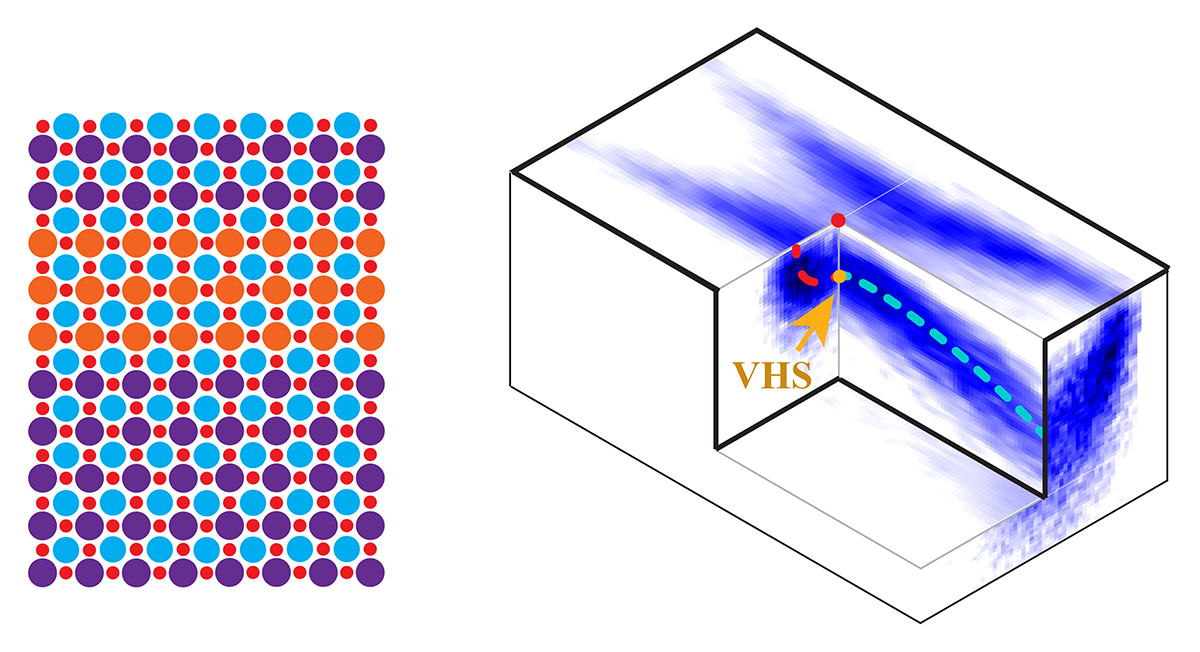
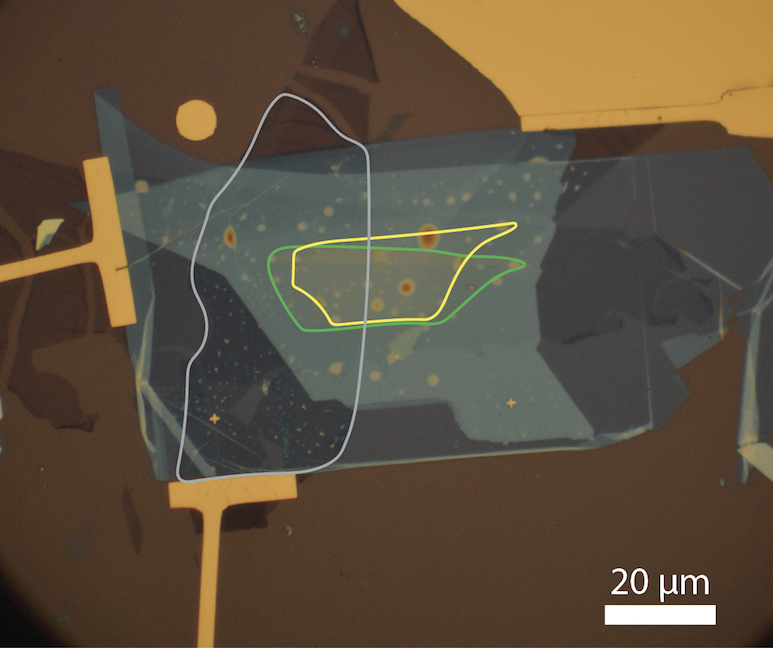
Scientists at Berkeley Lab and UC Berkeley have learned to control the quantum pathways that determine how light scatters in graphene. As a sheet of carbon just a single atom thick, graphene’s extraordinary crystalline structure gives rise to unique electronic and optical properties. Controlling light scattering not only provides a new tool for studying graphene but points to practical applications for managing light and electronic states in graphene nanodevices.

MORE>

Berkeley Lab’s Saul Perlmutter Wins the Einstein Medal

February 19, 2011

Berkeley Lab’s Saul Perlmutter has won the Einstein Medal presented annually by the Albert Einstein Society of Bern, Switzerland, for his role in discovering the accelerating expansion of the universe by observing very distant supernovae.

MORE>

The Daya Bay Neutrino Experiment: On Track to Completion

February 15, 2011

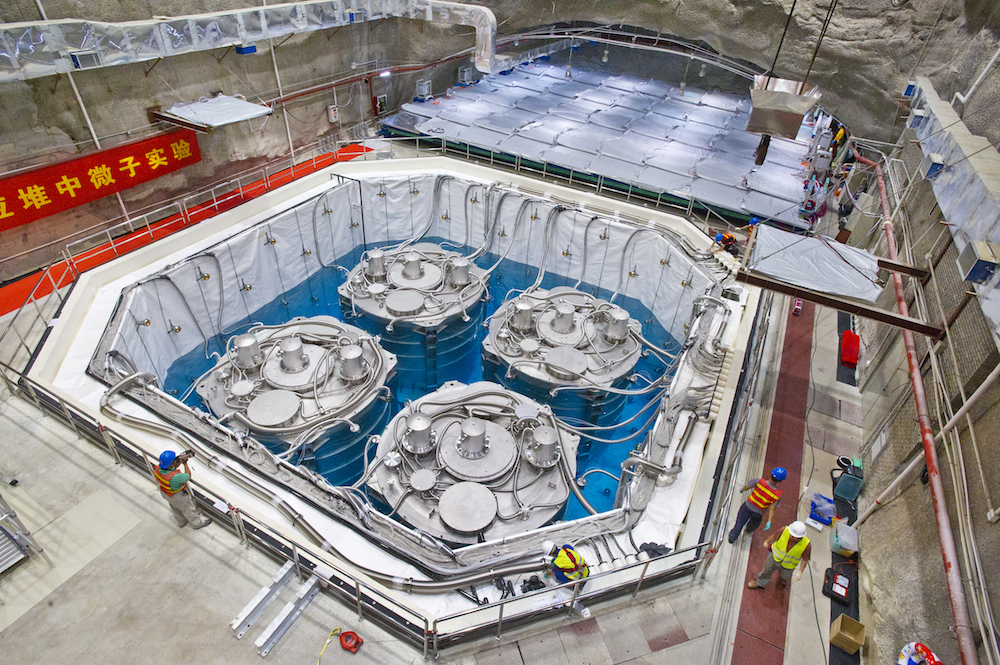
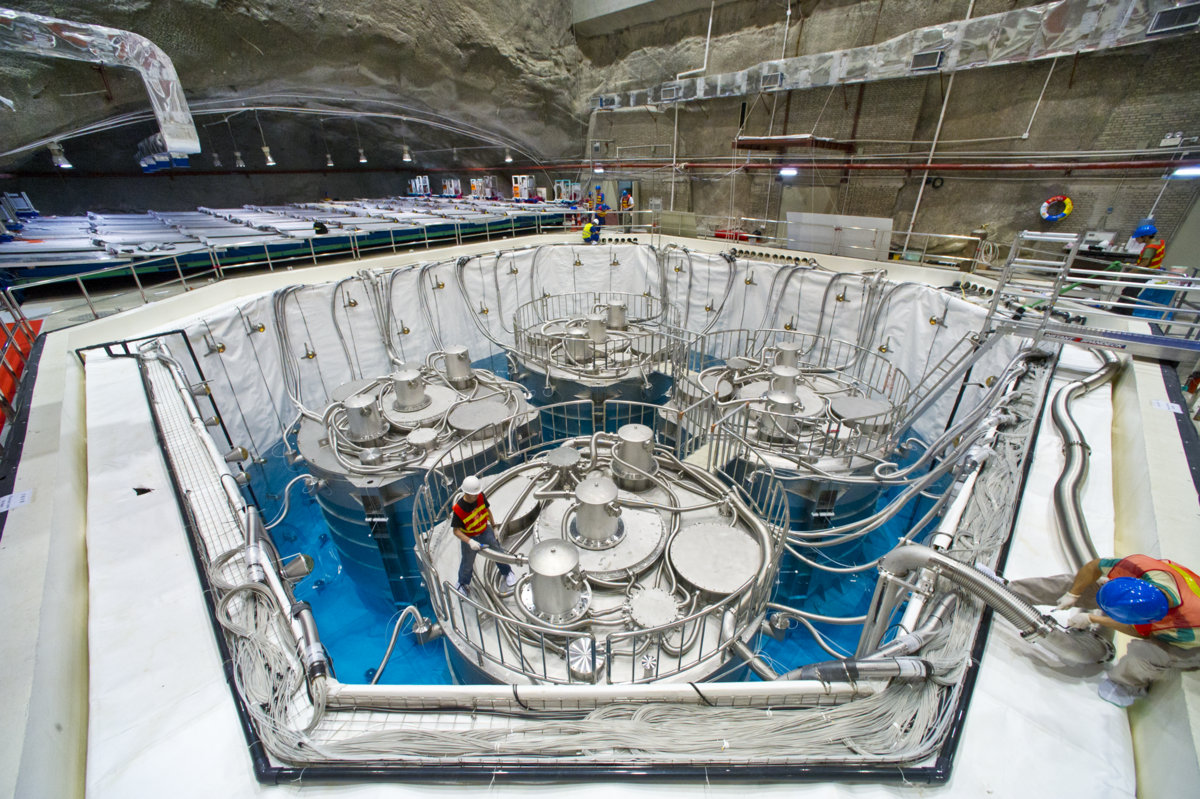
How much do different kinds of neutrinos weigh? And which kind is the heaviest? The answers could explain why there is more matter than antimatter in the universe, and indeed why there is any matter at all. Clues lie in determining the “mixing angles” at which neutrinos oscillate, one type into another. The Daya Bay Neutrino Experiment, an international collaboration whose U.S. participants are led by Berkeley Lab scientists and engineers, seeks to determine the most elusive mixing angle of them all, called theta one-three. See this interactive photographic tour of the remarkable underground laboratory.

MORE>

The Saga of the Dark Universe Finds a Spell-binding Bard

January 24, 2011

Excerpts from a review of Richard Panek’s “The 4 Percent Universe: Dark Matter, Dark Energy, and the Race to Discover the Rest of Reality,” published by Houghton Mifflin Harcourt on January 10: in relating the discovery of dark matter and dark energy, the author shows how physicists and astronomers at Berkeley Lab and UC Berkeley not only contributed to the study of dark matter but pioneered the techniques that revealed the existence of dark energy. Berkeley Lab scientists remain at the forefront of research into the nature of the dark universe.

MORE>

Astronomers Release the Largest Color Image of the Sky Ever Made

January 11, 2011

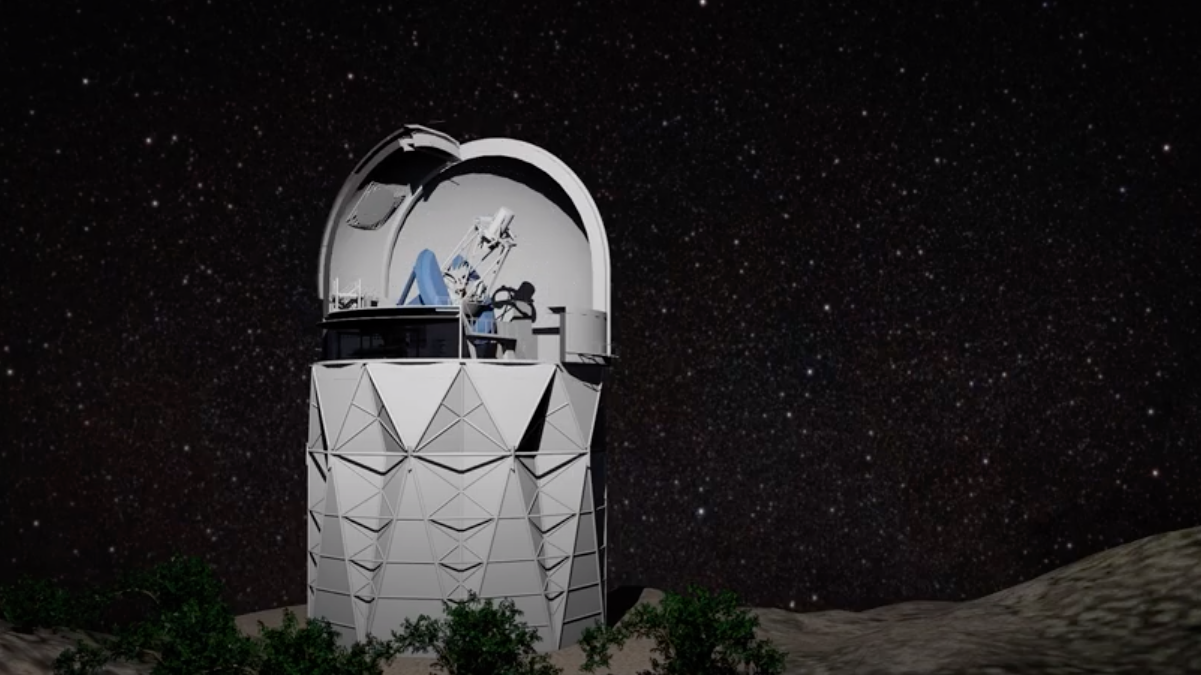
The largest image of the sky yet made – more than a trillion pixels – has been released by the multi-institutional third Sloan Digital Sky Survey (SDSS-III) at a press conference at the American Astronomical Society meeting in Seattle. The largest component of SDSS-III is the Baryon Oscillation Spectroscopic Survey, BOSS, led by Berkeley Lab scientists, now engaged in producing an even larger map of the sky.

MORE>

Into the Ice: Completing the IceCube Neutrino Observatory

December 17, 2010

IceCube, the world’s most sensitive neutrino detector, is now complete. The giant neutrino telescope, buried a mile and a half deep in the Antarctic ice, now has its complete array of 86 strings carrying over 5,000 photodetectors, deployed to search for signs of neutrinos passing through the clear polar ice. The electronics and packaging of the photodetectors, called Digital Optical Modules, were conceived, designed, and tested by Berkeley Lab scientists and engineers.

MORE>

A Flow of Heavy-Ion Results from the LHC

December 8, 2010

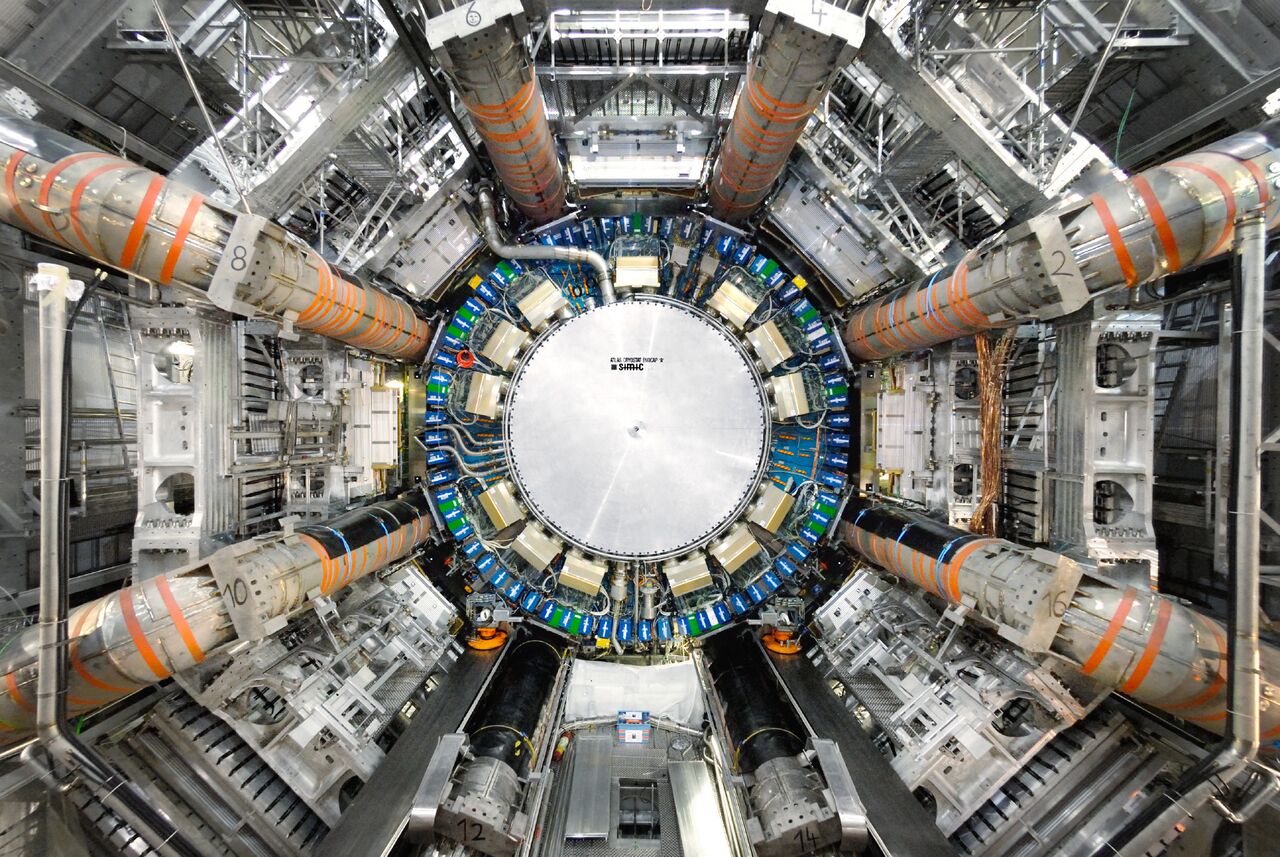
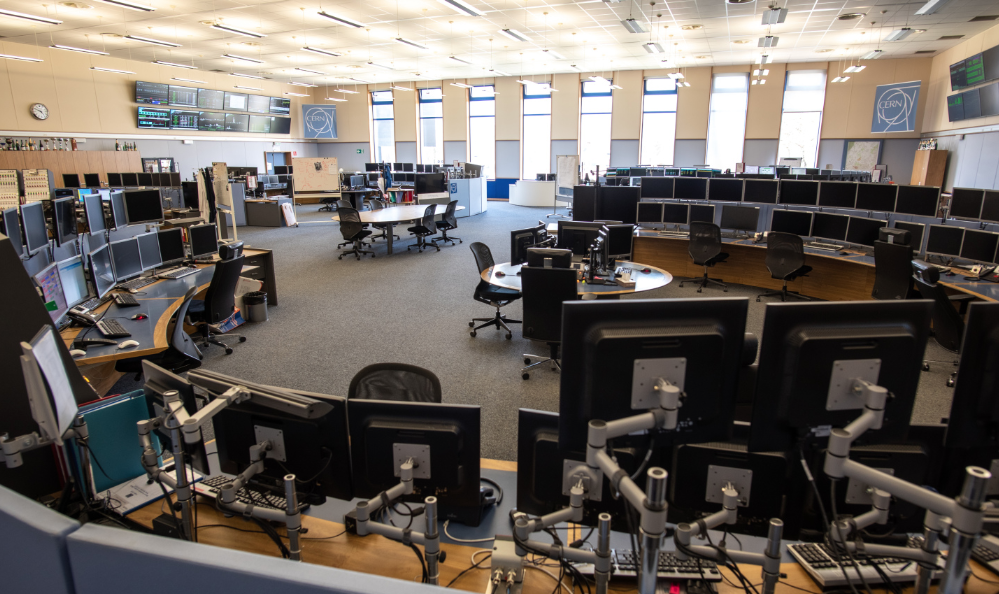
CERN’s Large Hadron Collider collides protons most of the year but switches to massive lead nuclei for a month. Collisions of these heavy ions reproduce the quark-gluon plasma that filled the universe millionths of a second after the big bang. Much of the program for quark-gluon plasma studies is shaped by theoretical and experimental contributions from Berkeley Lab’s Nuclear Science Division, as shown by results from ALICE and other experiments during the LHC’s first lead-lead run just concluded.

MORE>

Antimatter Atoms Successfully Stored for the First Time

November 17, 2010

Atoms of antimatter have been trapped and stored for the first time by the ALPHA collaboration, an international team of scientists working at CERN in Switzerland. Berkeley Lab researchers made key contributions to the effort, including the design of the trap’s crucial component—an octupole magnet—and computer simulations needed to identify real antihydrogen annihilation events against a noisy background.

MORE>

GRETINA Moves Into Its Cave

November 12, 2010

GRETINA is the most sensitive gamma-ray detector ever built for studies of the nucleus, including how the natural elements were formed in stars and supernovae, as well as the properties of artificial superheavy elements. GRETINA, now being assembled at Berkeley Lab’s 88-Inch Cyclotron, is the first stage of the even more powerful GRETA, the Gamma-Ray Energy Tracking Array.

MORE>

Six New Isotopes of the Superheavy Elements Discovered

October 26, 2010

A team of researchers has used Berkeley Lab’s 88-Inch Cyclotron to create six new isotopes of the superheavy elements, reaching in an unbroken chain of decays from element 114 down to rutherfordium. The discovery is a major step toward understanding how to explore the long-sought Island of Stability, which is thought to lie in the vicinity of element 114 – and possibly beyond.

MORE>

A U.S. Department of Energy National Laboratory Operated by the University of California
UC logo
Questions & CommentsPrivacy & Security Notice