All News

New Research Evaluates How U.S. Wind Plant Performance Changes with Age

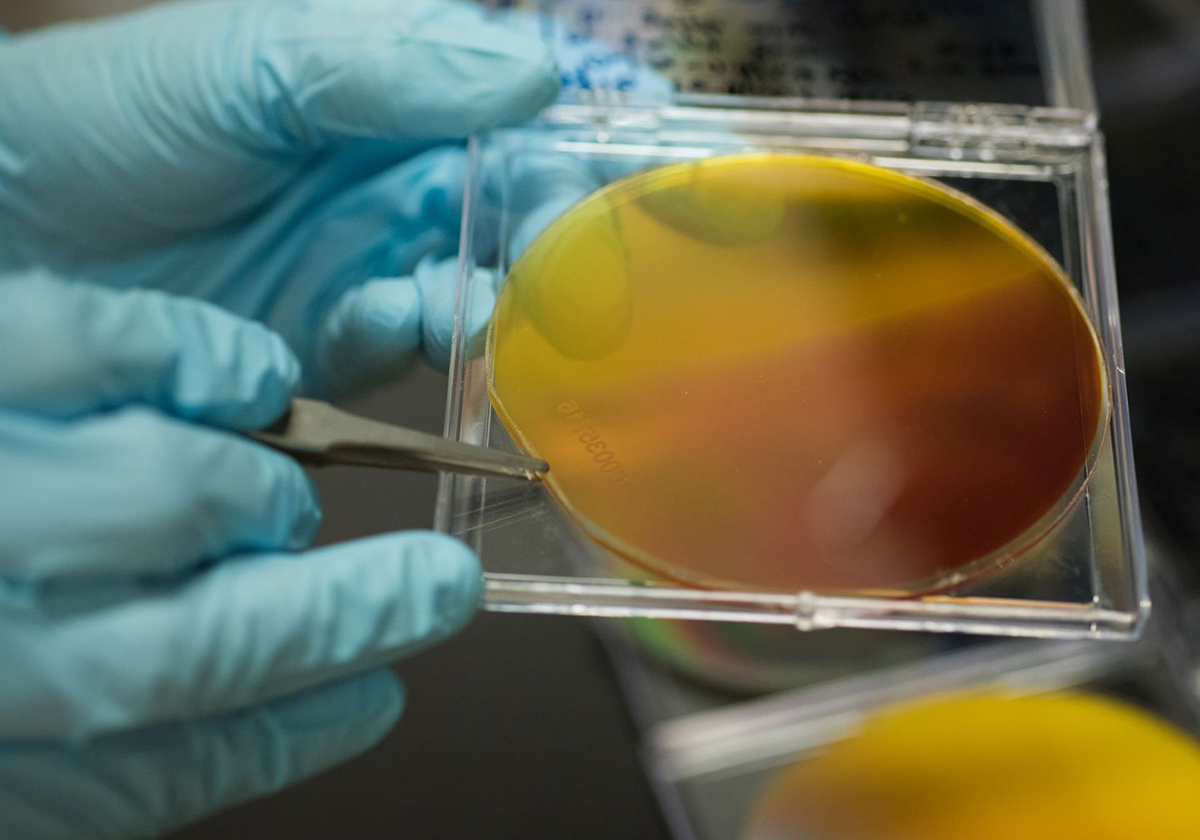
Investigation into Fungi Food Choices Yields a Buffet of Information

The World’s Forests Are Growing Younger

Smart Farms of the Future: Making Bioenergy Crops More Environmentally Friendly

Now Complete, Telescope Instrument is Poised to Begin Its Search for Answers About Dark Energy

Image - In this rendering, a cutaway view of the Mayall Telescope shows the Dark Energy Spectroscopic Instrument. (Credit: Dongjae “Krystofer” Kim/Kryated.com, DESI collaboration)

Daya Bay Reactor Experiment Continues to Generate Data

Photo - Antineutrino detectors are submersed in liquid at the Daya Bay experiment, as seen during the final phase of construction in August 2012. (Credit: Roy Kaltschmidt/Berkeley Lab)

Laser, Biosciences Researchers Combine Efforts to Study Viruses in Droplets

Image - A photo illustration showing magnified virus particles in droplets. (Credit: pxfuel.com)

Site of LUX-ZEPLIN Dark Matter Search Project Carefully Ramps Up Science Work

Photo - The LUX-ZEPLIN cryostat, which houses the experiment’s main detector, is pictured here in a surface lab before its delivery underground. (Credit: Matthew Kapust/SURF)

DESI Team Prepares for Telescope Instrument’s Restart after Unexpected Shutdown

Photo - DESI is installed within the dome of the Mayall Telescope at Kitt Peak National Observatory near Tucson, Arizona. (Credit: Marilyn Sargent/Berkeley Lab)

This COVID-19 Detector Has Berkeley Lab Roots

Illustration of carbon nanotube as a COVID-19 detector. (Credit: Zettl Research Group/Berkeley Lab)

Using Machine Learning to Estimate COVID-19’s Seasonal Cycle

map of the worldwide incidence rate of COVID-19

X-ray Experiments Zero in on COVID-19 Antibodies

This transmission electron microscope image shows SARS-CoV-2—also known as 2019-nCoV, the virus that causes COVID-19—isolated from a patient in the U.S.