All News

2 Poets and a Particle Accelerator

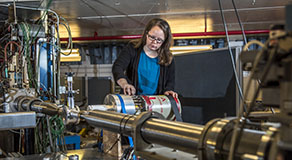
Photo - Kate Greene at the 88-Inch Cyclotron. (Credit: Kelly J. Owen)

Berkeley Lab Team Wins Data-Driven Scavenger Hunt for Simulated Nuclear Materials

Scientists Dig Deep to Track Down California’s Ever-Changing Groundwater Supply

NOvA Experiment Sees Strong Evidence for Antineutrino Oscillation

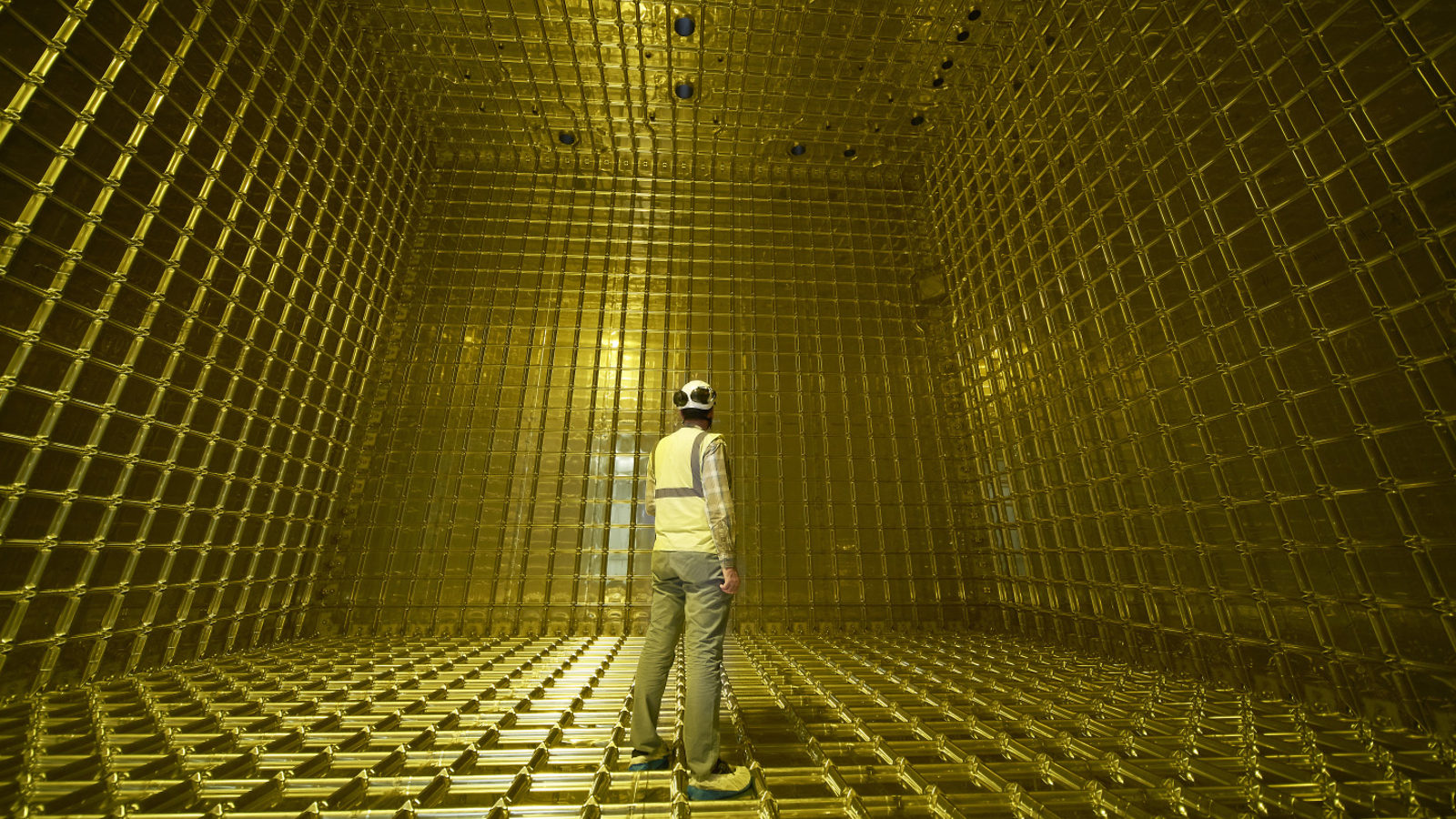
Photo - NOvA's far detector in Minnesota. At the Neutrino 2018 conference, Fermilab’s NOvA neutrino experiment announced that it had seen strong evidence of muon antineutrinos oscillating into electron antineutrinos over long distances. NOvA collaborated with the Department of Energy’s Scientific Discovery through Advanced Computing program and Fermilab’s HEPCloud program to perform the largest-scale analysis ever to support the recent evidence. (Credit: Reidar Hahn/Fermilab)

Vote for Your Favorite Photos: 2018 Physics Photowalk Competition

New Simulations Break Down Potential Impact of a Major Quake by Building Location and Size

Separate But Together: Ultrathin Membrane Both Isolates and Couples Living and Non-Living Catalysts

6 Berkeley Lab Researchers Receive DOE Early Career Research Awards

Berkeley Lab Researchers Use Machine Learning to Search Science Data

Image - A screenshot of image-based results in the Science Search interface. In this case, the user performed an image search for nanoparticles. (Credit: Gonzalo Rodrigo/Berkeley Lab)

Faster, Cheaper, Better: A New Way to Synthesize DNA

Scientists Create Continuously Emitting Microlasers With Nanoparticle-Coated Beads

Image - At left, a tiny bead struck by a laser (at the yellowish spot shown at the top of the image) produces optical modes that circulate around the interior of the bead (pinkish ring). At right, a simulation of how the optical field inside a 5-micron (5 millionths of a meter) bead is distributed. (Credit: Angel Fernandez-Bravo/Berkeley Lab, Kaiyuan Yao)

CERN Ceremony Marks Groundbreaking for Accelerator Upgrade Involving U.S. National Labs

Photo - A collaboration among several U.S. national laboratories has been working on superconducting magnets that will be integral to a planned high-luminosity upgrade for CERN's Large Hadron Collider. (Credit: Reidar Hahn/Fermi National Accelerator Laboratory)