LBNL Masthead A-Z Index Berkeley Lab masthead U.S. Department of Energy logo Phone Book Jobs Search
Search the News Center:
Posts Tagged ‘computing’

Meeting the Computing Challenges of Next-Generation Climate Models

March 26, 2013

Berkeley Lab recently hosted an international workshop that brought together top climatologists, computer scientists and engineers from Japan and the United States to exchange ideas for the next generation of climate models as well as the hyper-performance computing environments that will be needed to process the data from those models. It was the 15th in a series of such workshops that have been taking place around the world since 1999.

MORE>

Computer Simulations Yield Clues to How Cells Interact With Surroundings

March 21, 2013

Berkeley Lab scientists have developed a computer model of a protein that helps cells interact with their surroundings. Like its biological counterpart, the virtual integrin snippet is about twenty nanometers long. It also responds to changes in energy and other stimuli just as integrins do in real life. The result is a new way to explore how the protein connects a cell’s inner and outer environments.

MORE>

ESnet’s New Map Gives Up-to-the-Minute Network Data

January 17, 2013

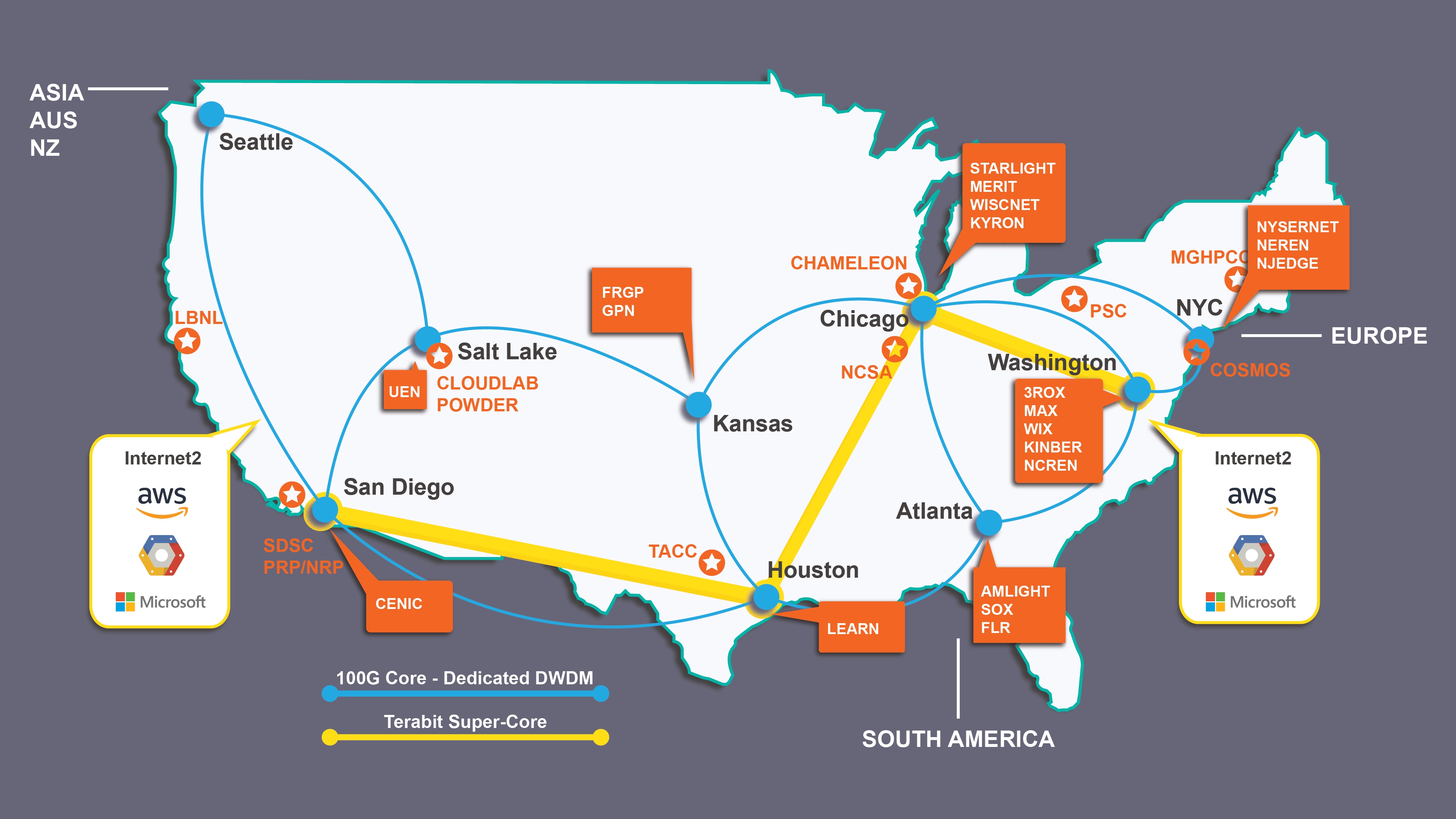
A new interactive map developed by the Department of Energy’s ESnet (Energy Sciences Network) provides a detailed, up-to-the-minute look at the level of traffic traversing the various sections of the network as it connects 40 research sites around the country.
ESnet is currently the world’s fastest coast-to-coast science network with a national backbone with 100 gigabit-per-second [...]

MORE>

How Computers Push on the Molecules They Simulate

January 3, 2013

Computer simulations are essential to test theories and explore what’s inaccessible to direct experiment. Digital computers can’t use exact, continuous equations of motion and have to slice time into chunks, so persistent errors are introduced in the form of “shadow work” that distorts the result. Berkeley Lab and UC Berkeley scientists have learned to separate the physically realistic aspects of the simulation from the artifacts of the computer method.

MORE>

Modeling the Breaking Points of Metallic Glasses

November 26, 2012

Metallic glass alloys (or liquid metals) are three times stronger than the best industrial steel, but can be molded into complex shapes with the same ease as plastic. These materials are highly resistant to scratching, denting, shattering and corrosion. Mathematical methods developed by Berkeley Lab researcher Christopher Rycroft of the Computational Research Division help explain why liquid metals have wildly different breaking points, depending on how they are made.

MORE>

Department of Energy’s ESnet Rolls Out World’s Fastest Science Network

November 13, 2012

The U.S. Department of Energy’s (DOE) ESnet (Energy Sciences Network) is now operating the world’s fastest science network, serving the entire national laboratory system, its supercomputing centers, and its major scientific instruments at 100 gigabits per second – 10 times faster than its previous generation network.

MORE>

Good Vibrations

August 15, 2012

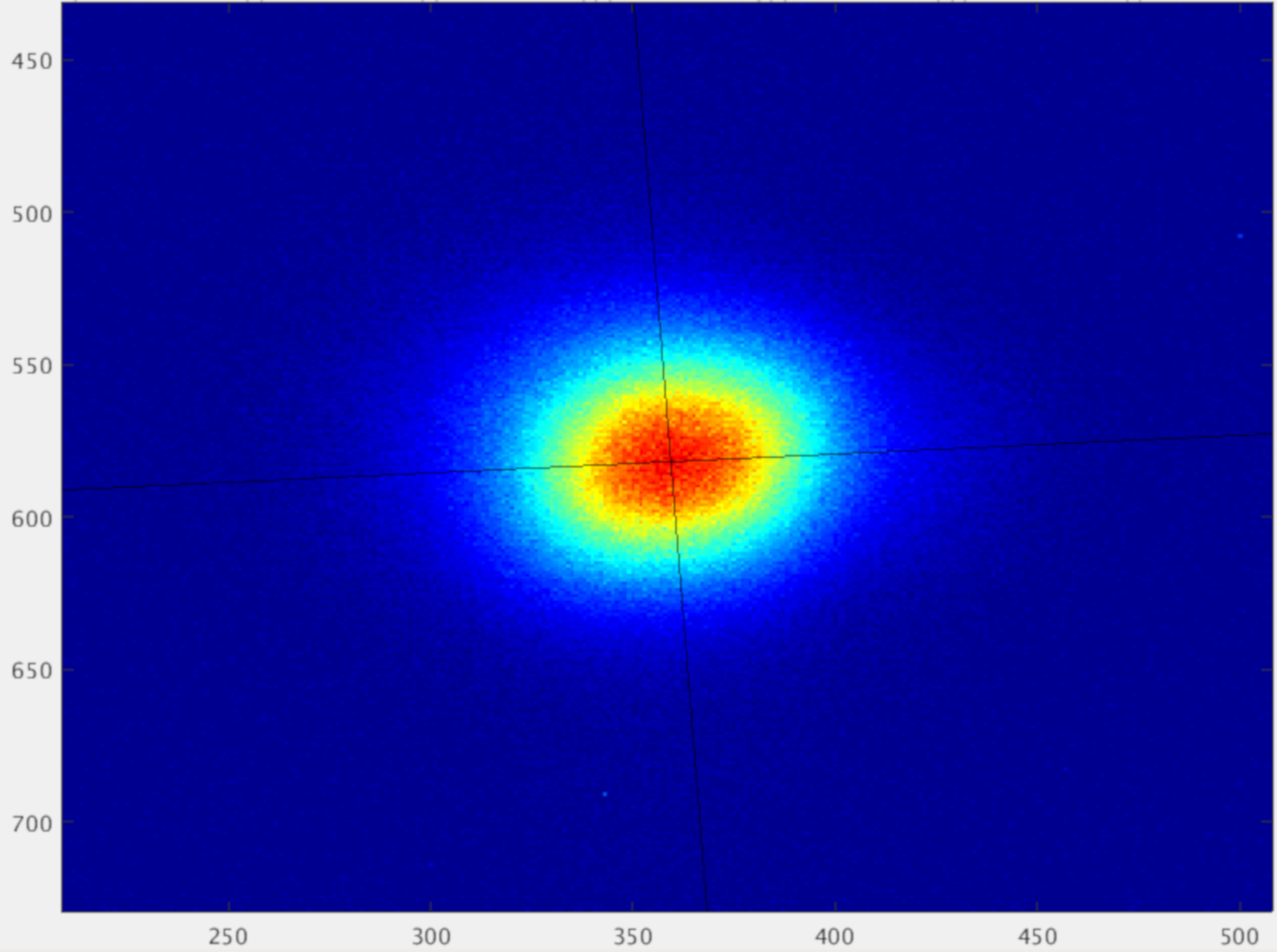
Using a unique optical trapping system that provides ensembles of ultracold atoms, Berkeley Lab scientists have recorded the first direct observations of distinctly quantum optical effects – amplification and squeezing – in an optomechanical system. Their findings point the way toward low-power quantum optical devices and enhanced detection of gravitational waves among other possibilities.

MORE>

Ask a Scientist About Extreme Weather and Climate Change

August 13, 2012

Do you have questions about droughts, heat waves, extreme weather, and climate change? Ask a scientist! Michael Wehner is a climate scientist in Berkeley Lab’s Computational Research Division. He uses high-performance computing to study extreme weather events in a changing climate, especially heat waves, floods, droughts and hurricanes.

MORE>

New Phenomenon in Nanodisk Magnetic Vortices

August 7, 2012

New findings from a team of Berkeley Lab and Japanese scientists suggest that the road to magnetic vortex RAM might be more difficult to navigate than previously supposed, but there might be unexpected rewards as well. A study at the Advanced Light Source revealed that contrary to suppositions, the formation of magnetic vortices in ferromagnetic nanodisks is an asymmetric phenomenon.

MORE>

A Direct Look at Graphene

August 1, 2012

Berkeley Lab researchers have recorded the first direct observations at microscopic lengths of how electrons and holes respond to a charged impurity in graphene. The results point to interactions between electrons as being critical to graphene’s extraordinary properties.

MORE>

A U.S. Department of Energy National Laboratory Operated by the University of California
UC logo
Questions & CommentsPrivacy & Security Notice