Lawrence Berkeley National Laboratory masthead A-Z Index Berkeley Lab masthead U.S. Department of Energy logo Phone Book Jobs Search
Search the News Center:
  Follow:   YouTube Flickr Twitter Facebook
Posts Tagged ‘indoor air’

Berkeley Lab Analysis Finds Reduced Cooling and Heating May Improve Health

February 17, 2009

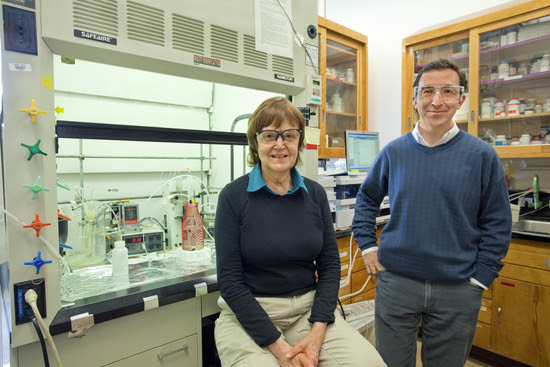
Research by Mark Mendell and Anna Mirer of Berkeley Lab’s Environmental Energy Technologies Division suggests that operating buildings in ways designed to save energy – with indoor temperatures slightly cooler in winter and warmer in summer – not only saves energy but improves the health of the occupants and makes them more comfortable besides.

Read More>

Gauging Indoor Air Quality

July 14, 2008

Air-quality research has focused on the outdoors even though most people spend the majority of their time indoors. Berkeley Lab’s Environmental Energy Technologies Division has developed a website that provides up-to-date information on how indoor air quality affects human health and work

Read More>

Berkeley Lab Scientists Find Evidence of Link

January 23, 2008

Contact: Allan Chen (510) 486-4210

BERKELEY, CA — A team of researchers at the U.S. Department of Energy’s Lawrence Berkeley National Laboratory (Berkeley Lab) has found evidence that the prevalence of building-related symptoms (BRS) increases with increasing outdoor concentrations of the pollutant ozone. They have also discovered that [...]

Read More>

Behind Closed Doors: Beware the Air

June 21, 2007

Contact: Allan Chen, a_chen@lbl.gov

Those factors in the home that cause or exacerbate asthma and allergies in children are not well understood, but scientists agree they include allergens like dust mites, mold, and environmental tobacco smoke.
Mark Mendell, an epidemiologist in Berkeley Lab’s Environmental Energy Technologies Division, suggests another set of factors worth investigating: emissions from common [...]

Read More>

Berkeley Lab Program Helps Building Managers Prepare for Chemical, Biological, and Radiological Threats

September 21, 2004

Contact: Allan Chen, (510) 486-4210, a_chen@lbl.gov

BERKELEY, CA – A team of researchers at the Department of Energy’s Lawrence Berkeley National Laboratory has developed an interactive computer program that building managers [...]

Read More>

When Mold Runs Amok

July 14, 2004

Contact: Allan Chen, a_chen@lbl.gov

Mold growth in buildings and its purported effects on human health have been in the news a lot in recent years. Mold-related litigation and claims against insurance companies for mold and other moisture-related [...]

Read More>

Berkeley Lab Recognized for Efforts to Protect Buildings From Chemical and Biological Weapon Attacks

May 26, 2004

Contact: Allan Chen, Environmental Energy Technologies Division, (510) 486-4210, a_chen@lbl.gov
Pam Seidenman, Technology Transfer Department, (510) 486-6461, psseidenman@lbl.gov

A team from the U.S. Department of Energy’s Lawrence Berkeley National Laboratory [...]

Read More>

Berkeley Lab Researchers Develop Concise Website on Handling Chemical-Biological Attacks Against Buildings

April 3, 2002

Contact: Allan Chen (510) 486-4210 a_chen@lbl.gov
BERKELEY, CA —  U.S. police, fire, and emergency service agencies have been racing to better prepare for terrorist attacks using chemical or biological agents on their communities. Now, researchers [...]

Read More>

Berkeley Lab Model Tracks Indoor Anthrax Dispersal

March 29, 2002

Contact: Dan Krotz, dakrotz@lbl.gov

An anthrax-contaminated letter closed the Hart Senate Office Building for several months. Berkeley Lab researchers have developed a model for studying the dispersal of anthrax [...]

Read More>

Top
A U.S. Department of Energy National Laboratory Operated by the University of California
UC logo    Office of Science logo
Questions & Comments · Privacy & Security Notice