All News

Cracking the Code: Using AI to Solve Difficult-to-Map Proteins
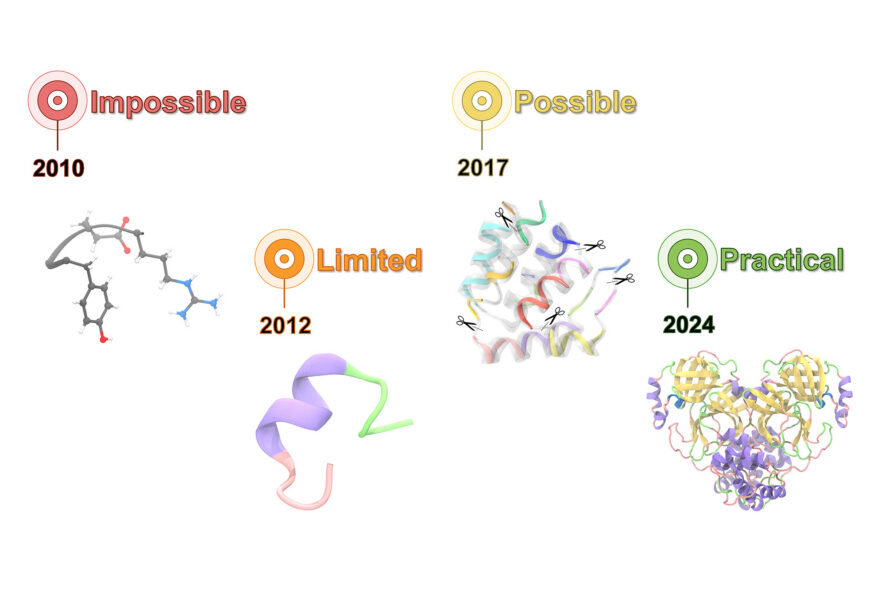
Graphic showing a timeline of progress in protein design from 2010 to 2024. In 2010, labeled “Impossible,” a small chemical structure is shown. In 2012, labeled “Limited,” a simple ribbon-like protein fragment appears. In 2017, labeled “Possible,” a more complex folded protein structure is shown with scissors icons indicating editable segments. In 2024, labeled “Practical,” a large, detailed multi-part protein complex is displayed. The layout visually conveys increasing capability and complexity over time.

Two Berkeley Lab Scientists Elected to the National Academy of Engineering
A circular photo portrait of a male scientist and a female scientist on a blue-green gradient background.

Foundational AI Models to Accelerate Biological Discovery
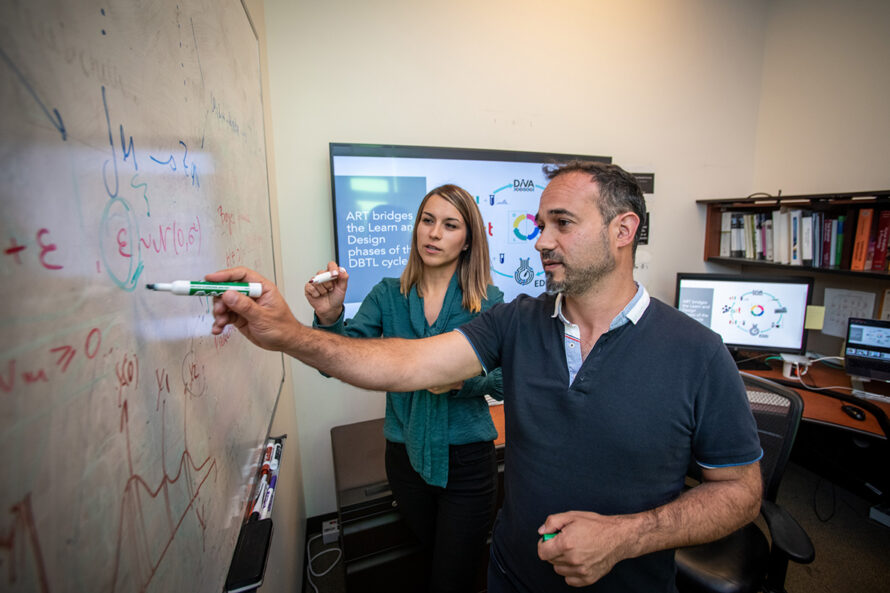
Two researchers write on a white board.

Cracking the Genome’s Switchboard: How AI Helps Decode Gene Regulation
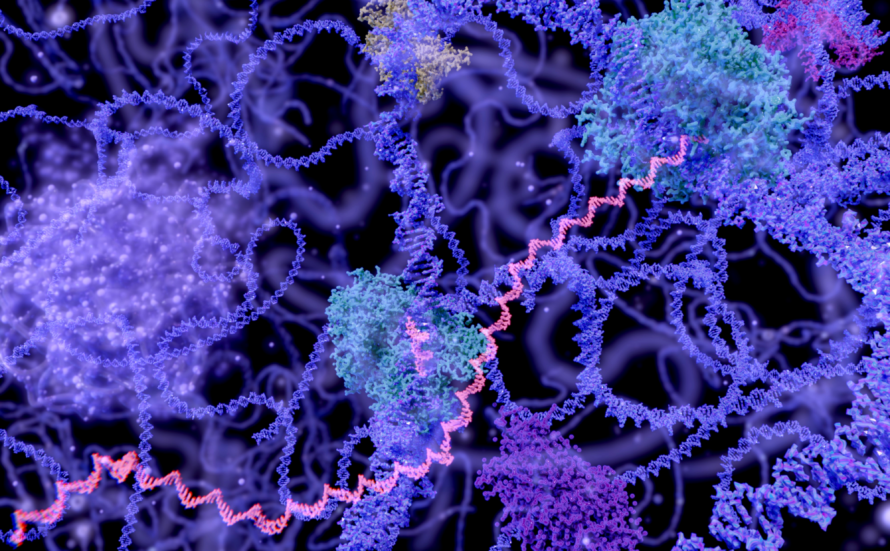
Purple double helices cluster on a black background, with blue clump-shaped molecules wrapped around the strands

Expert Interview: Marc Allaire on Breakthrough Medical Discoveries at the ALS
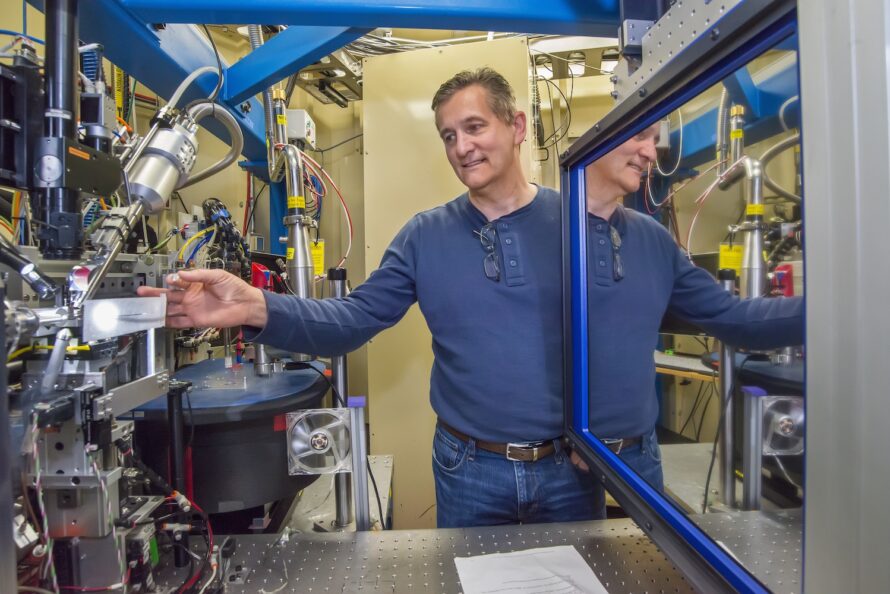
A man in a blue shirt stands smiling next to a metallic instrument with many separate components connected by tubes and wires.

Computational Chemistry Unlocked: A Record-Breaking Dataset to Train AI Models has Launched
An abstract decorative representation of atoms in molecules interacting. Many colorful interconnecting particles on a black field.

From Sequence to Structure: A Fast Track for RNA Modeling
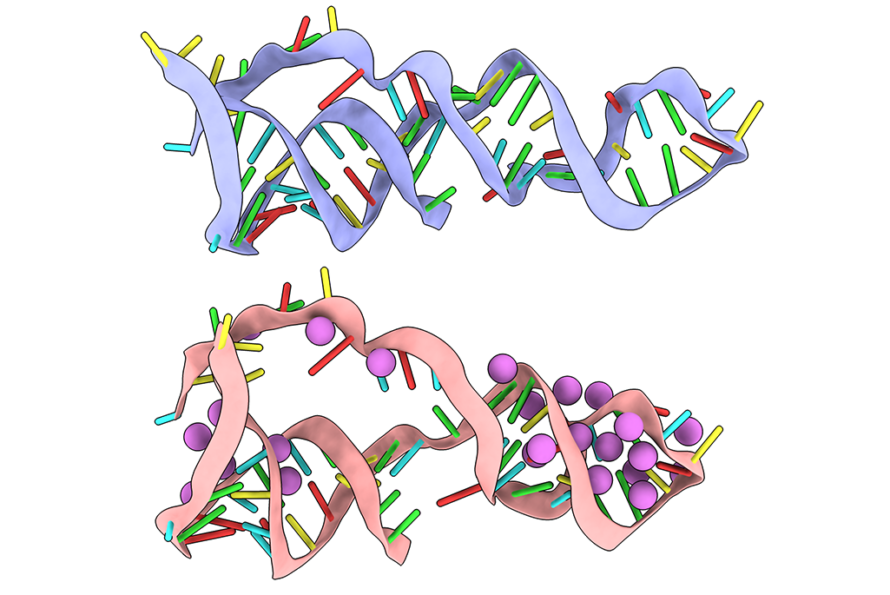
Two 3D renderings of a RNA molecule with a twisted ribbon-like backbone with multicolored bars protruding. The image on top has a blue backbone, the image below is pink, and also includes purple balls placed at certain points of the backbone.

Unraveling the Mysteries of DNA Damage in the Brain

Immunofluorescent staining of mouse brain, showing neurons and glial cells in the hippocampus. Blue are cell nuclei, while green are microfilaments of the cell extensions, red is a marker of DNA damage and is predominantly in the neurons.

Revealing the Mysteries Within Microbial Genomes

A digital illustration of light green rod-shaped bacteria floating in front of an uneven dark green surface suggestive of the gut lining.

A Better Understanding of DNA Unpacking

A digital illustration showing a strand of DNA (red and blue) wrapped around histone proteins (gray). The DNA strand comprising each chromosome is tightly packed into clusters of wrapped histones to compress the long molecule and streamline separation of copied chromosomes during cell replication. The strand is carefully unwound by different enzymes, including TIP60, to make it accessible for duplication and gene expression. (Credit:Wirestock Creators/Shutterstock)

Caught in the Actinium

Jen Wacker processes a sample of actinium at Berkeley Lab.

How to Make Sustainable Products Faster with Artificial Intelligence and Automation

A person in a navy top standing with their arms crossed in front of a hallway.