All News

What a Genome-Wide Screening Can Reveal about Cancer Survival

Study: Soils Could Release Much More Carbon Than Expected as Climate Warms

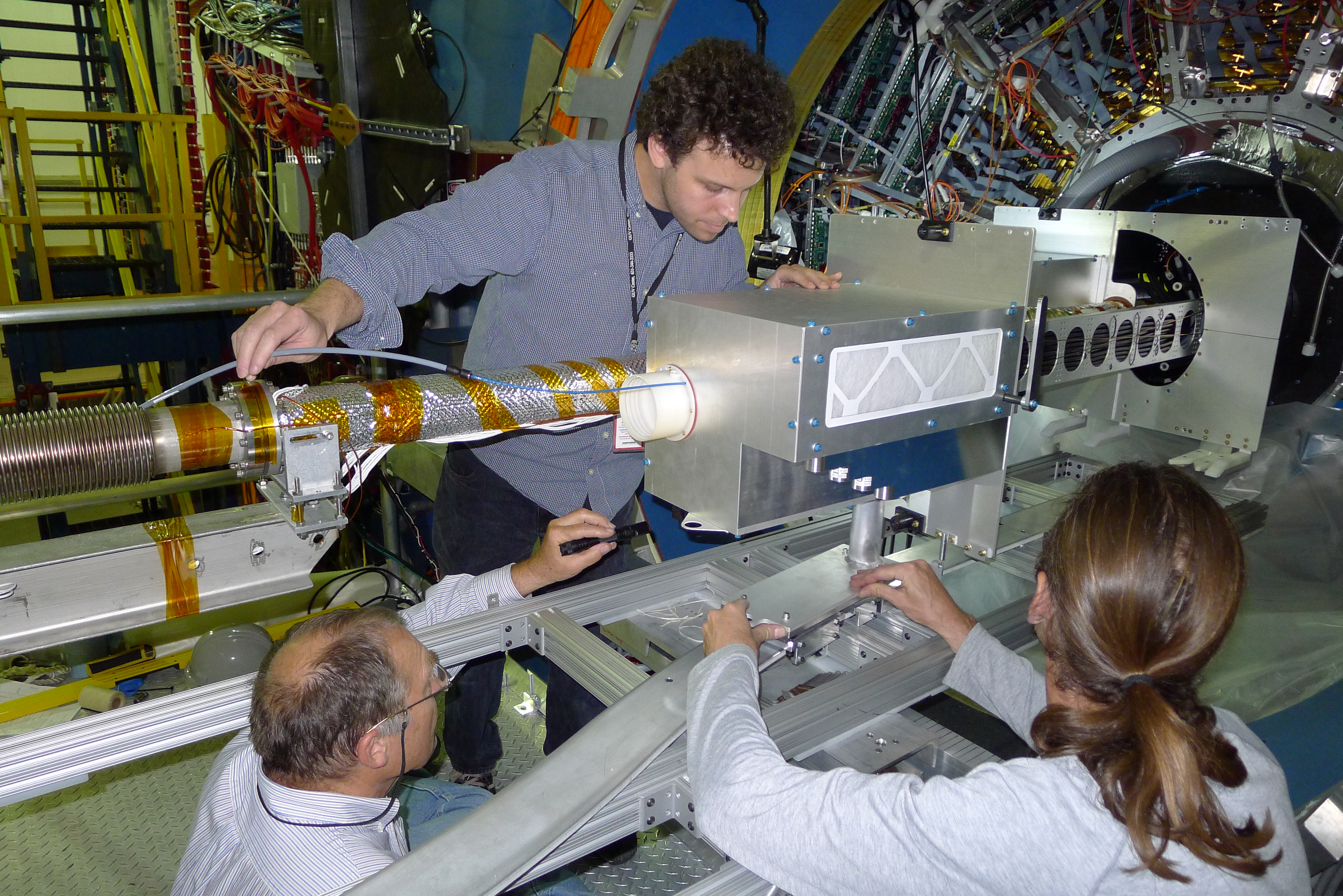
Scientist Caitlin Hicks Pries downloads soil temperature data while fellow Berkeley Lab scientists Cristina Castanha (left) and Neslihan Tas (middle) work on an experimental plot in the background.

Attention Earthlings: Help Wanted in Finding a New Planet

Image - The public is now invited to participate in the hunt for a hypothetical ninth planet in our solar system, dubbed Planet Nine. This image shows an artist's concept of how Planet Nine may appear—if it exists. (Credit: NASA)

New Materials Could Turn Water into the Fuel of the Future

Researchers are using a new high-throughput method of identifying new materials.

New Evidence for a Water-Rich History on Mars

Image - This image of Mars was created from about 1,000 Viking Orbiter images. (Credit: NASA Jet Propulsion Laboratory, U.S. Geological Survey)

New Projects to Make Geothermal Energy More Economically Attractive

Cyclotron Road Researchers Hit Their Stride, Bringing Benefits for Berkeley Lab Scientists Along the Way

Getting to Know Meteors Better

Illustration - Asteroids pass close to Earth in this illustration. NASA is partnering with Berkeley Lab to study meteorite materials to better understand how meteors fracture as they enter Earth’s atmosphere and assess the risks they pose. (Credit: ESA/P.Carril)

A New Paradigm in Parachute Design

Photo - This array of parachutes, designed for NASA’s Orion spacecraft, is seen here during a test above Eloy, Ariz., in 2015. Several parachute designs for Orion have also been tested in NASA wind tunnels. (Credit: NASA)

The Heat is On

Photo - The Mars Science Laboratory, which landed the Curiosity rover on MARS, featured the largest heat shield (the underside is shown here)—at 14 feet 9 inches in diameter—to enter a planet’s atmosphere. NASA is now engaging in R&D for even larger heat shields made of flexible, foldable material that can open up like an umbrella to protect spacecraft during atmospheric entry. (Credit: NASA/JPL-Caltech/Lockheed Martin)

When Rocket Science Meets X-ray Science

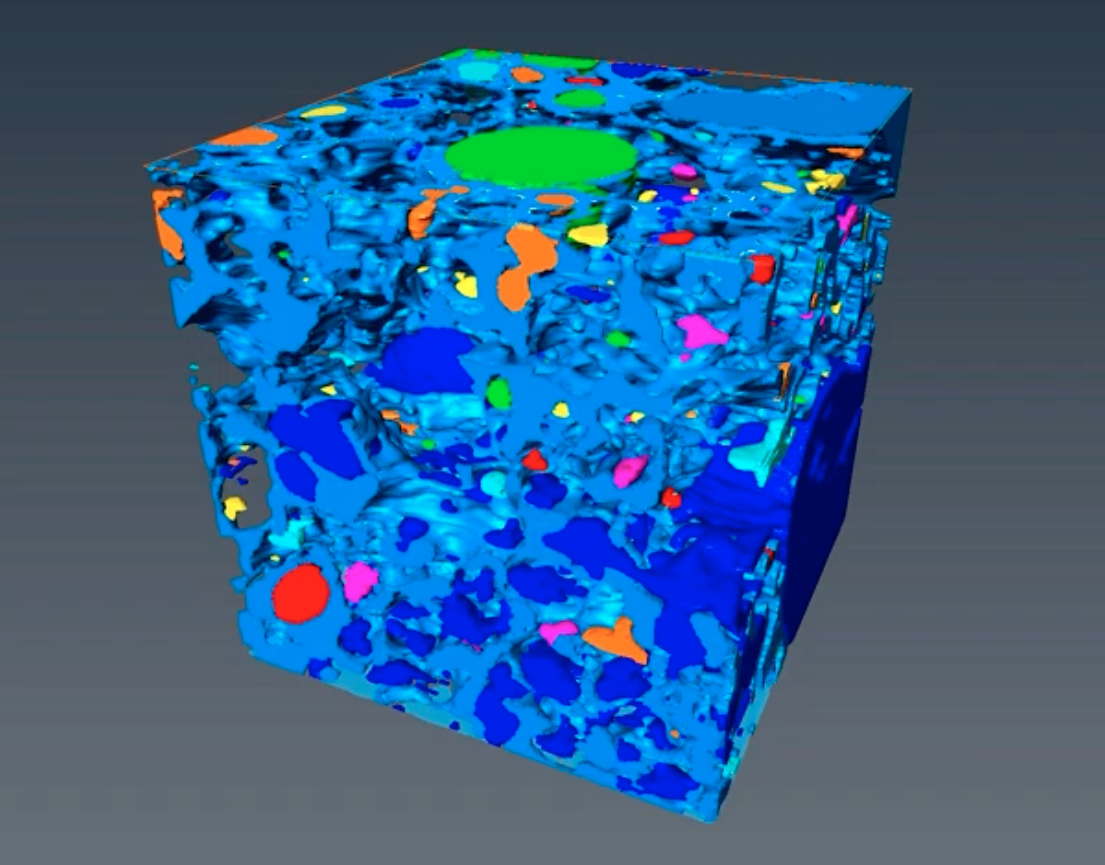
Photo - Francesco Panerai of Analytical Mechanical Associates Inc., a materials scientist leading a series of X-ray experiments at Berkeley Lab for NASA Ames Research Center, discusses a 3-D visualization (shown on screens) of a heat shield material's microscopic structure in simulated spacecraft atmospheric entry conditions. The visualization is based on X-ray imaging at Berkeley Lab’s Advanced Light Source. (Credit: Marilyn Chung/Berkeley Lab)

Researchers Catch Extreme Waves with High-Resolution Modeling