
All News

Construction of World’s Most Sensitive Dark Matter Detector Moves Forward
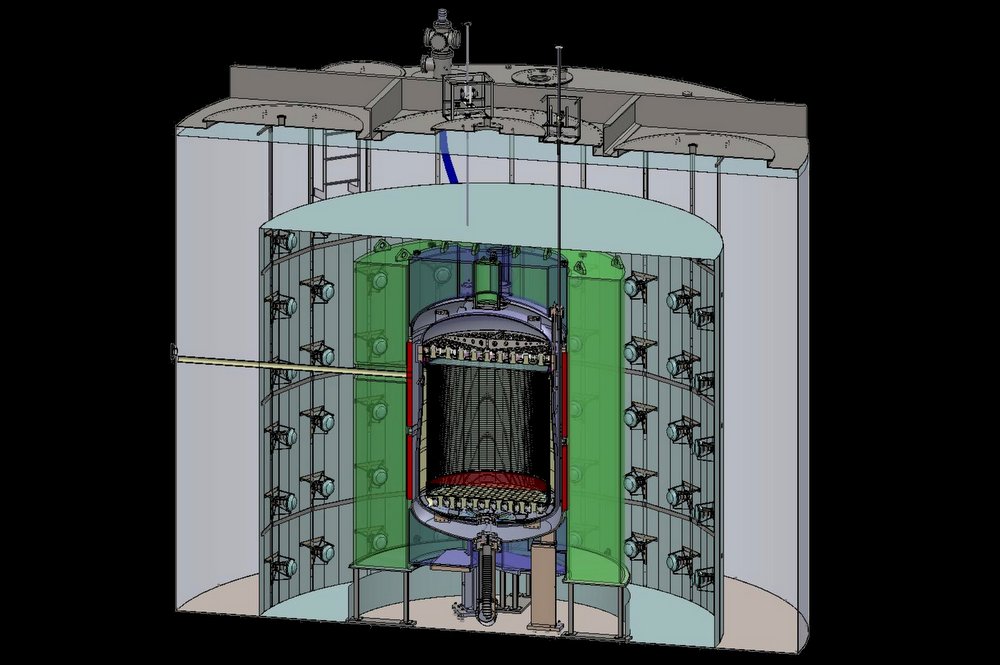
Photo - A cutaway rendering of the LUX-ZEPLIN (LZ) detector that will be installed nearly a mile deep near Lead, S.D. The central detector will be filled with 10 metric tons of purified liquid xenon that produces flashes of light and electrical pulses in particle interactions. An array of detectors, known as photomultiplier tubes, are designed to amplify and measure these particle signals. (Credit: Matt Hoff/Berkeley Lab)

Scientists Find Twisting 3-D Raceway for Electrons in Nanoscale Crystal Slices
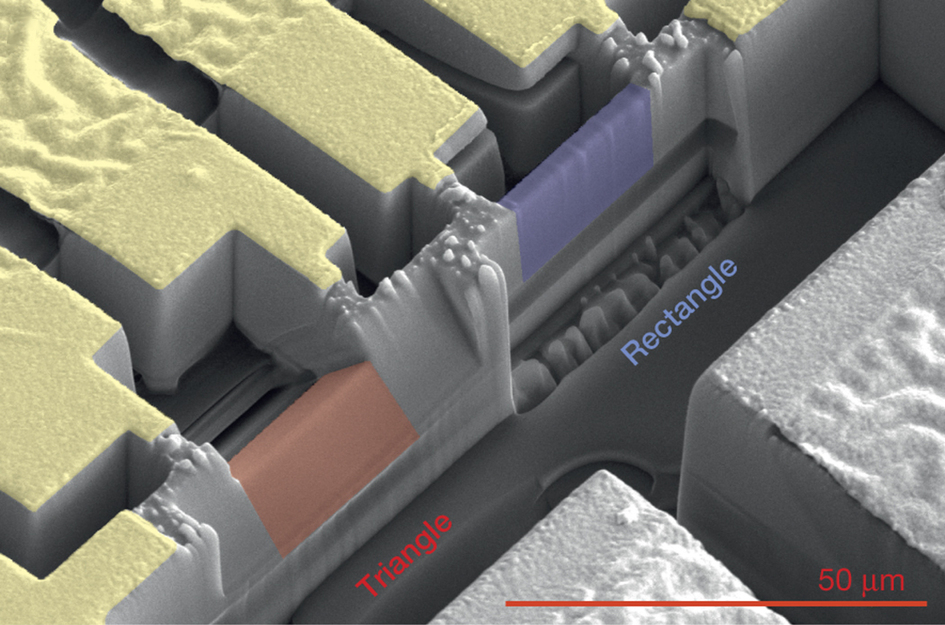
Photo - A scanning electron microscope image shows triangular (red) and rectangular samples of a semimetal crystal known as cadmium arsenide. The rectangular sample is about 0.8 microns (thousandths of a millimeter) thick, 3.2 microns tall and 5 microns long. The triangular sample has a base measuring about 2.7 microns. The design of the triangular samples, fabricated at Berkeley Lab’s Molecular Foundry, proved useful in mapping out the strange electron orbits exhibited by this material when exposed to a magnetic field. (Credit: Nature, 10.1038/nature18276)

Ed Lofgren, Pioneering ‘Rad Lab,’ Berkeley Lab, and Manhattan Project Physicist, dies at 102
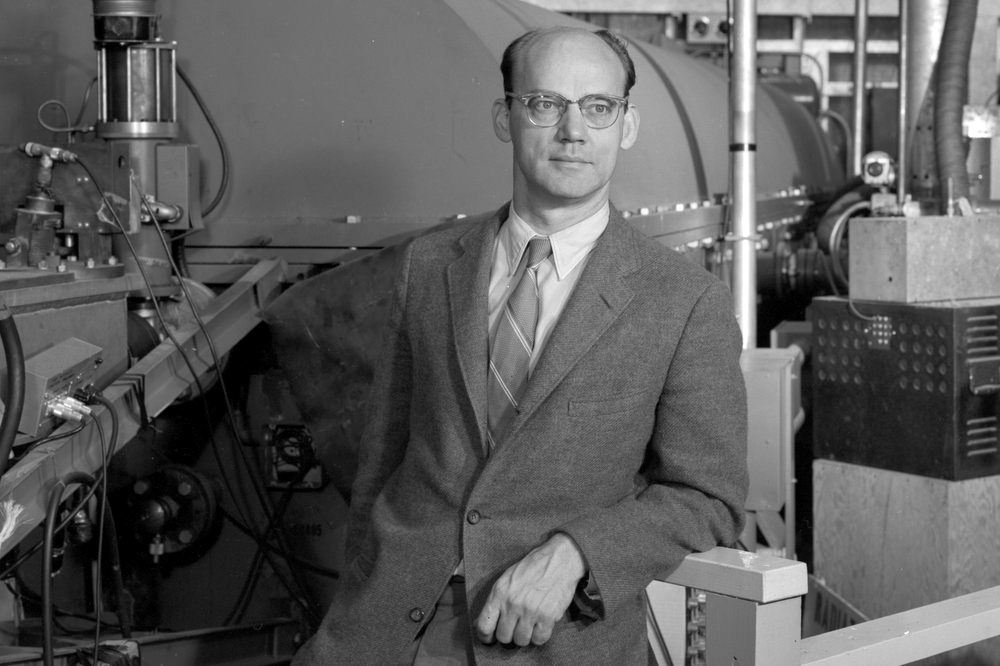
Photo - Ed Lofgren at Berkeley Lab in 1966. (Credit: Marilee B. Bailey/Berkeley Lab)

A Conscious Coupling of Magnetic and Electric Materials
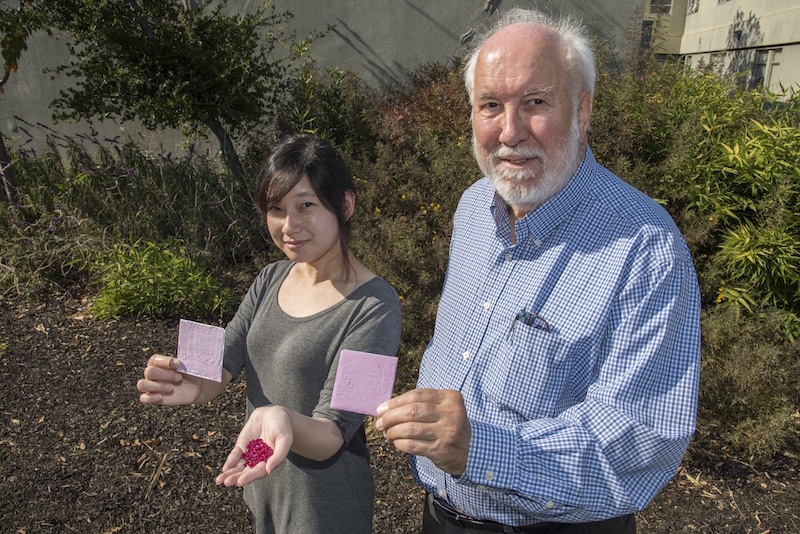
We’re Not in Kansas Anymore: Fluorescent Ruby Red Roofs Stay as Cool as White
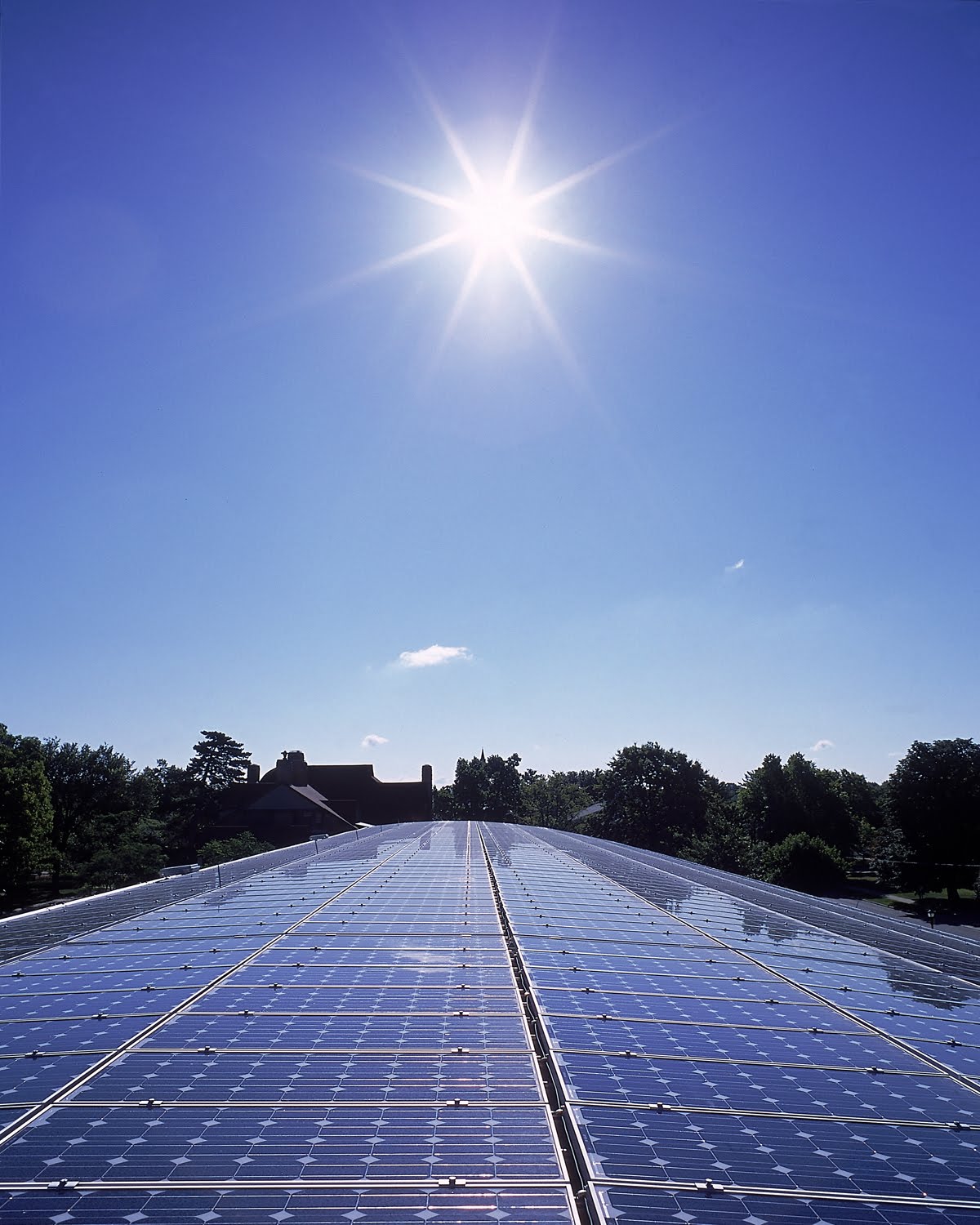
Nine Innovative Approaches That Utilities are Using to Plan for Increased Rooftop Solar
Nanoscale Tetrapods Could Provide Early Warning of a Material’s Failure
Let There Be (More) Light

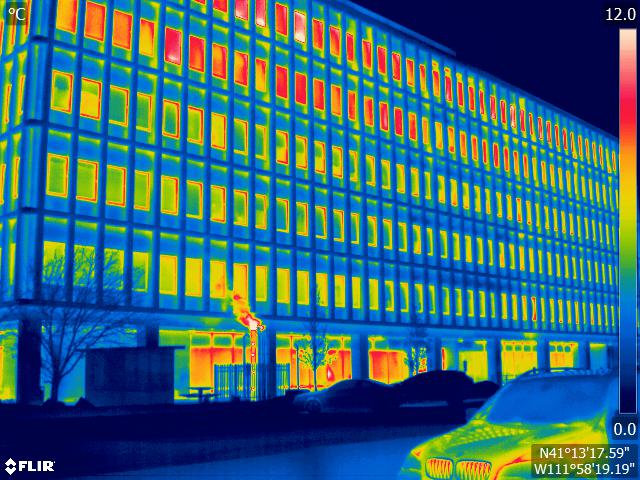
Berkeley Lab Awarded DOE Grants for Greener Buildings
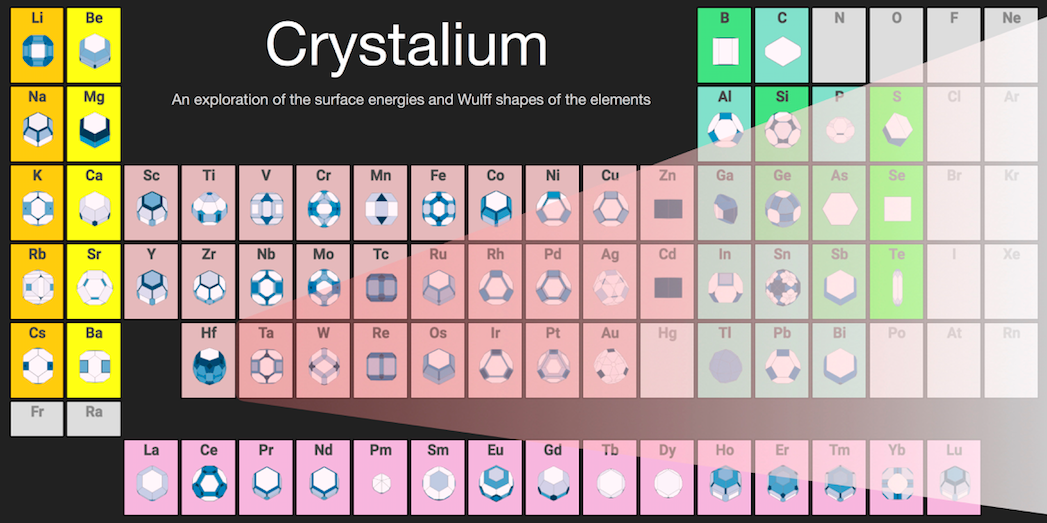
Researchers Build World’s Largest Database Of Crystal Surfaces And Shapes
Experts Anticipate Significant Continued Reductions in Wind Energy Costs
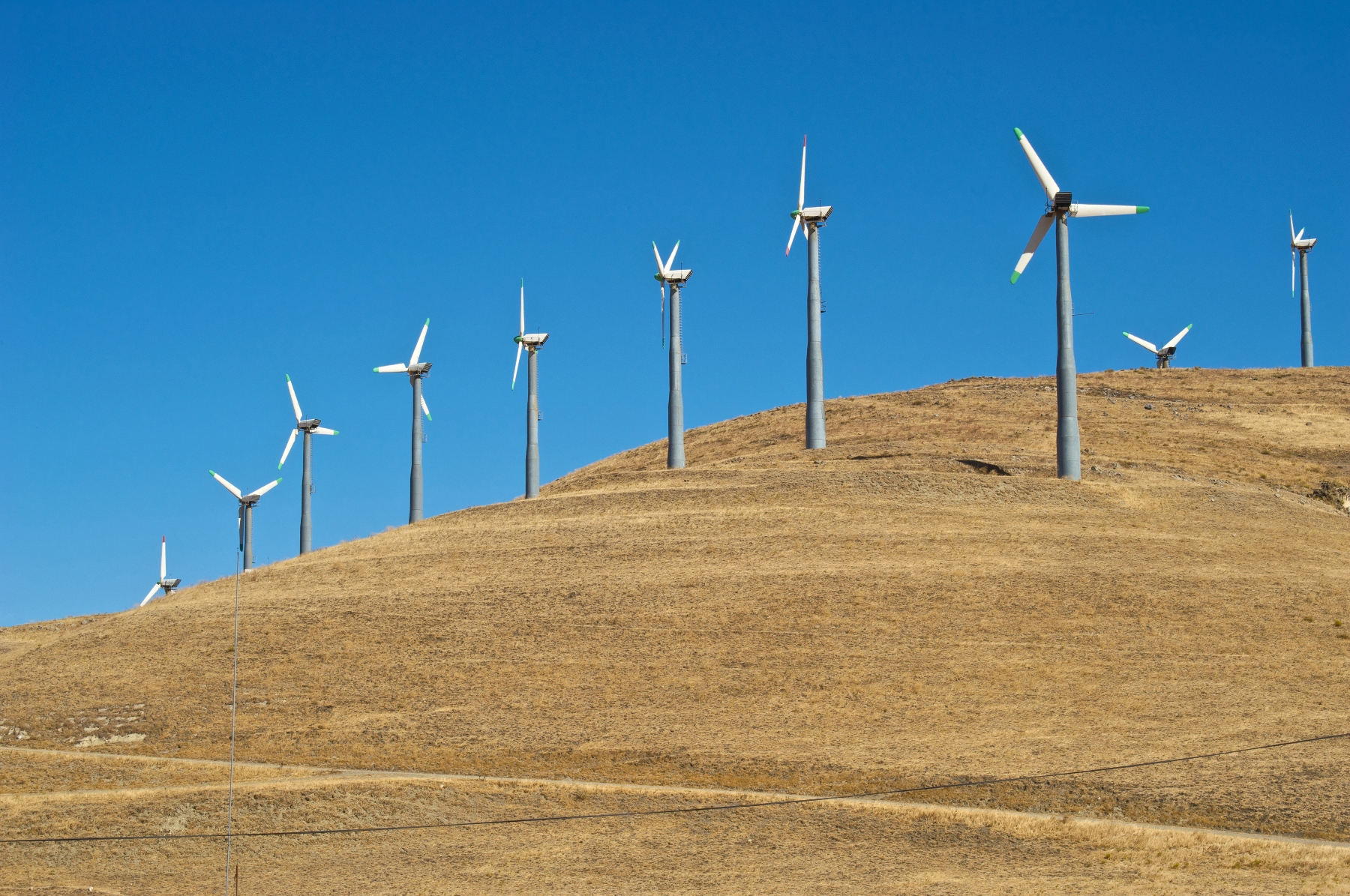
Wind turbines along a hill

Teams of Scientists Gather at Berkeley Lab to Study Secrets of Plants’ Plumbing
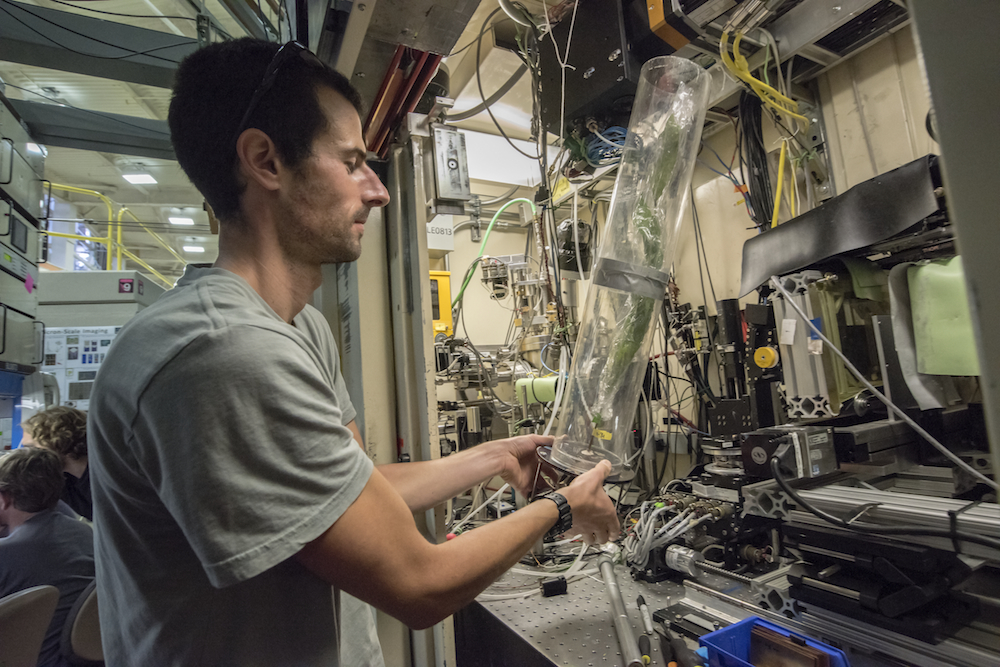
Photo - Thorsten Knipfer, a UC Davis postdoctoral researcher, carries an American chestnut sapling into the experimental chamber at Berkeley Lab’s Advanced Light Source. Knipfer and other researchers used X-rays at ALS Beamline 8.3.2 to scan the stems of dozens of saplings. The work will produce 3-D reconstructions of the stems’ microscopic structure. (Credit: Marilyn Chung/Berkeley Lab)