All News

Berkeley Team Plays Key Role in Analysis of Particle Interactions That Produce Matter From Light

Image - This image shows a reconstruction of a particle interactions event at CERN’s ATLAS detector that produced W bosons from photons, particles of light. (Credit: ATLAS collaboration)

CERN’s Large Hadron Collider Creates Matter From Light

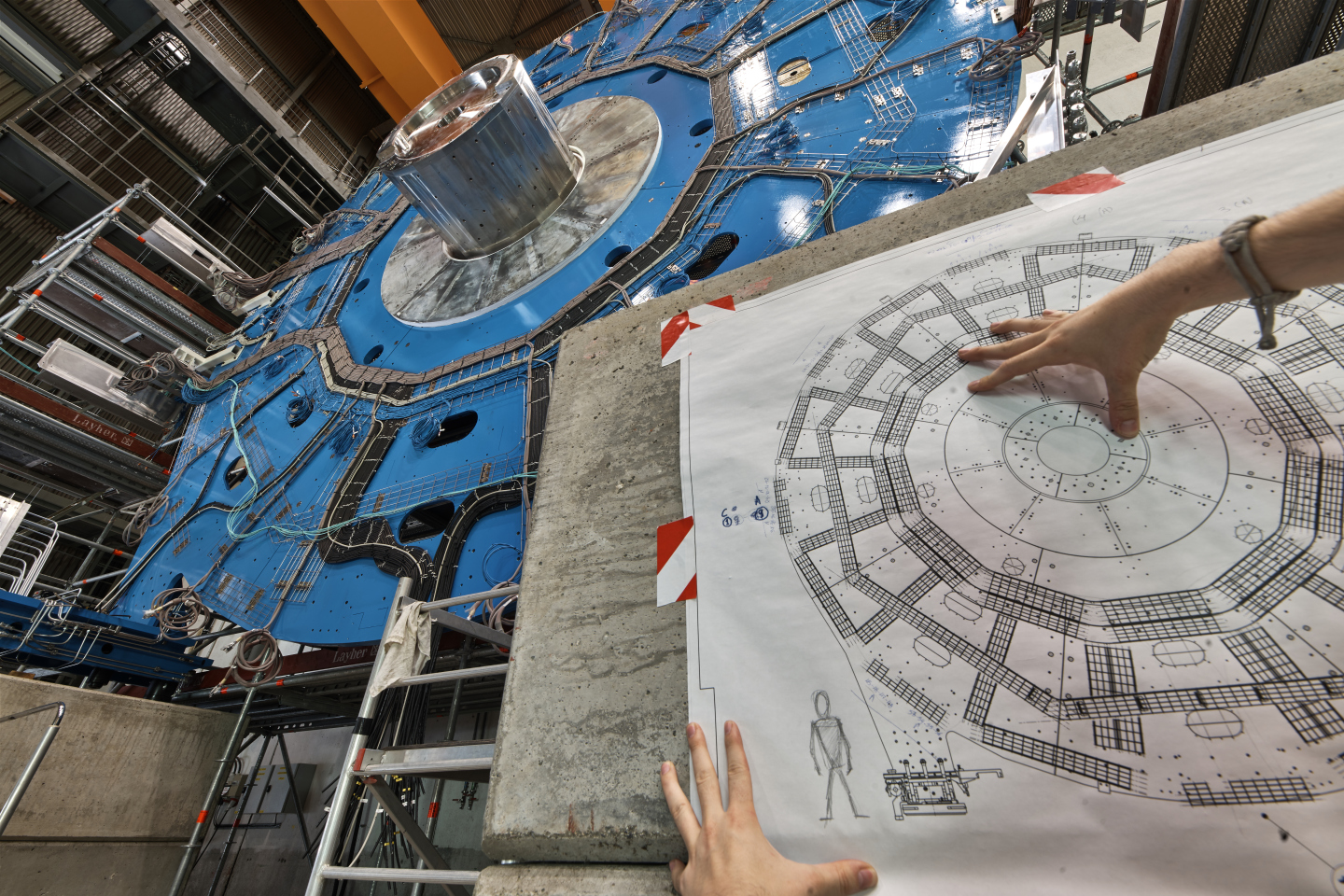
Photo - The ATLAS detector at CERN's Large Hadron Collider. (Credit: CERN)

Lead Lab Selected for Next-Generation Cosmic Microwave Background Experiment

Photo - This image, from “Eternal Sky,” a video series about the Simons Observatory, shows the Atacama Desert site where some of the telescopes for the CMB-S4 experiment will be built. (Credit: Copyright Debra Kellner/Simons Foundation)

Aerial Video: Berkeley Lab From Above

Photo - This image, taken from a drone video of the Berkeley Lab site, shows the domed Advanced Light Source building at right, among other buildings at the site. (Credit: Thor Swift/Berkeley Lab)

Lab Researcher and Physics Undergrad Shares Poster Project Honoring Black Physicists

Collage - A collage showing the first six posters in Ana Lyons' series honoring black physicists. (Credit: Ana Lyons)

New $115 Million Quantum Systems Accelerator to Pioneer Quantum Technologies for Discovery Science

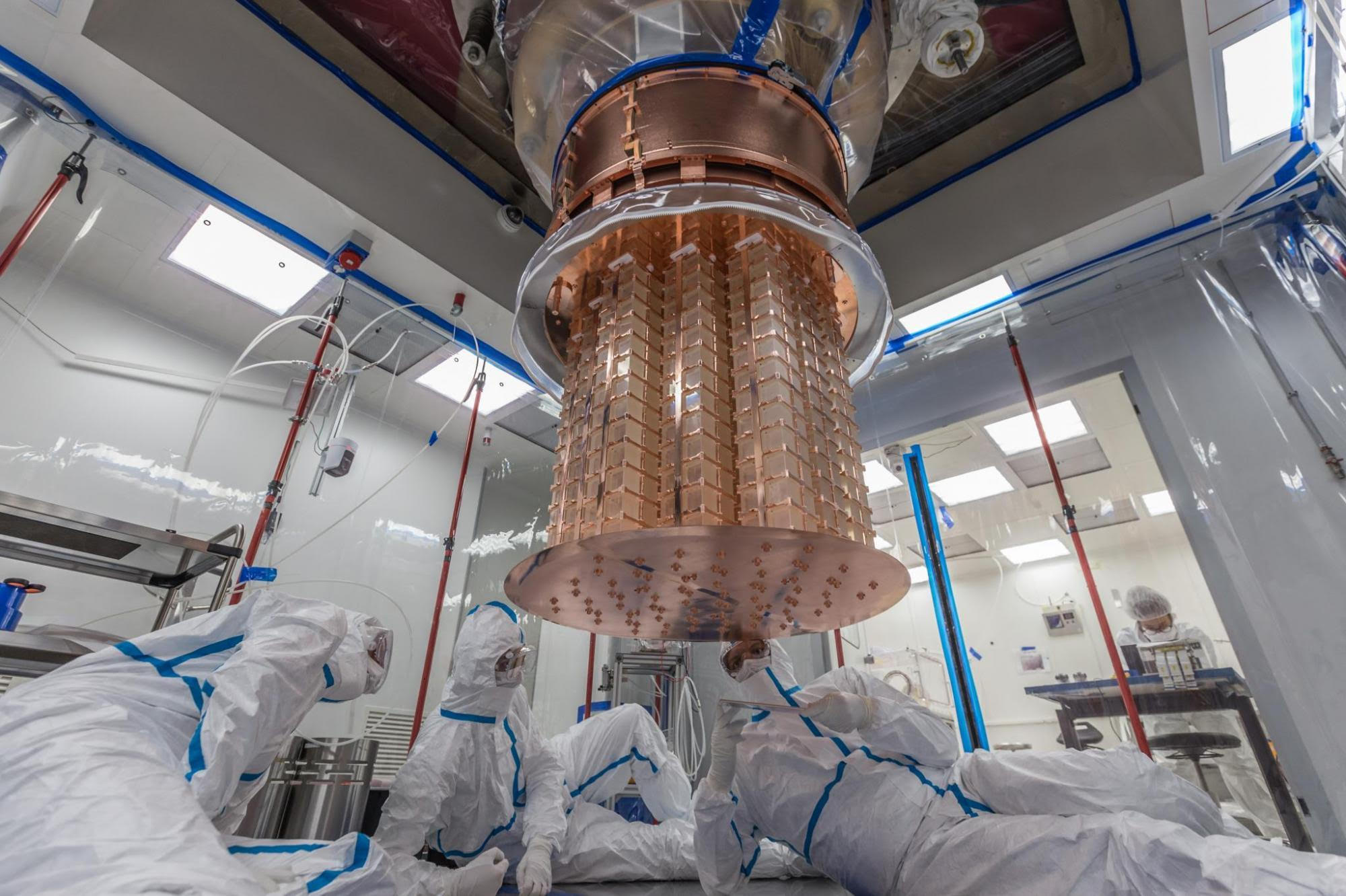
A supercomputing circuit, stored inside a special cooling chamber

Some of America’s Favorite Produce Crops May Need to Get a Move On by 2045

3 Awards Will Support Accelerator R&D for Medical Treatment, Miniaturization, and Machine Learning

Photo - Proton-beam therapy at the Paul Scherrer Institute in Switzerland. A Berkeley Lab researcher is working with PSI and Varian Medical Systems to develop a new system with improve beam performance. (Credit: Center for Proton Therapy/PSI)

2D Electronics Get an Atomic Tuneup

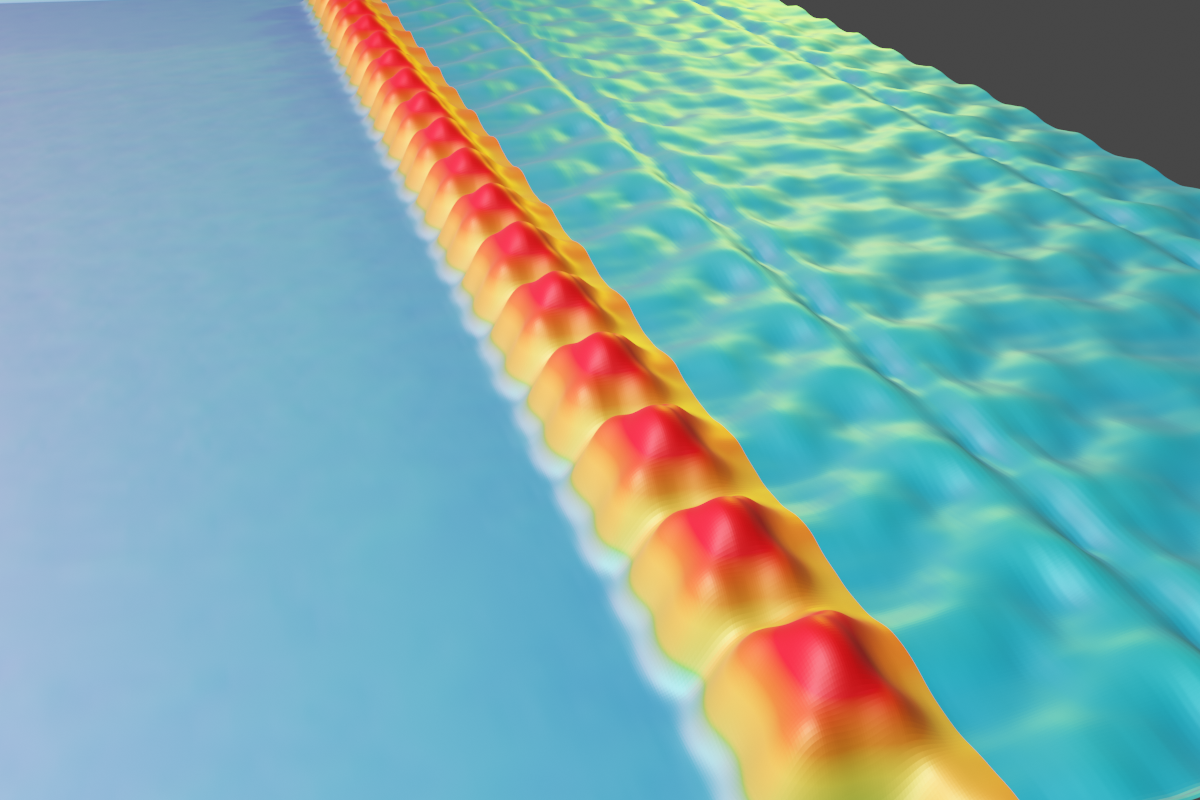
Electron microscopy experiments revealed meandering stripes formed by metal atoms of rhenium and niobium in the lattice structure of a 2D transition metal dichalcogenide alloy. (Image courtesy of Amin Azizi)

Toward an Ultrahigh Energy Density Capacitor

To make the new material, the thin film is first deposited via a pulsed-laser deposition process in this chamber. The bright “plume” you see is the laser hitting the target and depositing the material.

Low-Cost Home Air Quality Monitors Prove Useful for Wildfire Smoke

panoramic view of SF Bay on clear vs polluted days

New NSF Physics Frontier Center Will Focus on Neutron Star Modeling in ‘Gravitational Wave Era’

Image - This rendering shows the density of matter in the aftermath of two merged neutron stars, resulting in the formation of a black hole. (Credit: David Radice/Pennsylvania State University)