All News

Uncovering Uncultivated Microbes in the Human Gut

Engineering Living ‘Scaffolds’ for Building Materials

Nature’s Own Biorefinery

Scientists Take a Deep Dive Into the Imperfect World of 2D Materials

Image - This image, taken at Berkeley Lab's Molecular Foundry, shows an illustration of the atomic structure of a 2D material called tungsten disulfide. Tungsten atoms are shown in blue and sulfur atoms are shown in yellow. The background shows groupings of flakes of the material (dark gray) grown by a process called chemical vapor deposition on a titanium dioxide layer (light gray). (Credit: Katherine Cochrane/Berkeley Lab)

Using Tiny Organisms to Unlock Big Environmental Mysteries

A glass vial holds a water sample taken from a river

When Semiconductors Stick Together, Materials Go Quantum

Plumbing the Depths of Interfaces and Finding Buried Treasure

How to Catch a Magnetic Monopole in the Act

Laser ‘Drill’ Sets a New World Record in Laser-Driven Electron Acceleration

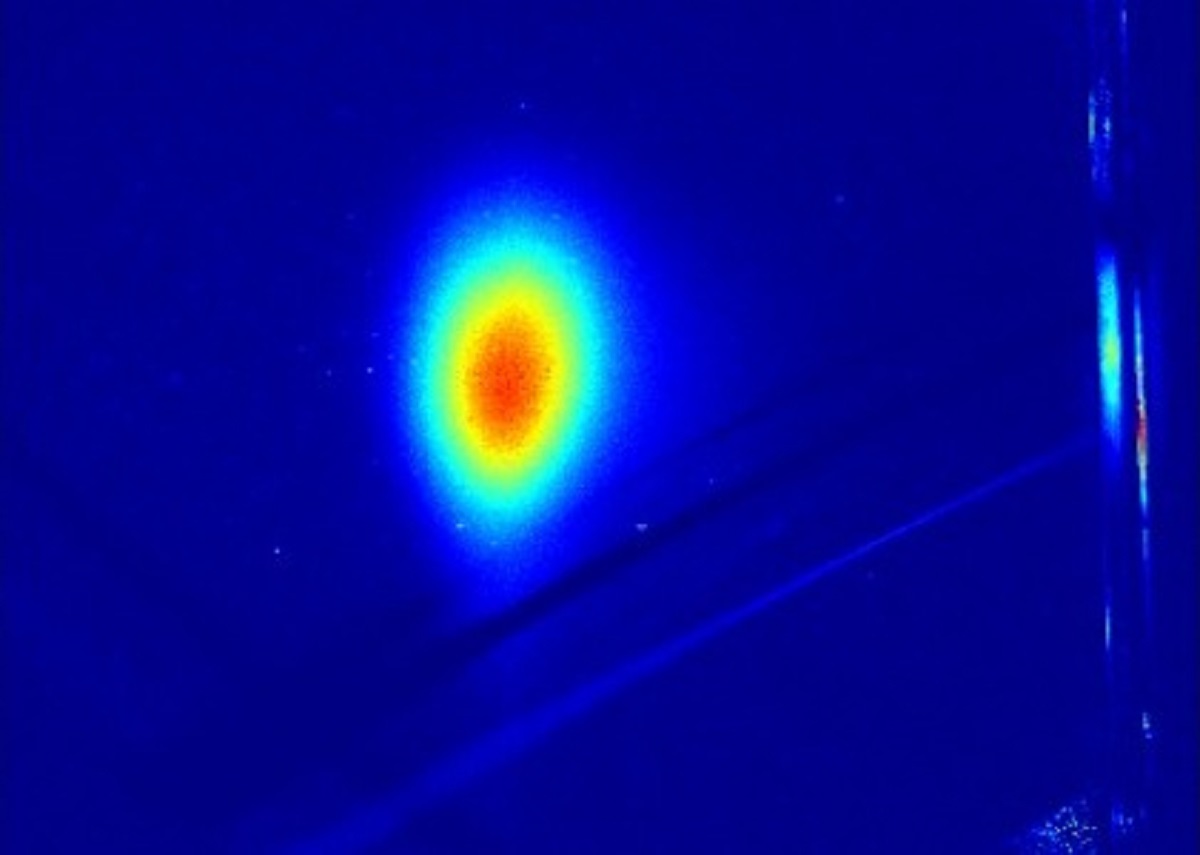
Image - A snapshot of a plasma channel’s electron density profile (blue) formed inside a sapphire tube (gray) with the combination of an electrical discharge and an 8-nanosecond laser pulse (red, orange, yellow). This plasma channel was used to guide femtoseconds-long “driver” laser pulses from the BELLA petawatt laser system, which generated plasma waves and accelerated electrons to 8 billion electron volts in just 20 centimeters. (Credit: Gennadiy Bagdasarov/Keldysh Institute of Applied Mathematics; Anthony Gonsalves and Jean-Luc Vay/Berkeley Lab)

Big Data at the Atomic Scale: New Detector Reaches New Frontier in Speed

Photo - A technician works on the TEAM 0.5 microscope. The microscope has been upgraded with a superfast detector called the 4D Camera that can capture atomic-scale images in millionths-of-a-second increments. (Credit: Thor Swift/Berkeley Lab)

New Molecular Blueprint Advances Our Understanding of Photosynthesis

Image - The cryo-EM structure of the NAD(P)H dehydrogenase-like complex (NDH). The atomic coordinate model shown as spheres, colored according to the different subunits, in front of an electron micrograph of frozen NDH particles in the background. (Credit: Thomas Laughlin/UC Berkeley and Berkeley Lab)

Preparing for a New Tool to Study the ‘Glue That Binds Us All’

Image - At left is a 1980s conception of the structure of the proton, which is a positively charged particle found in atomic nuclei. At right is our current understanding of the various subatomic particles – including quarks, antiquarks, and gluons – that make up the proton and contribute to a fundamental property known as spin. (Credit: Z.-E. Meziani)