
All News

Bringing Atomic Mapping to the Mainstream
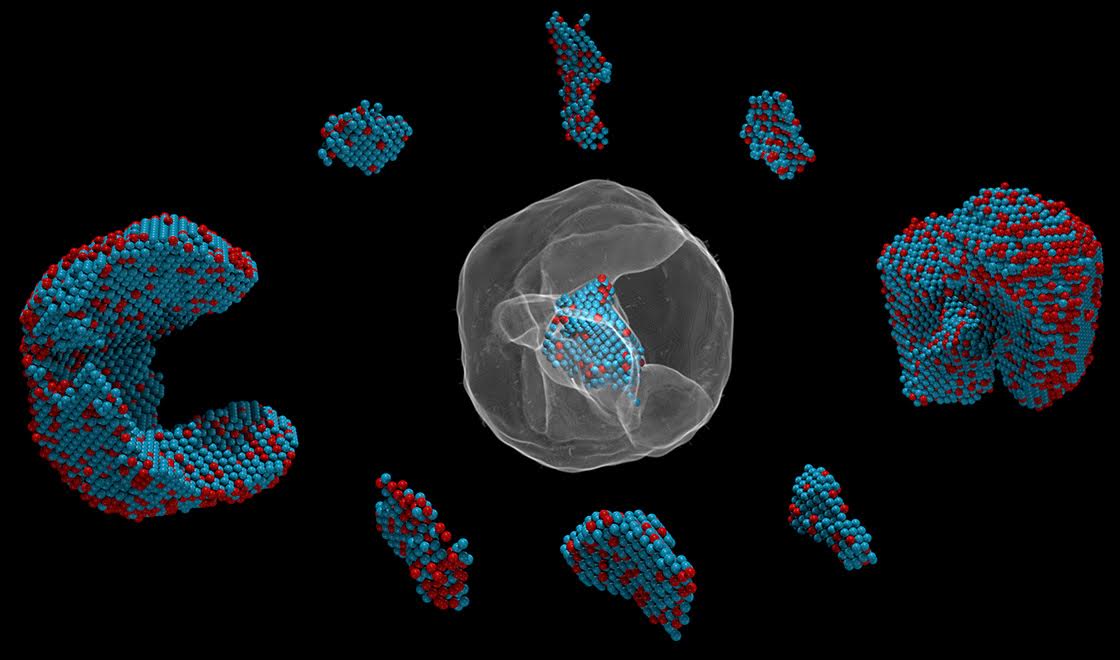
Image - This image shows the atomic composition of an iron-platinum nanoparticle. (Credit: Colin Ophus and Florian Niekiel/Berkeley Lab)

Scientists Fine-Tune System to Create ‘Syngas’ from CO2
X-ray Footprinting Solves Mystery of Metal-Breathing Protein
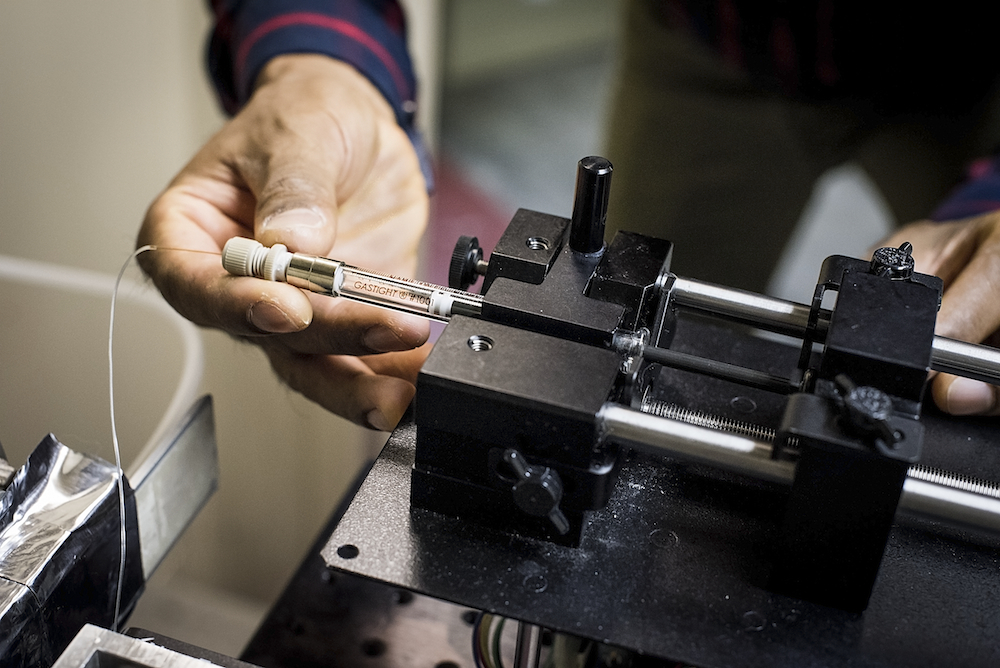
Photo - Sayan Gupta, an X-ray footprinting expert demonstrates a type of sample holder that was used to study how a protein binds to a mineral. (Credit: Paul Mueller)

Scientists Bring Visual ‘Magic’ to Light
New X-Ray Laser Technique Reveals Magnetic Skyrmion Fluctuations
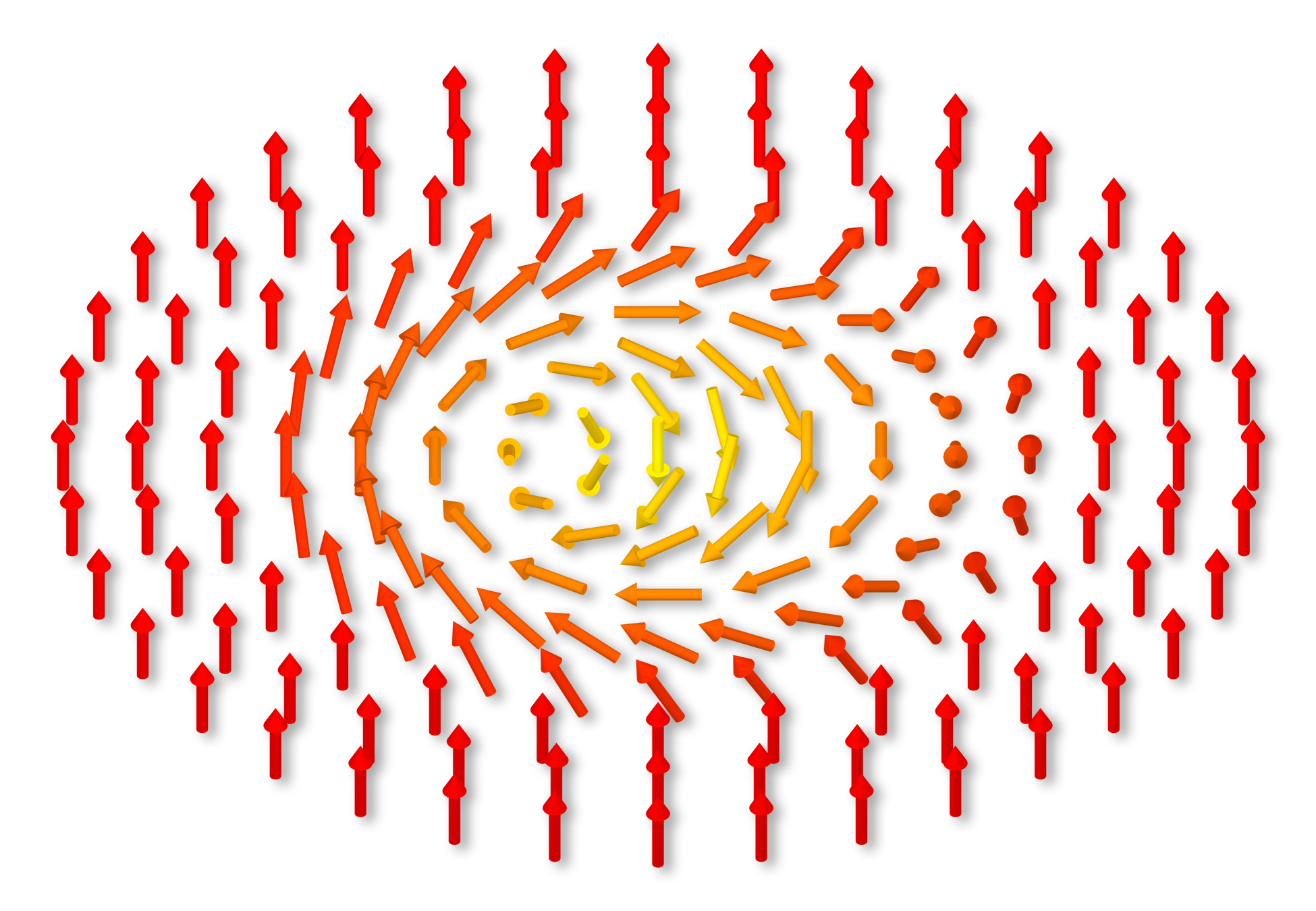
ILLUSTRATION - This graphic depicts the orientations of electron spins in a magnetic skyrmion that is 100 nanometers in diameter and composed of about 8 million atoms. The spin of the central atom points down (yellow), while those of the surrounding atoms change slowly, eventually flipping to the “up” orientation at the circumference. (Greg Stewart/SLAC National Accelerator Laboratory)

Scientists Developing Innovative Techniques for High-Resolution Analysis of Hybrid Materials
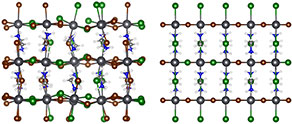
New Results Reveal High Tunability of 2-D Material
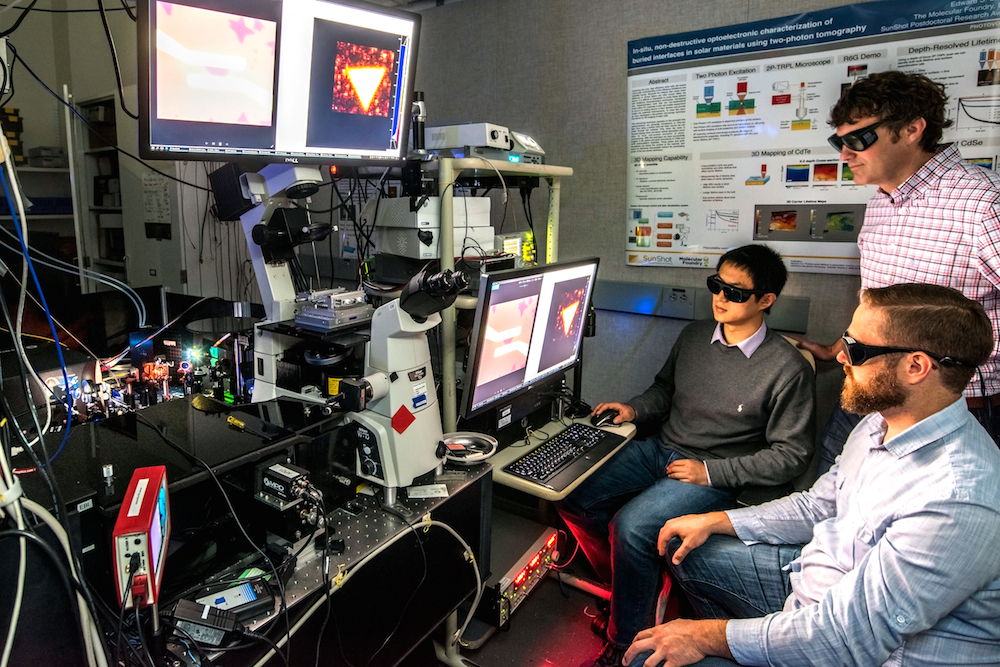
Image - Kaiyuan Yao (seated at left), Nick Borys (seated at right), and P. James Schuck (standing), seen here at Berkeley Lab’s Molecular Foundry, measured a property in a 2-D material that will could help realize new applications. (Credit: Marilyn Chung/Berkeley Lab)

Berkeley Lab Intern Focuses on Using Light for Spaceflight
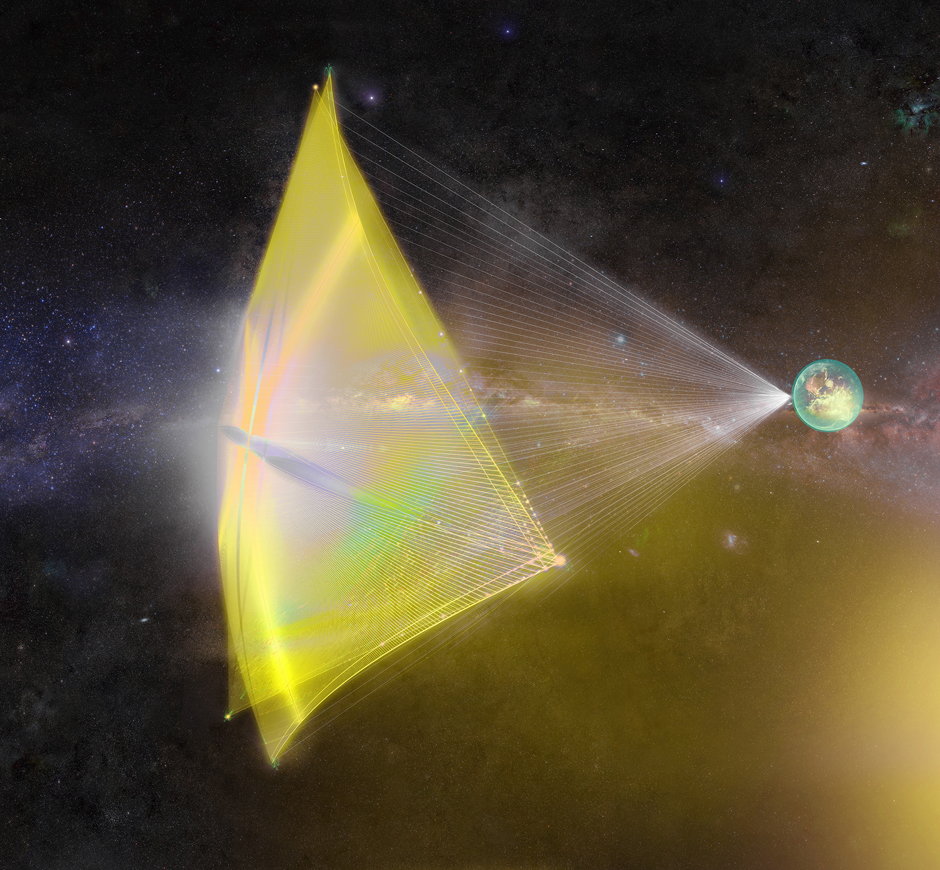
Image - Illustration of a light-driven solar sail (left), with Earth pictured at right. (Credit: Breakthrough Starshot/breakthroughinitiatives.org)

Internship Fuels a Student’s Budding Career in Science
New 3-D Simulations Show How Galactic Centers Cool Their Jets
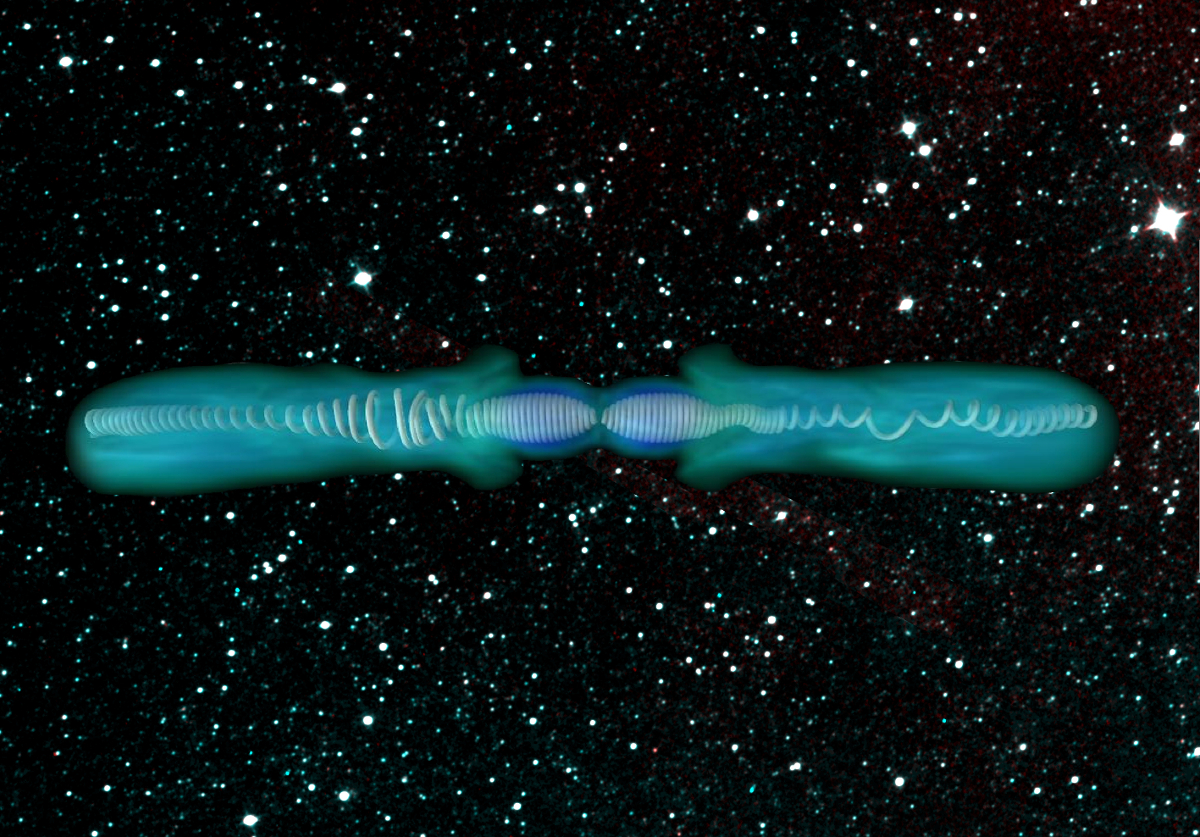
Image - This rendering illustrates magnetic kink instability in simulated jets beaming from active galactic nuclei. The jets are believed to be associated with supermassive black holes. The magnetic field line (white) in each jet is twisted as the central object (black hole) rotates. As the jets contact lower-density matter they recollimate. This causes the toroidal magnetic field to build up and become unstable. The irregular bends and asymmetries of the magnetic field lines are symptomatic of kink instability. The instability dissipates toroidal magnetic field into heat and leads to a less tightly wound magnetic field. (Credit: Berkeley Lab, Purdue University, NASA)

Mimicking Nature with Designer Molecules

Five Berkeley Lab Researchers Receive DOE Early Career Research Awards