LBNL Masthead A-Z Index Berkeley Lab masthead U.S. Department of Energy logo Phone Book Jobs Search
Search the News Center:
Posts Tagged ‘physics’

Flawed Diamonds Promise Sensory Perfection

May 9, 2013

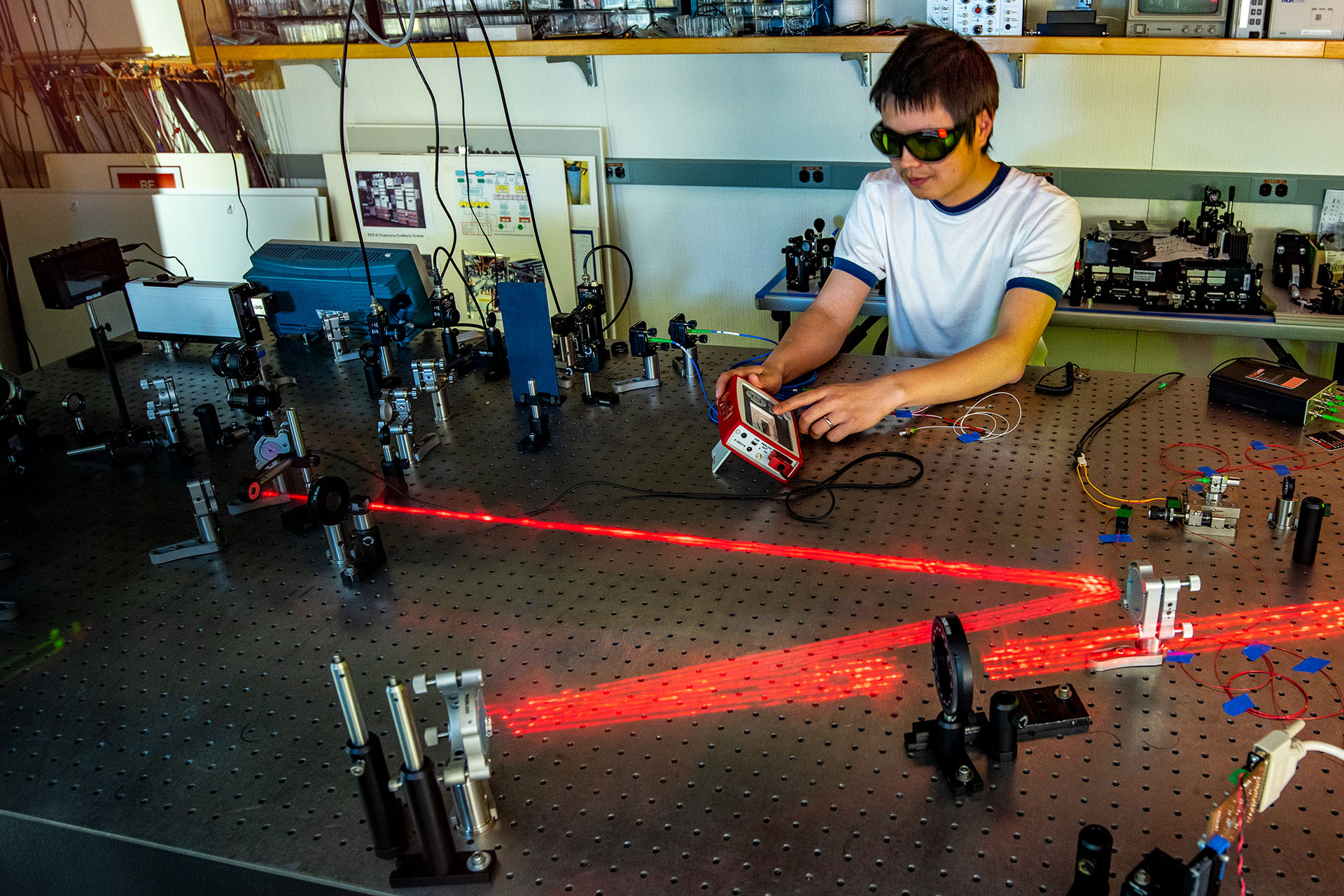
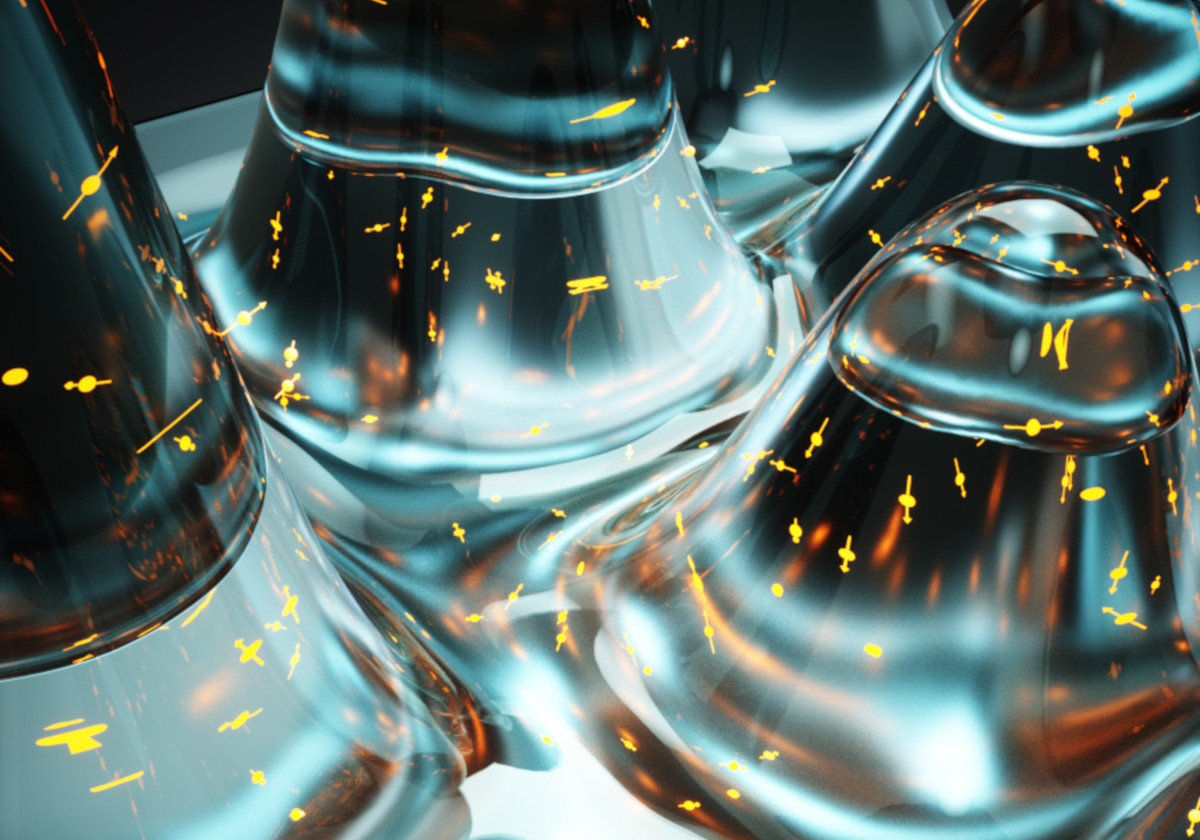
By extending the coherence time of electron states to over half a second, a team of scientists from Berkeley Lab, UC Berkeley, and Harvard University has vastly improved the performance of one of the most potent possible sensors of magnetic fields on the nanoscale – a diamond defect no bigger than a pair of atoms, called a nitrogen vacancy (NV) center. The achievement is an important advance for nanoscale sensors and quantum computing.

MORE>

Does Antimatter Fall Up or Down?

April 30, 2013

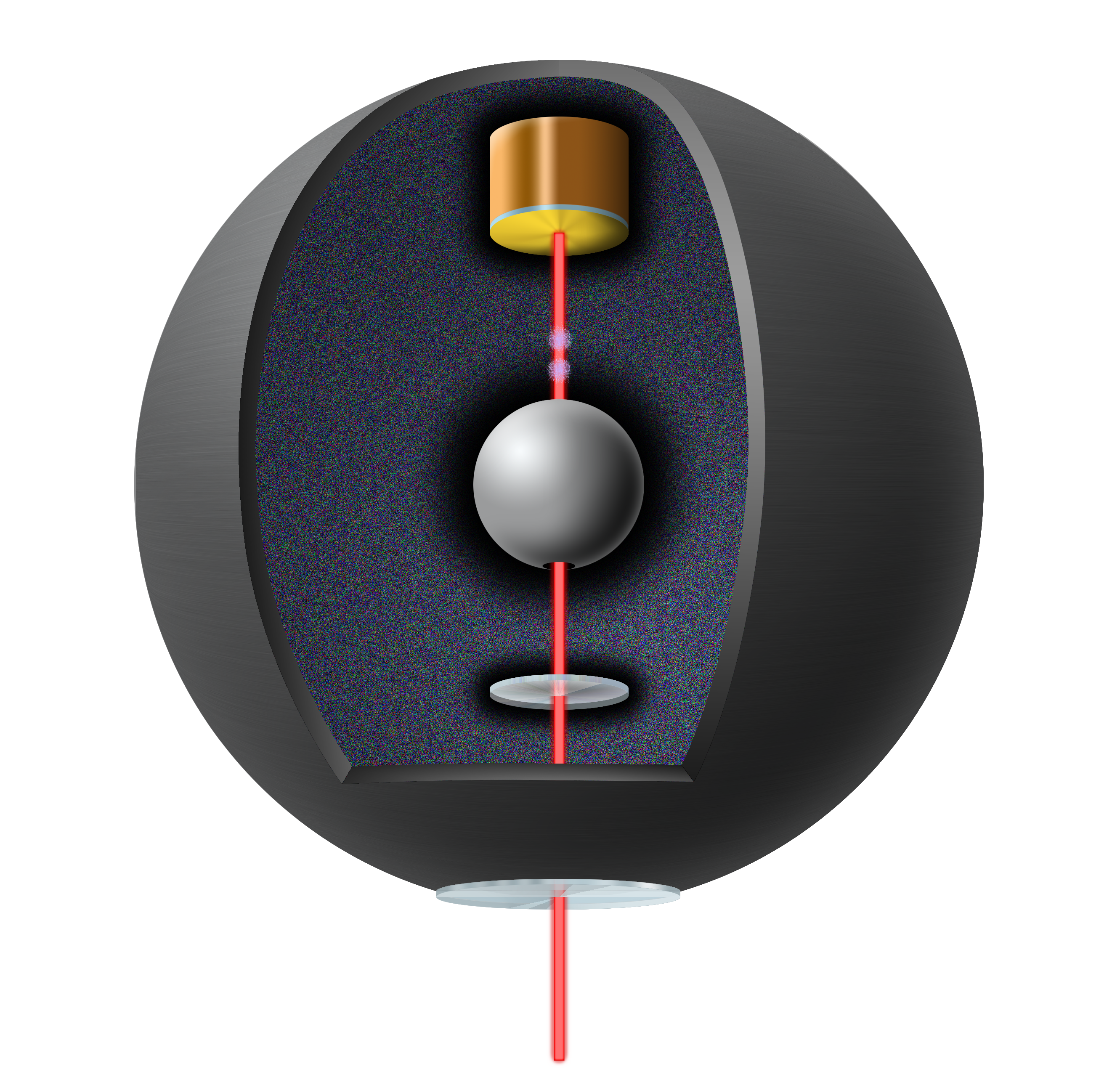
Theory and observations support the view that antimatter experiences gravity just as ordinary matter does, but the evidence so far has been indirect. Indeed, some theorists speculate that antimatter is antigravitational, that it may fall “up” instead of “down.” Led by Berkeley Lab physicists, the ALPHA Collaboration at CERN has made direct measurements of the gravitational mass of atoms of antihydrogen, testing how they fall and in what direction.

MORE>

Four Berkeley Lab Researchers Elected to American Academy of Arts and Sciences

April 29, 2013

Four Berkeley Lab scientists have been elected to the 2013 class of the American Academy of Arts and Sciences, an honorary society founded in 1780 to recognize leading “thinkers and doers.” The new members affiliated with Berkeley Lab are Frances Hellman and Don Tilley of the Materials Sciences Division and Chemical Sciences Division respectively, Susan Marqusee of the Physical Biosciences Division, and Hitoshi Murayama of the Physics Division.

MORE>

In Memoriam: George Gidal, Distinguished Physicist

March 27, 2013

George Gidal, an experimental particle physicist who was an important participant in many of the discoveries of the 20th century that gave us a nearly complete picture of fundamental interactions, died March 1 in Berkeley.

MORE>

Planck Mission Updates the Age of the Universe and What it Contains

March 21, 2013

At a March 21 NASA telephone news conference, scientists from the U.S. team participating in the European Space Agency’s Planck mission to map the cosmic microwave background (CMB) discussed Planck’s first cosmological results, including some surprising news. For one thing, the universe is 13.82 billion years old, a hundred million years older than previously thought, [...]

MORE>

Building the Massive Simulation Sets Essential to Planck Results

March 14, 2013

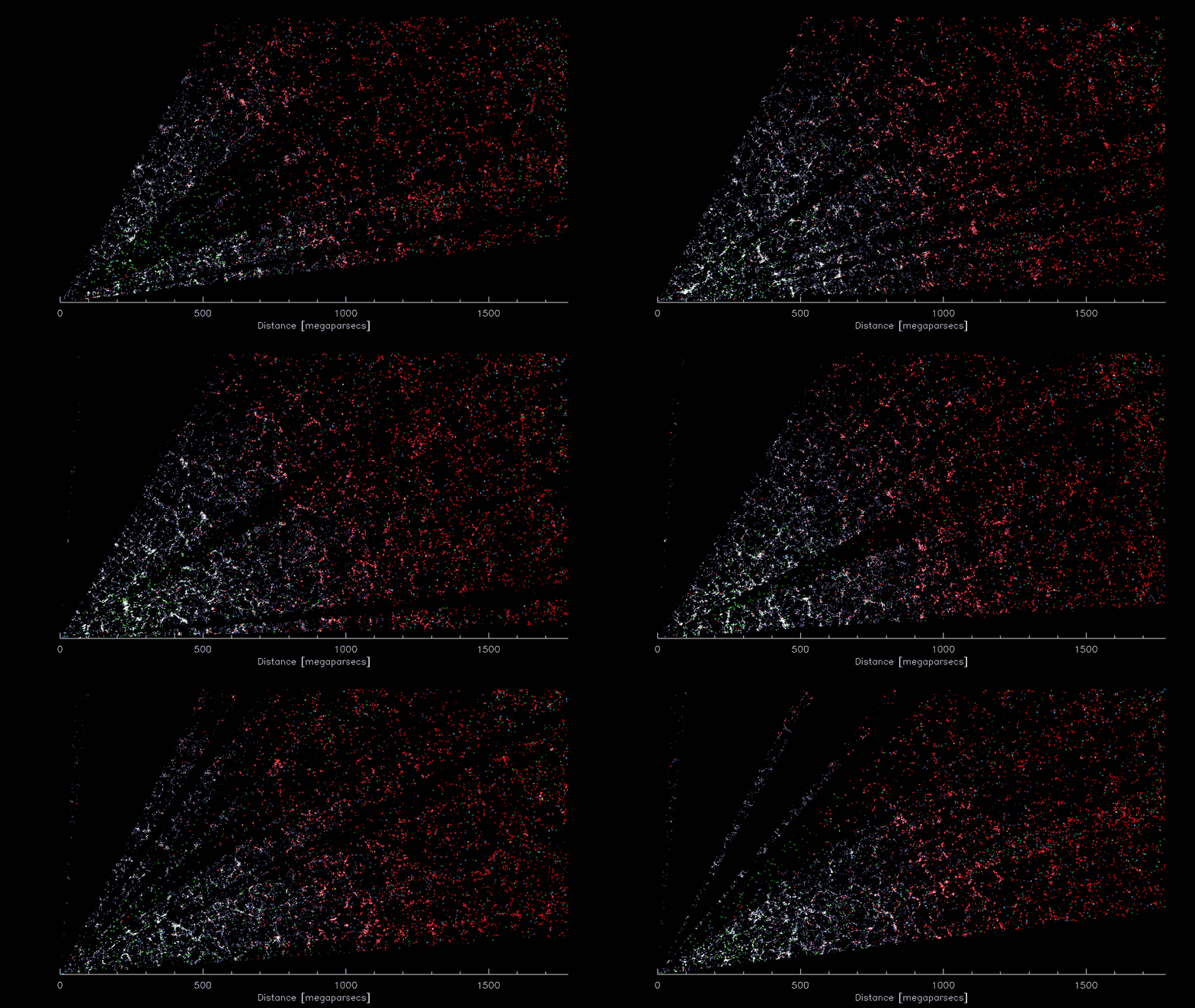
The Planck collaboration has released its first cosmological results, based on trillions of measurements of the cosmic microwave background. The results owe much to Berkeley Lab’s National Energy Research Scientific Computing Center (NERSC), including tens of millions of hours of massively parallel processing, plus the expertise of physicists and computational scientists in the Computational Cosmology Center (C3) who generated a quarter of a million simulated maps of the Planck sky, essential to the analysis.

MORE>

Long Predicted Atomic Collapse State Observed in Graphene

March 7, 2013

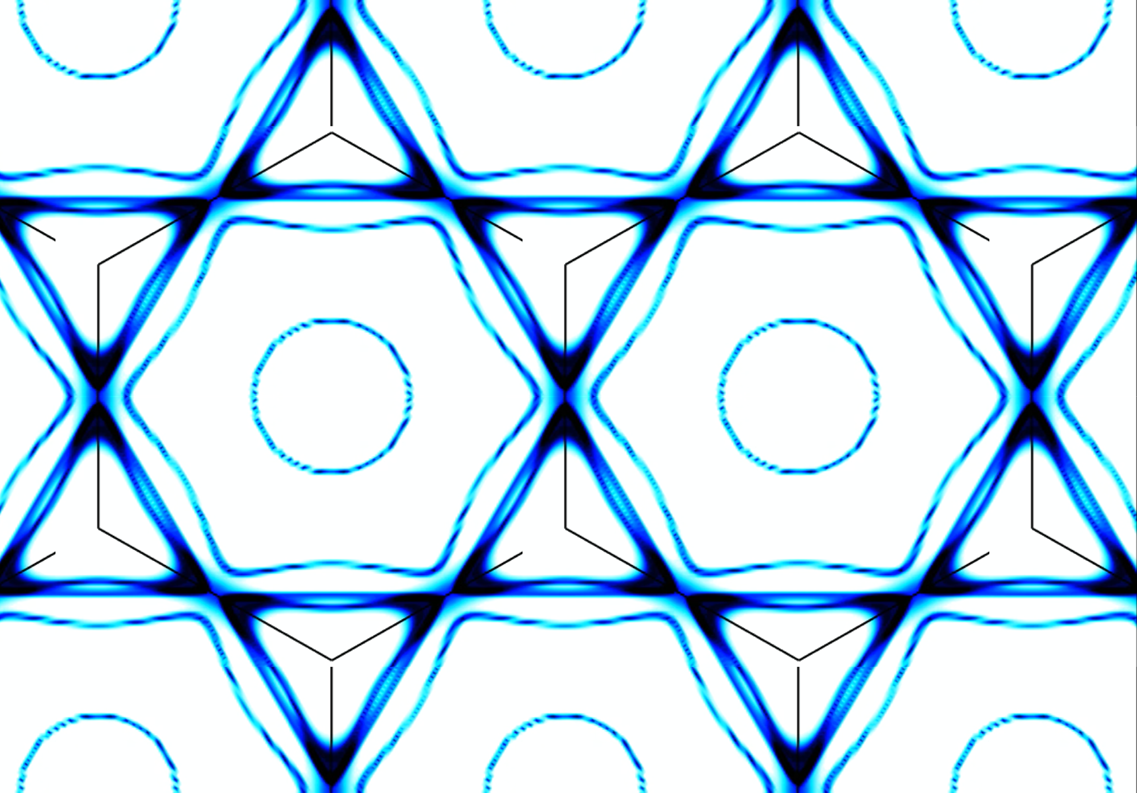
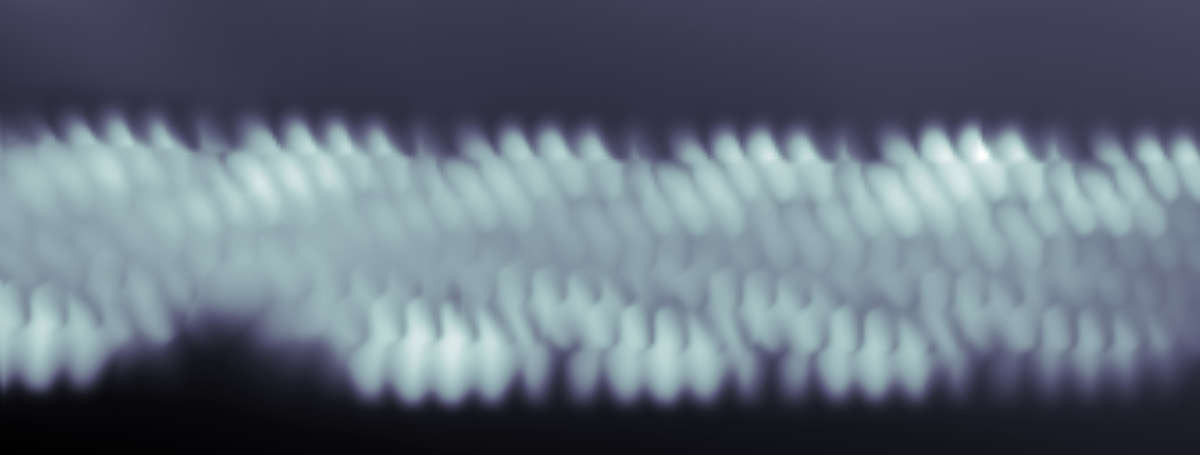
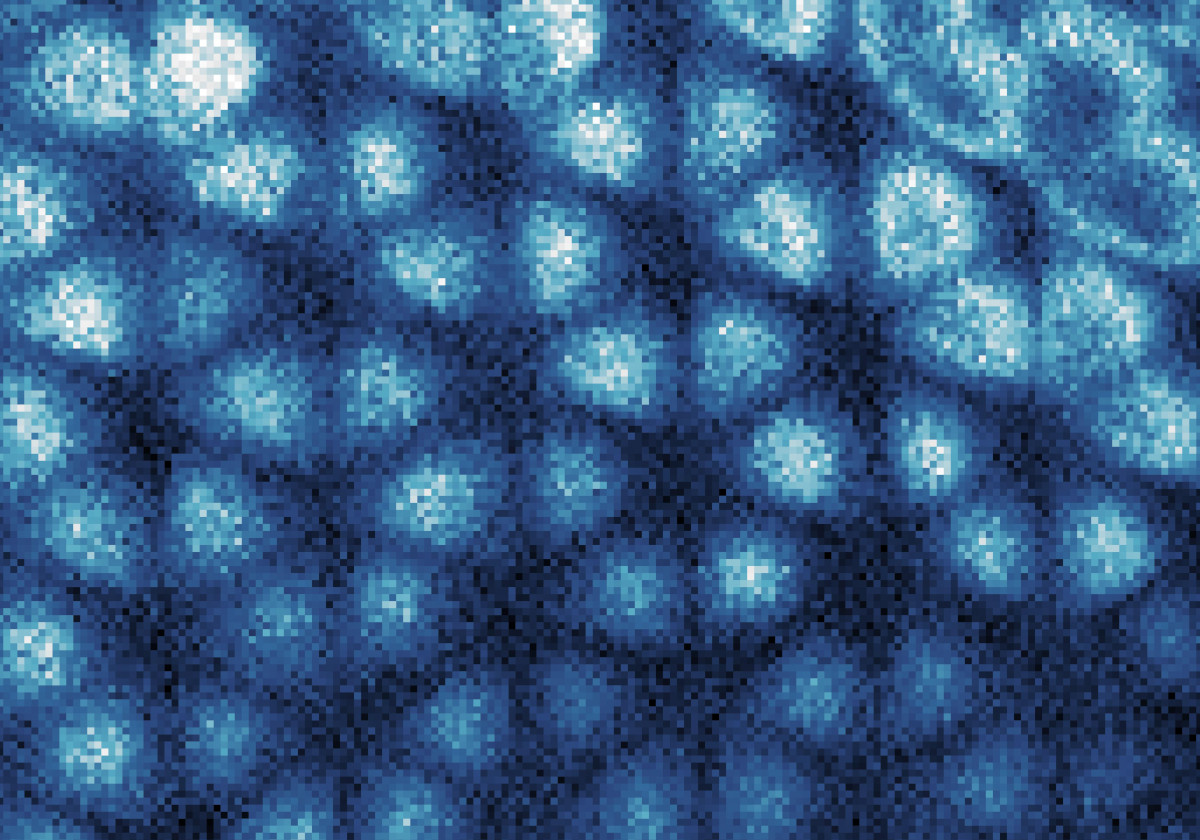
Seventy years ago theorists predicted superlarge nuclei would exhibit a quantum-mechanical phenomenon known as “atomic collapse.” Recently materials scientists calculated that highly-charged impurities in graphene should exhibit a corresponding state, a buildup of electrons partially localized in space and energy constituting a unique electronic resonance. By constructing artificial superlarge nuclei on graphene, researchers at Lawrence Berkeley National Laboratory have achieved the first experimental observation of the long-sought state, with important implications for the future of graphene-based electronic devices.

MORE>

Searching for the Solar System’s Chemical Recipe

February 20, 2013

The ratio of isotopes in elements like oxygen, sulfur, and nitrogen were once thought to be much the same everywhere, determined only by their different masses. Then isotope ratios in meteorites, interplanetary dust and gas, and the sun itself were found to differ from those on Earth. Planetary researchers now use Berkeley Lab’s Advanced Light Source to study these “mass-independent” effects and their origins in the chemical processes of the early solar system.

MORE>

A Cyclotron’s Long Journey Home

February 19, 2013

Seventy-five years after one of the world’s first working cyclotrons was handed to the London Science Museum, it has returned to its birthplace in the Berkeley hills, where the man who invented it, Ernest O. Lawrence, helped launch the field of modern particle physics as well as the national laboratory that would bear his name, Lawrence Berkeley National Laboratory.

MORE>

Black Gold: Enabling Bright, High Rep-Rate Electron Beams

February 14, 2013

Free electron lasers (FELs) have proven their worth, but next-generation light sources will have to do better than produce ultrabright x-ray pulses 100 or so times a second. What’s needed is megahertz rep rate, a million times a second. Since it’s electrons that make the x-rays, the only way to achieve that kind of performance [...]

MORE>

A U.S. Department of Energy National Laboratory Operated by the University of California
UC logo
Questions & CommentsPrivacy & Security Notice