Collage of industrial and technology scenes: rows of servers in a data center, a refinery or power plant with tall stacks, and a food or beverage bottling line, arranged with teal and green graphic blocks.

Cracking the Code: Using AI to Solve Difficult-to-Map Proteins

Graphic showing a timeline of progress in protein design from 2010 to 2024. In 2010, labeled “Impossible,” a small chemical structure is shown. In 2012, labeled “Limited,” a simple ribbon-like protein fragment appears. In 2017, labeled “Possible,” a more complex folded protein structure is shown with scissors icons indicating editable segments. In 2024, labeled “Practical,” a large, detailed multi-part protein complex is displayed. The layout visually conveys increasing capability and complexity over time.

Thermodynamic Computing Advances with Design and Training

A computer processor CPU overheating and smokes around on computer motherboard, blue logic board with microprocessor.

Two Berkeley Lab Scientists Elected to the National Academy of Engineering

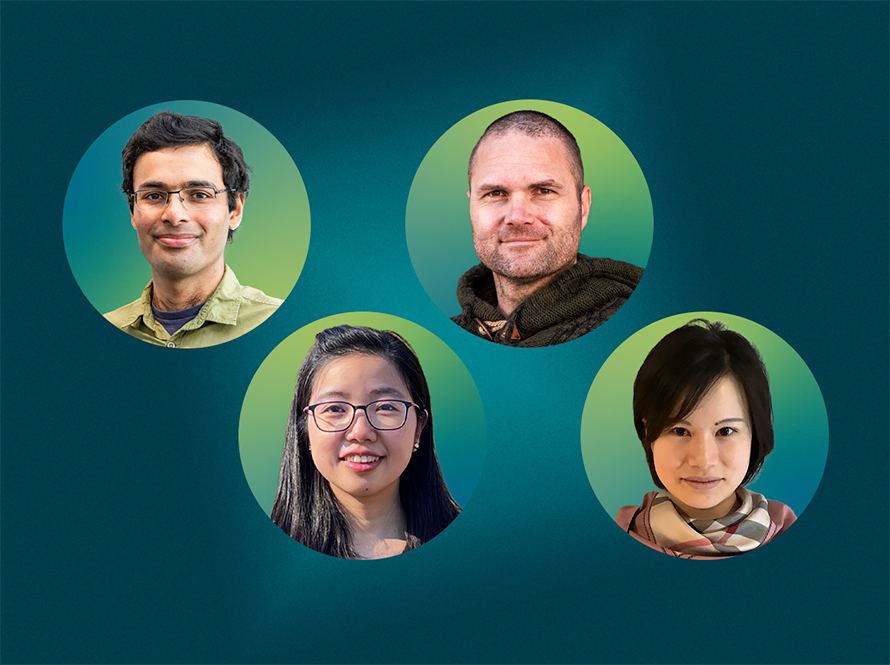
A circular photo portrait of a male scientist and a female scientist on a blue-green gradient background.

Artificial Intelligence

A digital image of server racks forming a tunnel, with glowing lines and dots resembling data flow emerging from a central light source.

Accelerating scientific discovery with AI.

Quantum Science
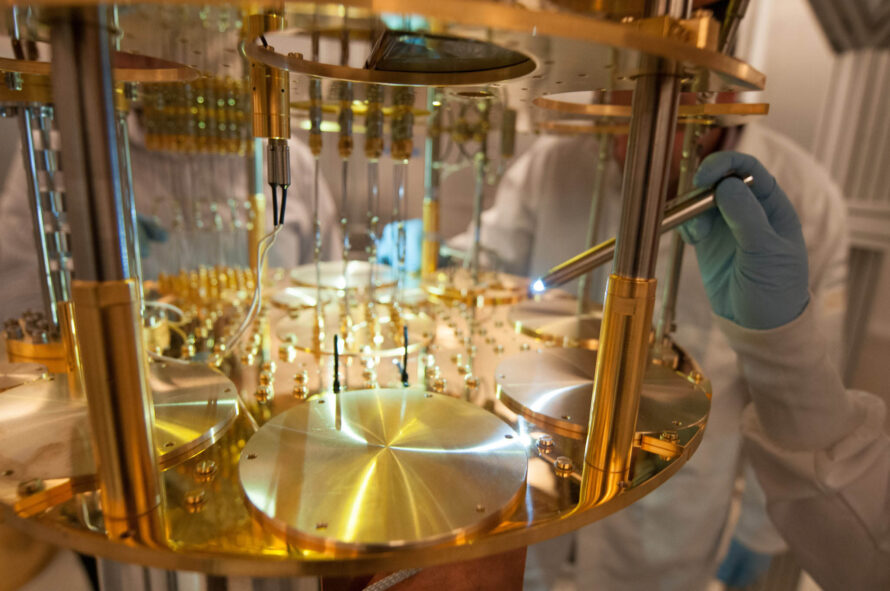
Golden quantum fridge

Quantum information systems are poised to solve global challenges that are far beyond the reach of today’s technologies.

Why the Energy Department’s science labs will spearhead the federal push into AI

If your PC has a yellow USB port, take note: it’s not just there for decoration and could save you in a pinch

Large-scale ion-trap quantum computing systems inch closer to reality with US’ new breakthrough