Editor’s note: This article is adapted from a press release by Fermi National Accelerator Laboratory.
With the start of construction on its far detectors, the international Deep Underground Neutrino Experiment (DUNE) is one step closer to investigating some of the universe’s greatest mysteries — including how the universe took shape after the Big Bang and whether particles called neutrinos are the reason our world is predominantly made of matter.
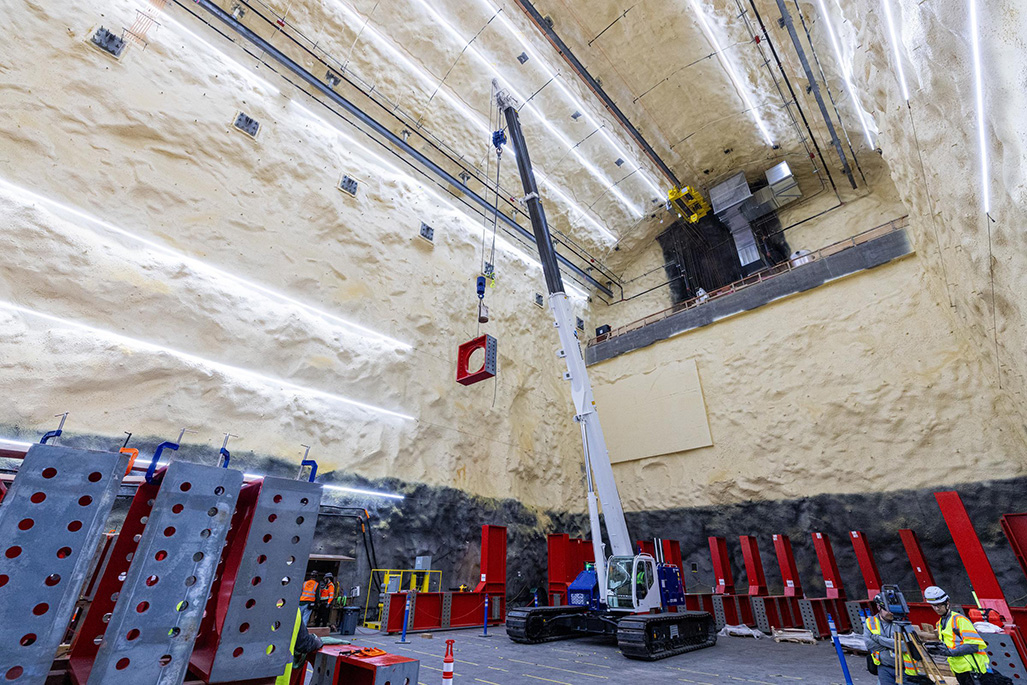
Installation crews with the U.S. Department of Energy’s (DOE) Fermi National Accelerator Laboratory (Fermilab) and CERN, the European Organization for Particle Physics, are working alongside the Sanford Underground Research Facility (SURF) to begin building massive cryostats, giant insulated containers designed to hold liquid argon at an extremely cold temperature for the experiment.
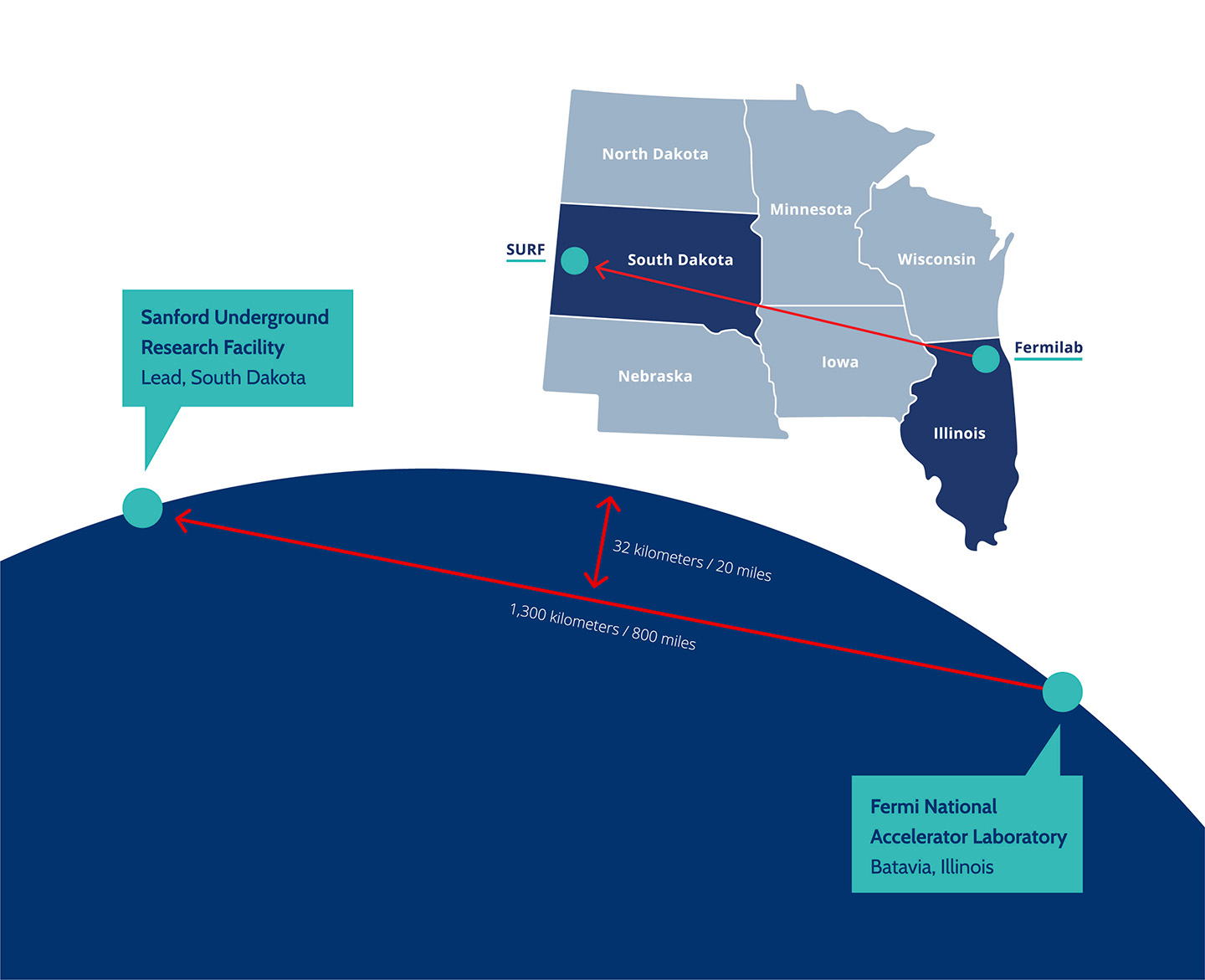
DUNE will observe how neutrinos change after traveling through 800 miles of earth by measuring them first at the near detector, close to the neutrino beam source, and then at the far detectors now under construction. DOE’s Lawrence Berkeley National Laboratory (Berkeley Lab) is one of five DOE Office of Science laboratories contributing to the project, along with dozens of institutions around the world.
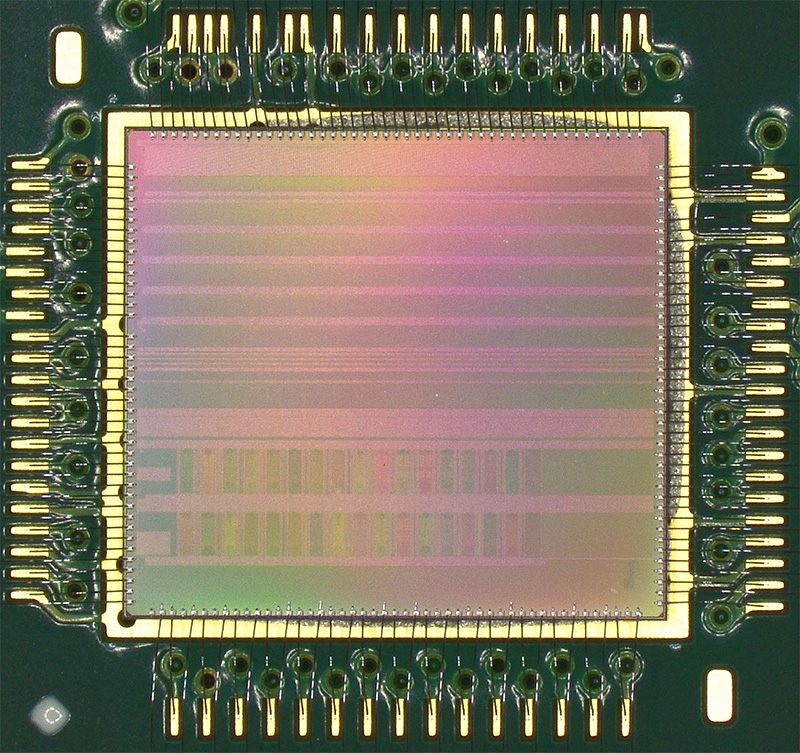
Carl Grace of Berkeley Lab’s Engineering Division led a team of experts from Berkeley Lab, Fermilab, and Brookhaven Lab in developing the ColdADC ASIC. (Credit: Tarun Prakash/Berkeley Lab)
Berkeley Lab leads the prototyping, design, and construction of the far detector readout electronics for DUNE, coordinating teams from Fermilab, Brookhaven Lab, and 10 U.S. university groups. The electronics are critical components that will be installed both inside and outside the large cryostats. They will capture faint signals produced by neutrino interactions and turn them into the data that scientists will analyze.
Berkeley Lab researchers have also played a key role in developing technologies for the near detector, including designing and building LArPix, the revolutionary 3D pixelated detection system at its heart.
During construction of the far detectors, Berkeley Lab physicists will work a mile underground at SURF, leading the installation and commissioning of the readout electronics. Berkeley Lab’s team has been involved in the DUNE far detector project since 2014, when the experimental hall had yet to be excavated from solid granite.
“It’s exciting to see how far the project has come, from solid rock to a space ready for the detector,” said Cheng-Ju Lin, part of Berkeley Lab’s Physics Division and head of the DUNE Readout Electronics Consortium. “After years of preparation, our team is eager to head underground and begin detector installation.”
Berkeley Lab’s Physics and Engineering divisions also led the design of ColdADC, a custom application-specific integrated circuit (ASIC) that digitizes raw signals from the DUNE far detector. The ColdADC ASIC is designed to operate at a cryogenic temperature of 88 Kelvin, or about negative 300 degrees Fahrenheit, and work reliably for decades.
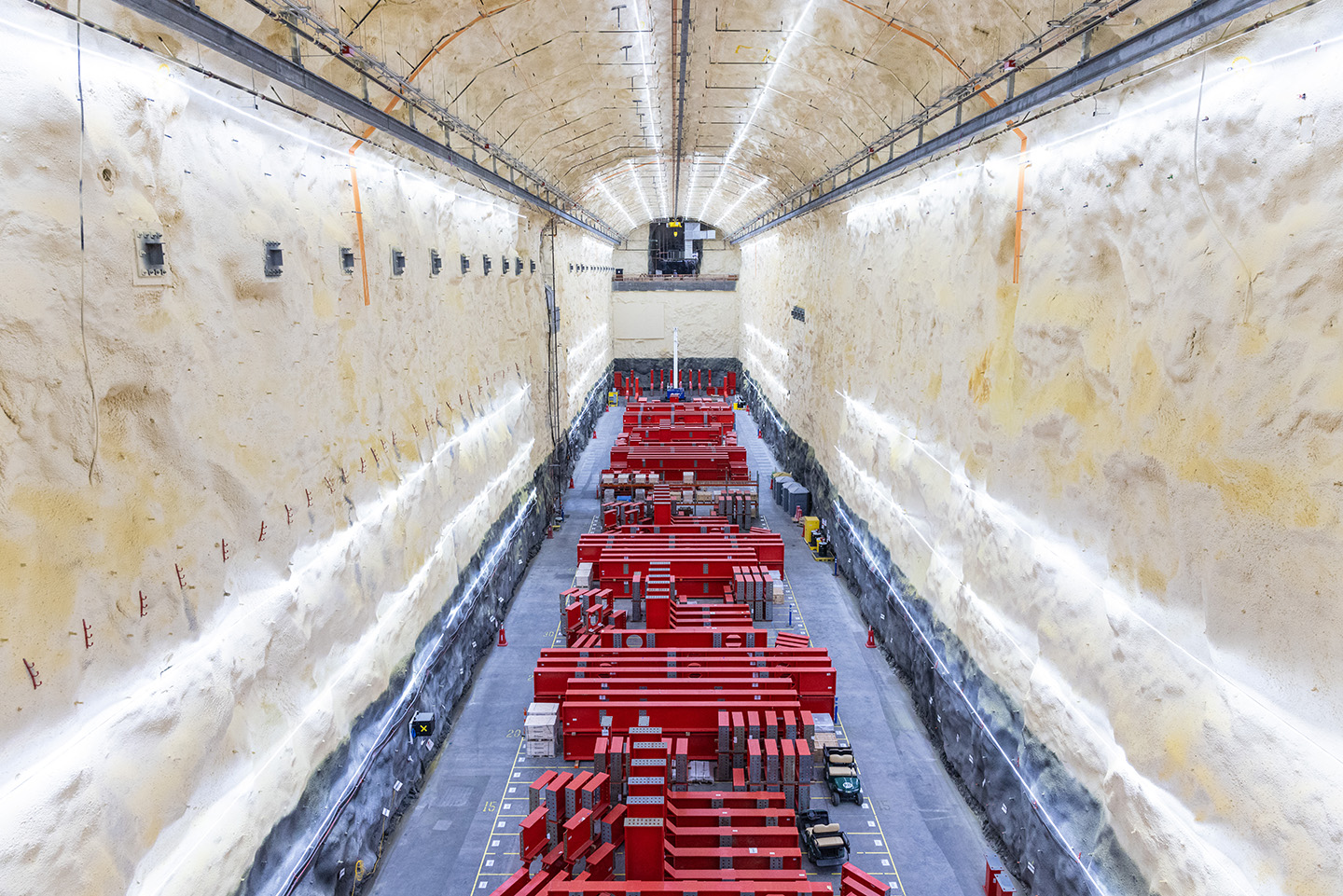
To build DUNE’s far detectors nearly a mile underground at SURF in Lead, South Dakota, thousands of red steel beams were meticulously transported, one by one, to the assembly area. Once installed, the beams will form the outer structures of the experiment’s two detector module cryostats. Each will house roughly 17,000 tons of liquid argon.
“The entire organization is thrilled to see this work begin,” said Norbert Holtkamp, director of Fermilab. “Once underway, DUNE has the potential to help us broaden our fundamental understanding of our universe, as well as potentially open the door to new technological advances.”
The more than 6,200 tons of steel being used on the cryostat modules are an in-kind contribution from CERN. CERN is leading the design, construction planning, logistics, and installation of DUNE’s massive cryostats, working with a Minnesota-based structural steel contractor to assemble the structures deep underground in South Dakota.
“We have been lucky to see several milestones occur recently, such as the arrival of steel for both cryostats in Rapid City from Houston, to the celebration earlier this year marking the start of steel being lowered underground in Lead,” said Jolie Macier, project manager for the far detectors and cryogenics of DUNE. “This brings us one step closer to science.”
DUNE marks the first time CERN has made such significant contributions to an experiment happening outside of Europe. “Collaboration is in CERN’s DNA, and our contribution to DUNE is a brilliant example of cross-organizational partnership,” said Mark Thomson, director general of CERN. “After years of planning and careful coordination, I am thrilled to see that we are ready to start installation.”
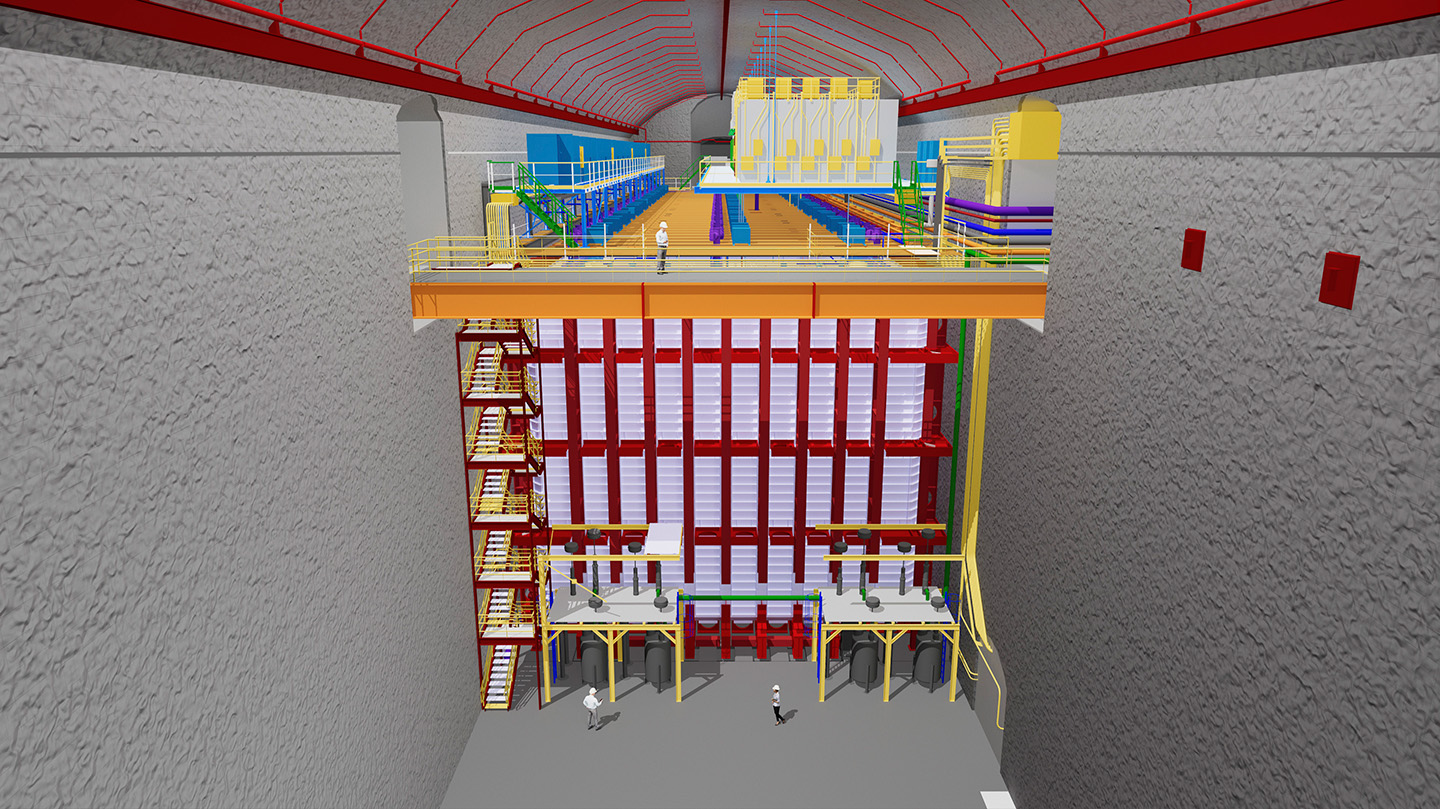
Each cryostat measures 216 feet long (65.8 meters), 62 feet wide (18.9 meters) and 60 feet high (18.3 meters). Each one is longer than a Boeing 747 airplane and will stand a full story taller than the iconic Hollywood sign in Los Angeles.
“SURF is proud to support this world-class research 4,850 feet (1,478 meters) below ground level. This massive experiment is slated to run into the late 2040s, with the potential to impact science for generations,” said Mike Headley, SURF laboratory director and executive director of the South Dakota Science and Technology Authority.
A total of 2,600 red steel beams will be used to build DUNE’s two cryostat modules. SURF is responsible for shaft operations and logistics, ensuring that each of these steel beams — and other necessary installation equipment — is safely transported underground to the work site.
In addition to the installation work underway in the South Cavern, SURF crews have begun lowering steel components for the second cryostat into the North Cavern, where assembly is expected to begin next year.
“This marks an incredible milestone for the collaboration and reflects the cross-continental partnerships between CERN, Fermilab, and SURF that are essential to realizing this project,” said Sowjanya Gollapinni, co-spokesperson for DUNE. “This synergy is at the core of how big international collaborations work. We are thrilled to take this major step forward as we move closer to the transformative science that DUNE will deliver.”
The underground space of DUNE is planned to be completed by 2029, and the detector apparatus in 2030. From that date, an 1,800-strong worldwide team of researchers will begin probing the laws of nature more deeply than ever before, observing particles from the sun and outer space. Using Fermilab’s PIP-II accelerator upgrade, the terrestrial neutrino beam is expected to be sent to the underground detectors in South Dakota by 2031, enabling DUNE’s long-term scientific program.
###
Lawrence Berkeley National Laboratory (Berkeley Lab) is committed to groundbreaking research focused on discovery science and solutions for abundant and reliable energy supplies. The lab’s expertise spans materials, chemistry, physics, biology, earth and environmental science, mathematics, and computing. Researchers from around the world rely on the lab’s world-class scientific facilities for their own pioneering research. Founded in 1931 on the belief that the biggest problems are best addressed by teams, Berkeley Lab and its scientists have been recognized with 17 Nobel Prizes. Berkeley Lab is a multiprogram national laboratory managed by the University of California for the U.S. Department of Energy’s Office of Science.
DOE’s Office of Science is the single largest supporter of basic research in the physical sciences in the United States, and is working to address some of the most pressing challenges of our time. For more information, please visit energy.gov/science.
LZ Sees Surprising Result in Search for Dark Matter
Super Intelligence for Particle Accelerators Gets Another Boost