LBNL Masthead A-Z Index Berkeley Lab masthead U.S. Department of Energy logo Phone Book Jobs Search
Search the News Center:
Posts Tagged ‘microbes’

Revealing the Secrets of Motility in Archaea

February 14, 2013

The protein structure of the archaellum, the motor that propels many species of Archaea, the third domain of life, has been characterized for the first time by a team from Berkeley Lab and the Max Planck Institute for Terrestrial Microbiology. A ring made of six identical proteins derives energy from hydrolyzing adenosine triphosate (ATP) and uses this energy to drive shape changes, both assembling and rotating the archaellum’s whiplike propeller.

MORE>

Berkeley Lab Researchers Create First of Its Kind Gene Map of Sulfate-reducing Bacterium:

November 9, 2011

Critical genetic secrets of a bacterium that holds potential for removing toxic and radioactive waste from the environment have been revealed in a study led by Berkeley Lab researchers. The researchers have created a first-of-its-kind gene map of Desulfovibrio vulgaris, which can be used to identify the genes that determine how these bacteria interact with their surrounding environment.

MORE>

Close Up Look at a Microbial Vaccination Program

September 22, 2011

Berkeley Lab researchers, using a combination of cryo-electron microscopy and 3-D image reconstruction, determined the structure of Cascade, a protein complex that plays a key role in the microbial immune system by detecting and inactivating the nucleic acid of invading pathogens. Microbial immune systems in the human microbiome play a critical role in preserving the health of their human host.

MORE>

CSI: Microbial Version without PCR

September 21, 2011

Berkeley Lab researchers have developed PCR-free techniques for identifying the most active microbial populations in samples based on the PhyloChip, the Lab’s award-winning, high-density DNA microarray. These new techniques will be used in a wide variety of applications including the development of advanced biofuels.

MORE>

Lessons Learned from the Two Worst Oils Spills in U.S. History

August 18, 2011

One year after the BP Deepwater Horizon oil spill in the Gulf of Mexico and two decades after the Exxon Valdez spill in Alaska’s Prince William Sound, the scientific lesson is clear – microbes matter! Despite vast differences in the ecosystems and circumstances of these two worst oil spills in U.S. history, oil-degrading microorganisms played a significant role in reducing the overall environmental impact of both spills, a Berkley Lab scientist reports.

MORE>

Berkeley Lab Researchers Win Four Early Career Awards

May 11, 2011

Berkeley Lab researchers have won four DOE Office of Science Early Career Research Program awards, in the second year of the planned annual award program. The five-year, $2.5 million awards are intended to support young scientists in the formative stages of their careers. The winners were chosen from over a thousand applicants by outside scientific experts.

MORE>

Berkeley Lab Technology Spawns Successful Start-up Companies

October 11, 2010

What do a smart window company, a microbial analysis start-up and waste-heat recovery start-up have in common? They’re all located in the San Francisco Bay Area and they’re all based on technology developed at the Lawrence Berkeley National Laboratory. What’s more, these three start-up companies have either had highly successful launches or closed major deals in the last several months. One of the companies announced a new manufacturing facility that will create hundreds of jobs around the country and bring energy-savings technologies to a wider market.

MORE>

CRISPR Critters: Scientists identify key enzyme in microbial immune system

September 9, 2010

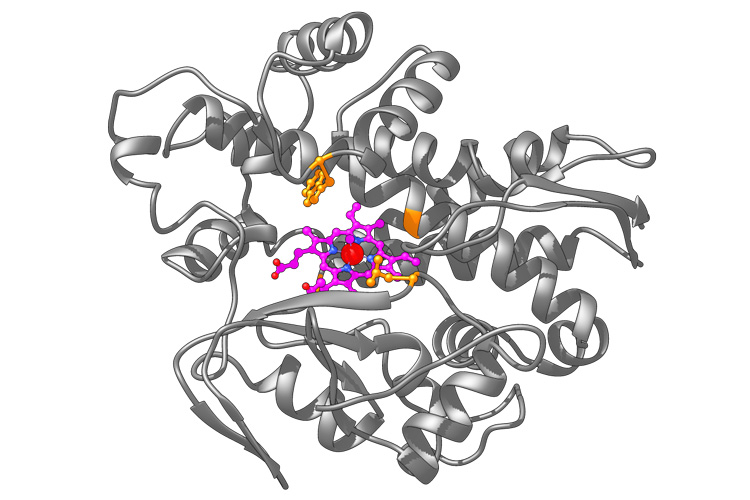
Using protein crystallography beamlines at Berkeley Lab’s Advanced Light Source, a team of researchers has resolved the atomic-scale crystal structure of an enzyme called “Csy4” that plays a key role in a microbial immune system. The research provides important new clues to the fundamental role of RNA in the evolution of life.

MORE>

Driving for Biofuels: New Technique Speeds Search for Biofuel Microbes

March 19, 2009

A new research technique from the Joint BioEnergy Institute provides vital information on microbial metabolism in a fraction of the time required for conventional scientific methods. The technique was successfully tested on an extremophile that shows great promise for producing biofuels from cellulosic biomass.

MORE>

A U.S. Department of Energy National Laboratory Operated by the University of California
UC logo
Questions & CommentsPrivacy & Security Notice