Two Lawrence Berkeley National Laboratory (Berkeley Lab) scientists have been elected to the National Academy of Sciences (NAS) in recognition of their distinguished and continuing achievements in original research. They are part of a cohort of 120 new members and 25 international members.
The National Academy of Sciences is a private, nonprofit institution that was established under a congressional charter signed by President Abraham Lincoln in 1863. It recognizes achievement in science by election to membership, and — alongside the National Academy of Engineering and the National Academy of Medicine — provides science, engineering, and health policy advice to the federal government and other organizations. The 2026 electees bring the total number of active members to 2,705 with 557 international members.
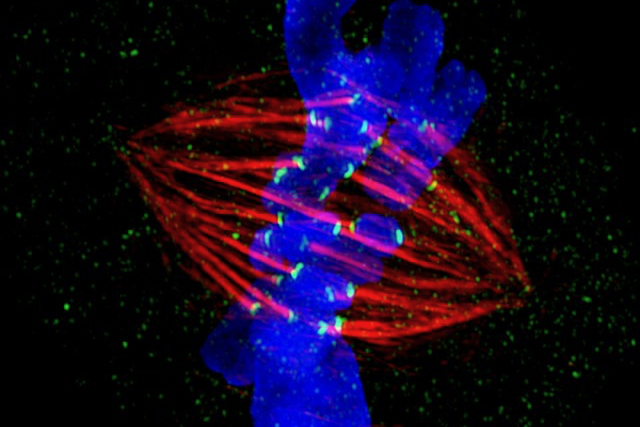
Gary Karpen is a biologist senior faculty scientist in Berkeley Lab’s Biological Systems and Engineering Division and a Professor of Cell and Developmental Physiology in the Department of Molecular and Cell Biology at UC Berkeley. Karpen studies how the structure, organization, and maintenance of genetic material impact inheritance and cell function. His lab focuses on chromatin — a packaged form of DNA strands wrapped around proteins that comprises our chromosomes — with a particular emphasis on centromeres, rarely expressed sequences called heterochromatin, DNA repair, and regulatory RNAs. His research reveals insights into fundamental aspects of nuclear organization and genome regulation that are shared across the tree of life, broadening our understanding of cancer and other diseases, birth defects, and aging.
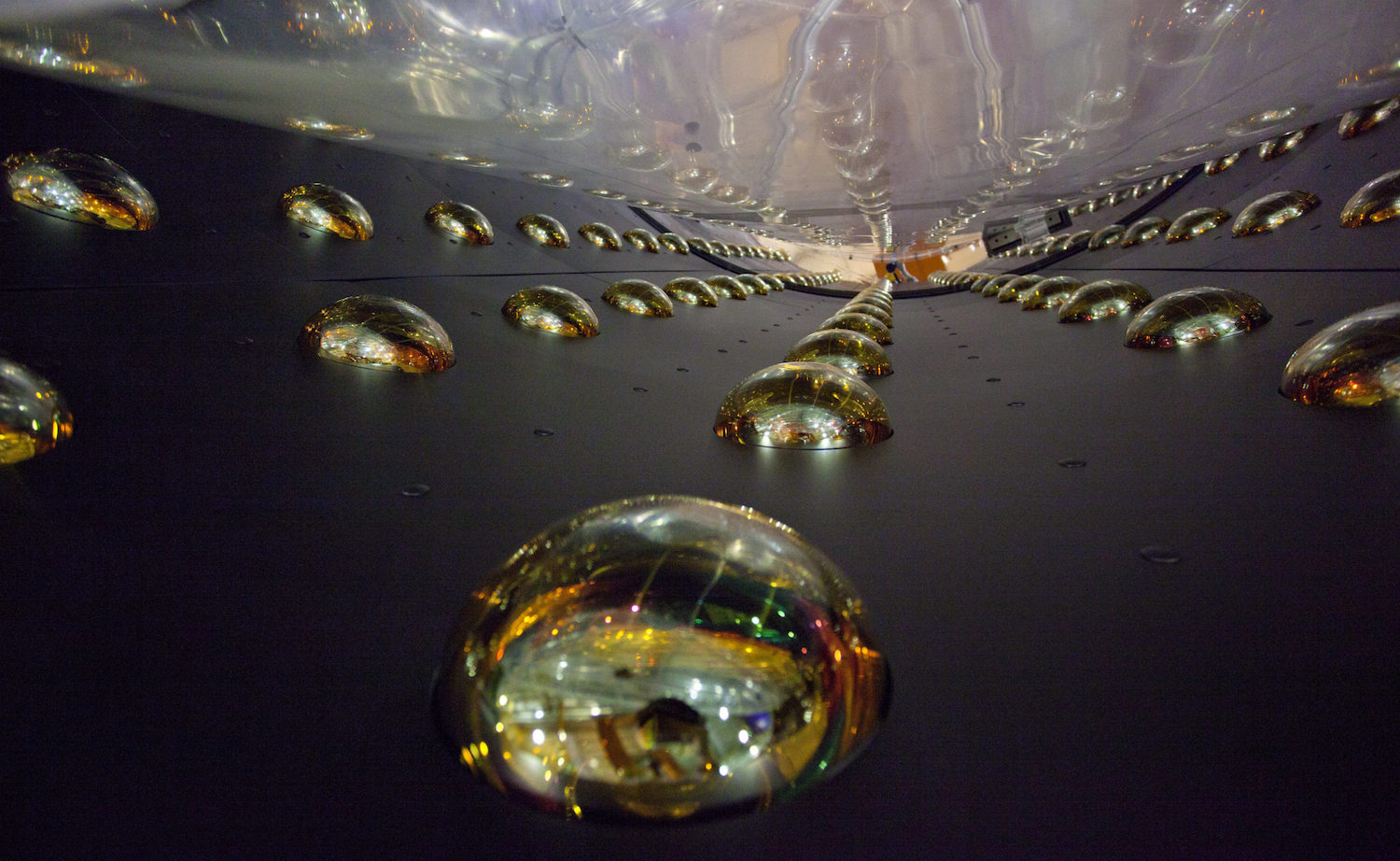
Kam-Biu Luk is a Professor Emeritus of physics at UC Berkeley and a retired senior faculty scientist in Berkeley Lab’s Physics Division. He is an experimental particle physicist whose research has focused on neutrinos: nearly massless, electrically neutral elementary particles that can pass through matter virtually undetected. Neutrinos are created during radioactive decay processes, including the fusion process occurring in stars and the fission process that powers nuclear reactors. Luk initiated and co-led the Daya Bay Reactor Neutrino Experiment, a project based in China with more than 200 international collaborators. In 2012, the Daya Bay experiment discovered a new form of a phenomenon called “neutrino oscillation” in which neutrinos change from one type to another. For this discovery, Luk and his collaborator Yifan Wang received the 2014 American Physical Society Division of Particles and Fields W.K.H. Panofsky Prize for outstanding work in experimental particle physics, and he was also the co-recipient of the 2016 Breakthrough Prize. Luk is currently participating in the Deep Underground Neutrino Experiment (DUNE) hosted by Fermi National Accelerator Laboratory, which will investigate any potential difference in behavior between neutrinos and antineutrinos that may shed light on the evolution of the universe, especially why antimatter is absent in the present universe.
###
Lawrence Berkeley National Laboratory (Berkeley Lab) is committed to groundbreaking research focused on discovery science and solutions for abundant and reliable energy supplies. The lab’s expertise spans materials, chemistry, physics, biology, earth and environmental science, mathematics, and computing. Researchers from around the world rely on the lab’s world-class scientific facilities for their own pioneering research. Founded in 1931 on the belief that the biggest problems are best addressed by teams, Berkeley Lab and its scientists have been recognized with 17 Nobel Prizes. Berkeley Lab is a multiprogram national laboratory managed by the University of California for the U.S. Department of Energy’s Office of Science.
DOE’s Office of Science is the single largest supporter of basic research in the physical sciences in the United States, and is working to address some of the most pressing challenges of our time. For more information, please visit energy.gov/science.
Three Berkeley Lab Researchers Named AAAS Fellows
Physicists Announce First Results from Daya Bay’s Final Dataset