Quantum computers have the potential to transform science, accelerating breakthroughs in drug development, cosmology, materials science, nuclear physics, and more.
To make this future a reality, researchers at Lawrence Berkeley National Laboratory (Berkeley Lab) are partnering with industry, academia, and the national labs to drive advances across the quantum computing “stack” — the hardware, software, and controls designed to ensure error-corrected quantum calculations.
“Making a functional quantum computer requires much more than qubits alone. It takes an entire technology stack that can harness quantum science for real-world applications,” said Chris Spitzer, operations lead at the Advanced Quantum Testbed (AQT).
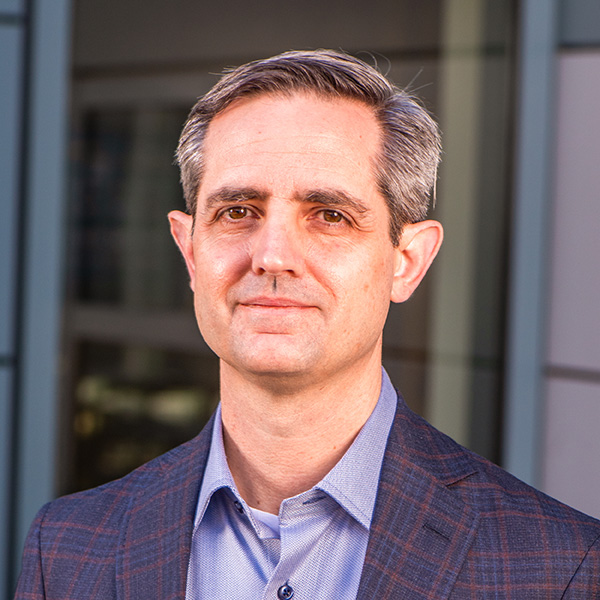
Chris Spitzer (Credit: Robinson Kuntz/Berkeley Lab)
In this Q&A, Spitzer explains why an integrated approach to developing the quantum computing stack is essential to quantum computing
Q: What are the components of a quantum computing stack?
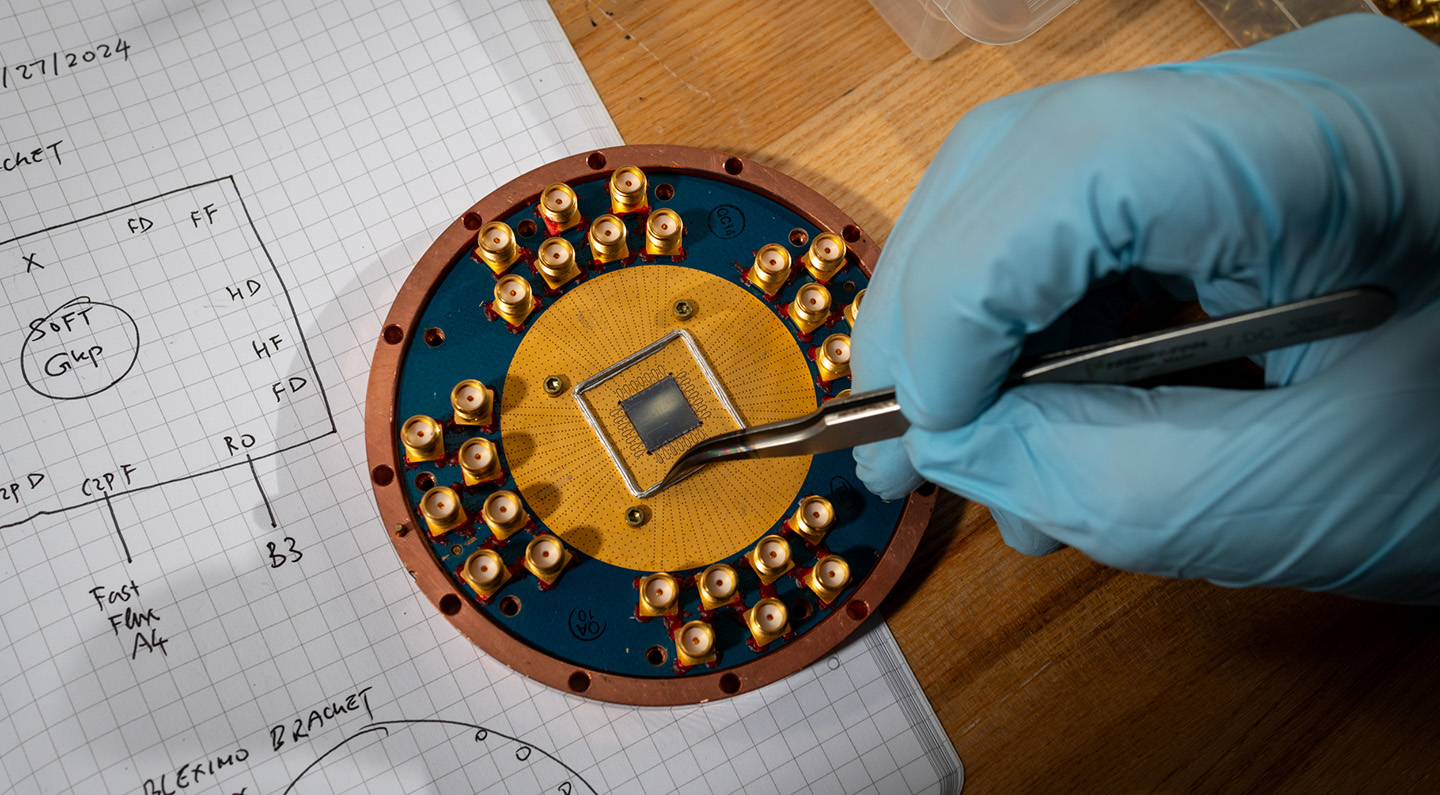
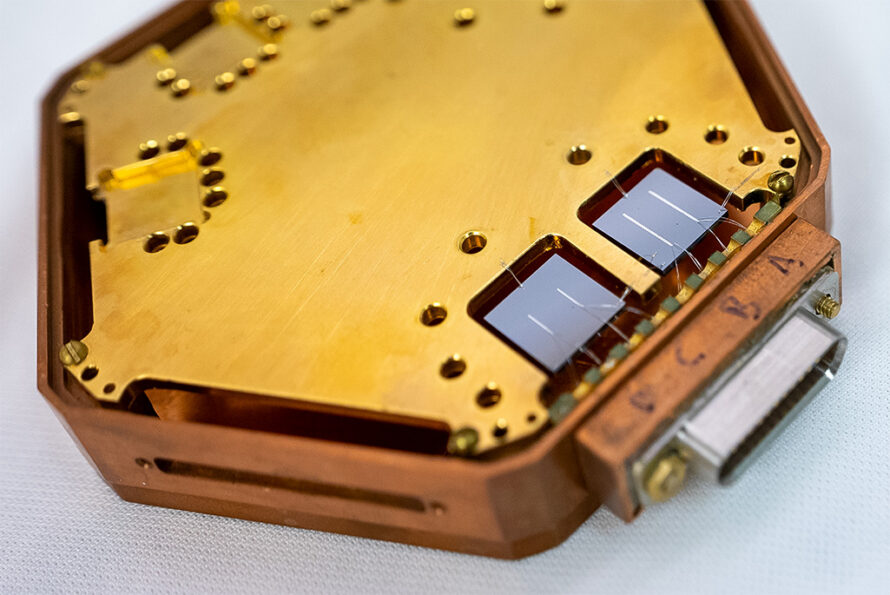
The quantum stack is everything required to make a quantum computer work. At the base of the stack is a superconducting quantum processing unit (QPU) that contains the qubits that store and manipulate quantum information.
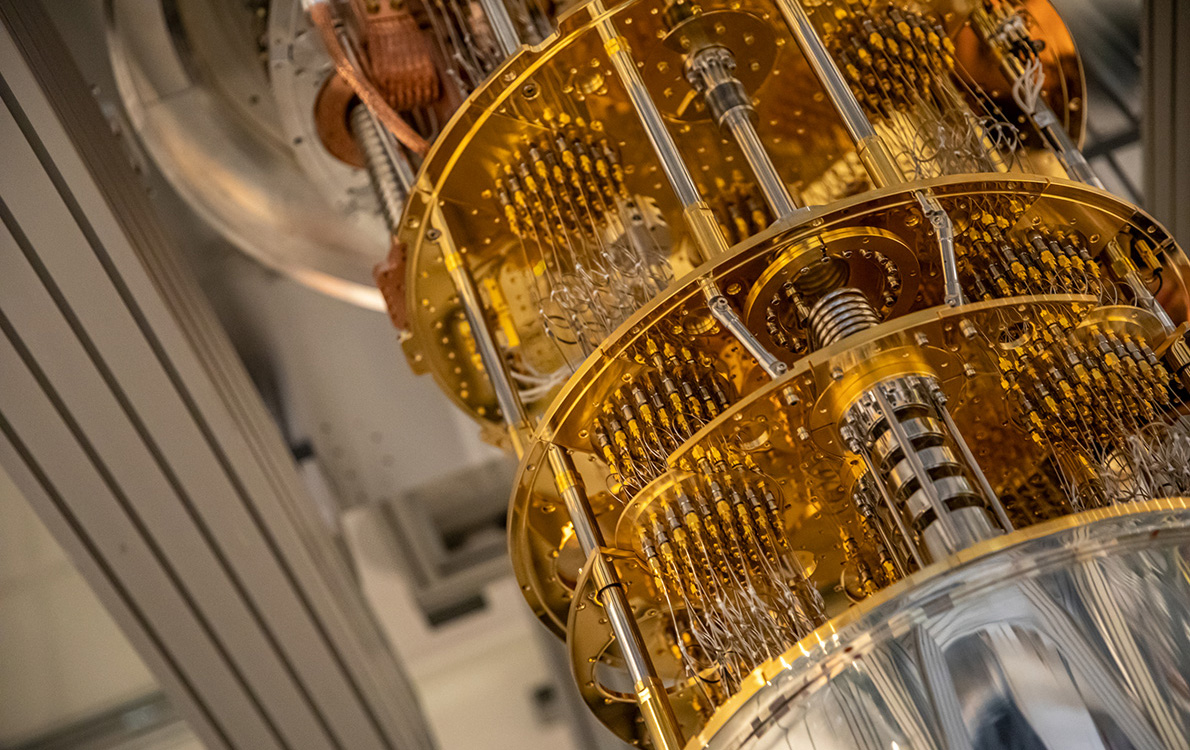
Above the QPU sits the dilution refrigerator’s cold stage, which keeps the processor below 20 millikelvin — about 0.02 degrees above absolute zero, even colder than outer space. This extreme cooling prevents unwanted interactions with the environment and maintains the superconducting state needed to preserve quantum information.
The dilution refrigerator looks like a golden chandelier with cables running up and down. Those cables control the chip by sending microwaves from room temperature down to the millikelvin regime, and getting information back out.
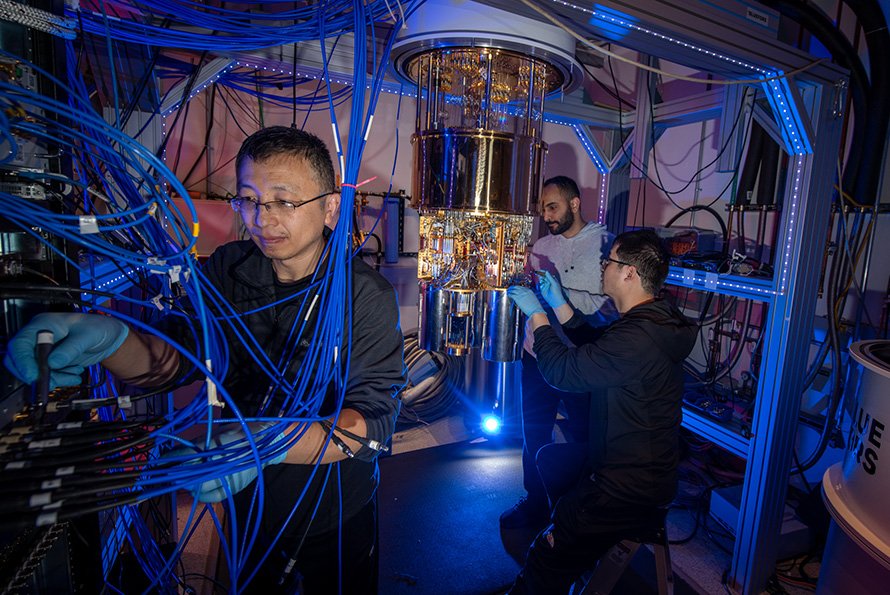
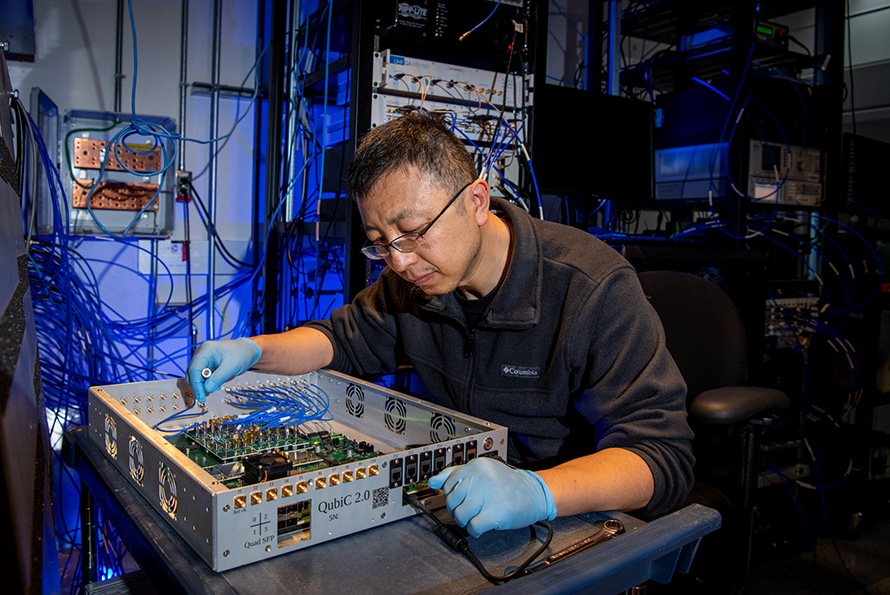
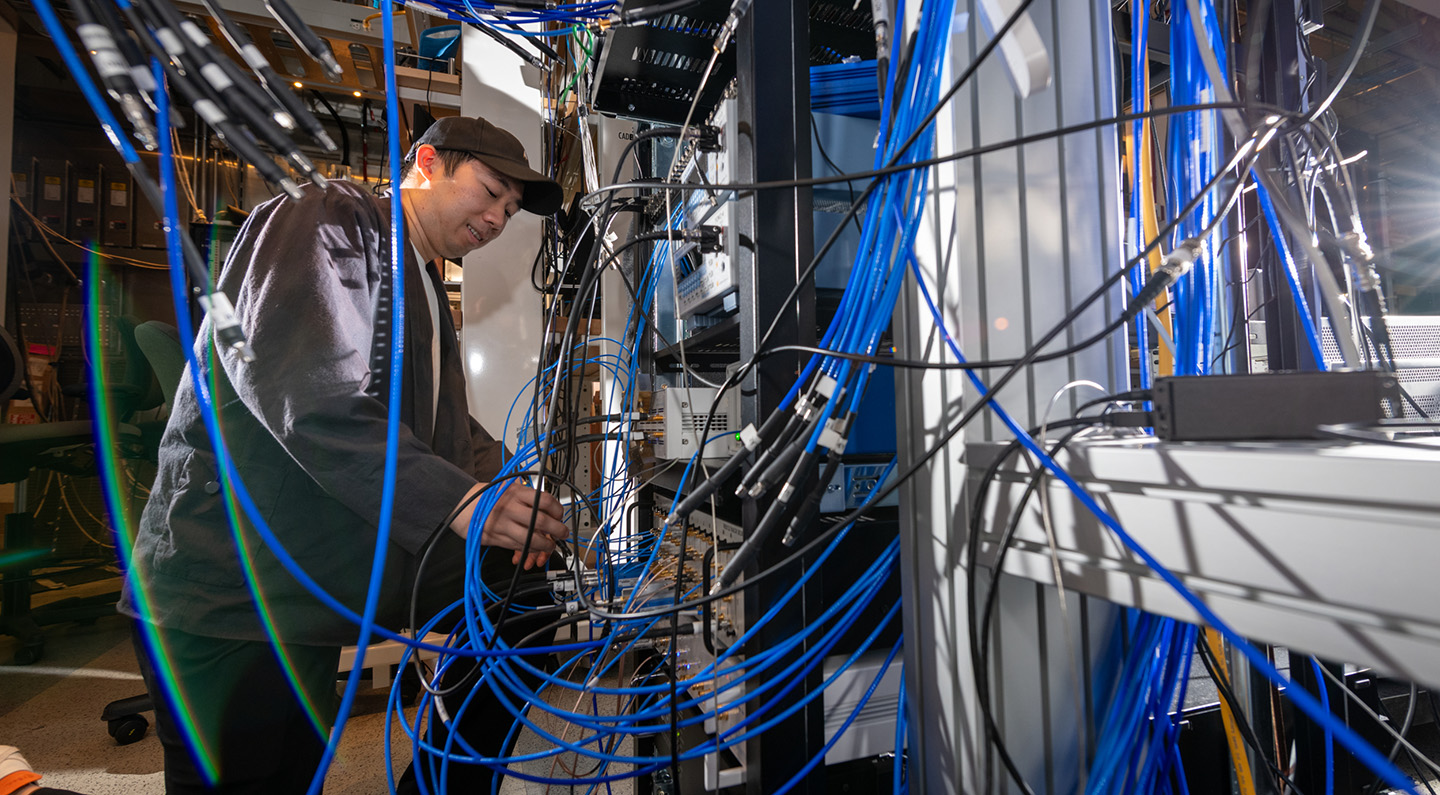
The third element of the stack is the rack of control electronics. Its role is to send highly precise, synchronized microwave pulses through the wires leading into the dilution refrigerator. These pulses control the qubits and perform “gating,” enabling qubits to interact in the exact ways required for each quantum computation. At the AQT, we manage this last part by using QubiC, an open-source superconducting qubit control system developed by researchers in Berkeley Lab’s Accelerator Technology & Applied Physics Division (ATAP), and in-house software designed to optimize the quantum program.
Q: Why is it important to think about the stack holistically when designing quantum computing systems of the future?
Taking the holistic approach is important because any part of the stack could be the thing that limits the performance of the quantum computer.
For example, at AQT, a lot of work goes into operating processors with the highest coherence, meaning that the quantum information stored in the processors is stable for as long as possible. But a quantum processor doesn’t do you any good if you aren’t able to deliver pristine microwave signals to it. So, you need to work on the cold stage of the dilution refrigerator to make sure that you’re not injecting noise or heat but only delivering the signals you want.
The wires are also important for scalability. Right now, you have one or more wires per qubit on your processor. This works well if you’ve got a few dozen qubits on your processor but not when you’re getting above a few thousand qubits. All those wires wouldn’t fit in the dilution fridge. Figuring out new types of low-noise wiring technology that can optimize coherence or the lifetime of quantum information is an active area of research.
Q: What will be the characteristics of first- and second-generation quantum computers, and how will they interact with classical computing?
The first-generation quantum computers that we have today are still intermediate scale, meaning these systems have a few dozen to a few hundred qubits. We can run interesting programs, but it’s not big enough to do a calculation that will really challenge the power of a supercomputer.
At Berkeley Lab, we’re contributing to the foundation for the second generation of these technologies — large-scale, error-corrected quantum systems. To make this a reality, we’ll ultimately need systems with thousands of qubits, if not many times larger than that.
Another important part is that these larger-scale systems will need a full stack built around them to correct errors as they arise in the quantum processors. And to detect and then correct those errors when they come up on the processor, you need a lot of classical computing. Figuring out what the error was and what you need to do as the corrective step is a very computationally intensive task.
Next-generation quantum computers will also include AI and machine learning in the loop. The ATAP team here is now looking into developing QubiCML, an AI-assisted readout for quantum computers that would allow us to do things like quantum-error correction or more advanced hybrid algorithms.
Q: What are the most important scientific challenges that these first-gen systems will help scientists solve that classical computers can’t today?
At AQT, a lot of the work that we do is focused on using first-generation quantum systems to understand the physics of quantum processors, and how we can build systems that are robust against noise. Solving this problem will allow us to develop large-scale, error-corrected quantum computers that will look at simulations of particle interactions, high-energy physics, condensed matter, new materials, and quantum chemistry.
Q: How is the current research at Berkeley Lab most likely to make an impact on the near and far futures of quantum computing?
There are challenges across the stack to getting to the next generation of quantum computers, from scaling up a quantum processor and cryogenic infrastructure to designing low-noise materials and error-corrected QPUs.
And the reason why Berkeley Lab is so central to these efforts is that we have extensive research in all these different areas.
In programs like the AQT, we’re working on building processors with performance increases of roughly 1,000 times compared to the processors we have in hand now.
At AQT, we’re also looking into how to optimize the operation of those devices in a full stack and applying them to real-world scientific problems. We’re taking what we learn at the testbed to work with industry on the future development of quantum computers.
In addition to large quantum programs, researchers can leverage world-leading experts and specialized instruments at the Molecular Foundry and the Advanced Light Source to study the materials used in quantum processors.
We also have the National Energy Research Scientific Computing Center (NERSC), whose supercomputers are critical to simulating quantum processors with optimal performance, and researchers in the ATAP Division with deep expertise in control electronics and instrumentation.
And finally, one of the things that we’re able to do in a national laboratory setting is look for the best solutions across a range of technologies that are going to get us to that next level, and then actually build and operate those systems at the scale of large prototypes so that we can directly observe how they work and figure out what we need to do to make them better.
###
The Advanced Light Source, Molecular Foundry, and NERSC are DOE Office of Science user facilities at Berkeley Lab.
Lawrence Berkeley National Laboratory (Berkeley Lab) is committed to groundbreaking research focused on discovery science and solutions for abundant and reliable energy supplies. The lab’s expertise spans materials, chemistry, physics, biology, earth and environmental science, mathematics, and computing. Researchers from around the world rely on the lab’s world-class scientific facilities for their own pioneering research. Founded in 1931 on the belief that the biggest problems are best addressed by teams, Berkeley Lab and its scientists have been recognized with 17 Nobel Prizes. Berkeley Lab is a multiprogram national laboratory managed by the University of California for the U.S. Department of Energy’s Office of Science.
DOE’s Office of Science is the single largest supporter of basic research in the physical sciences in the United States, and is working to address some of the most pressing challenges of our time. For more information, please visit energy.gov/science.
Solving a Mystery in Dark Matter Detectors Could Improve Quantum Computers
A ‘Robot Pizza Chef’ Serving Up Better Quantum Computers