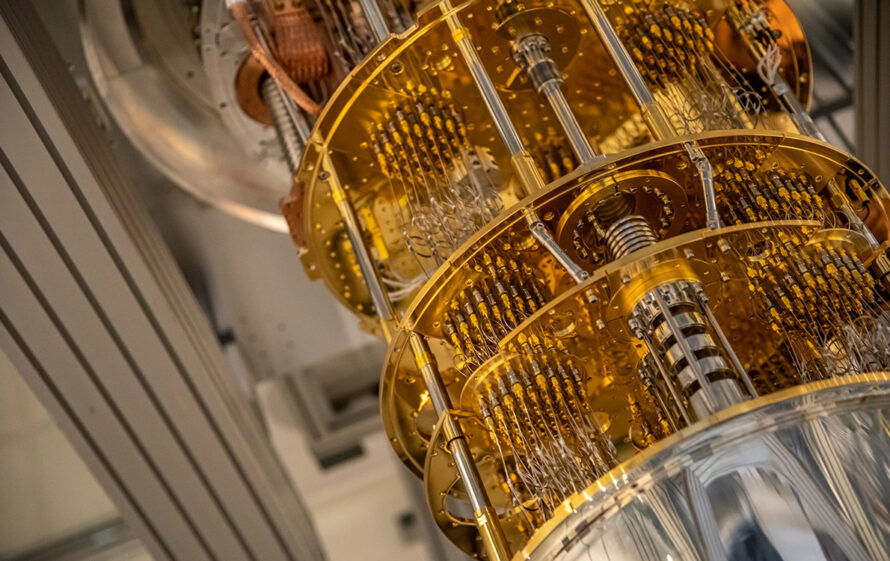
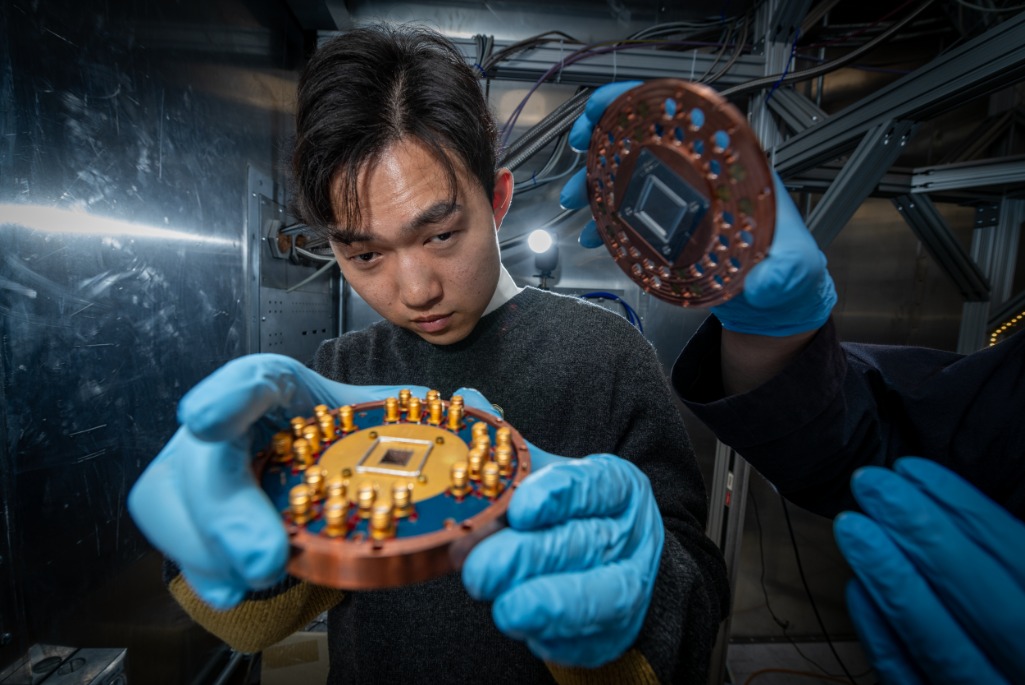
The Department of Energy’s Lawrence Berkeley National Laboratory (Berkeley Lab) is contributing to the development of quantum computing technologies to help solve grand challenges in energy, physics, chemistry, and beyond.
A big part of this effort is serving as a go-to resource for companies at the vanguard of quantum computing R&D and preparing the quantum workforce of tomorrow. Berkeley Lab partners with industry and across the quantum research ecosystem — from theory to application — to fabricate and test quantum-based devices, develop software and algorithms, and build prototype computers and networks. These capabilities also enable Berkeley Lab to play a key role in Quantum California, a new statewide initiative to coordinate California’s leadership in quantum technology, workforce development, and economic growth.
“Berkeley Lab’s expertise and capabilities are a vital component of the nation’s quantum ecosystem and help ensure that breakthroughs can move from experimental stages to practical applications,” said Bert de Jong, Quantum Systems Accelerator Director and Berkeley Lab scientist.
Here are several ways Berkeley Lab is already a vital part of the nation’s quantum ecosystem, supporting industry and more:
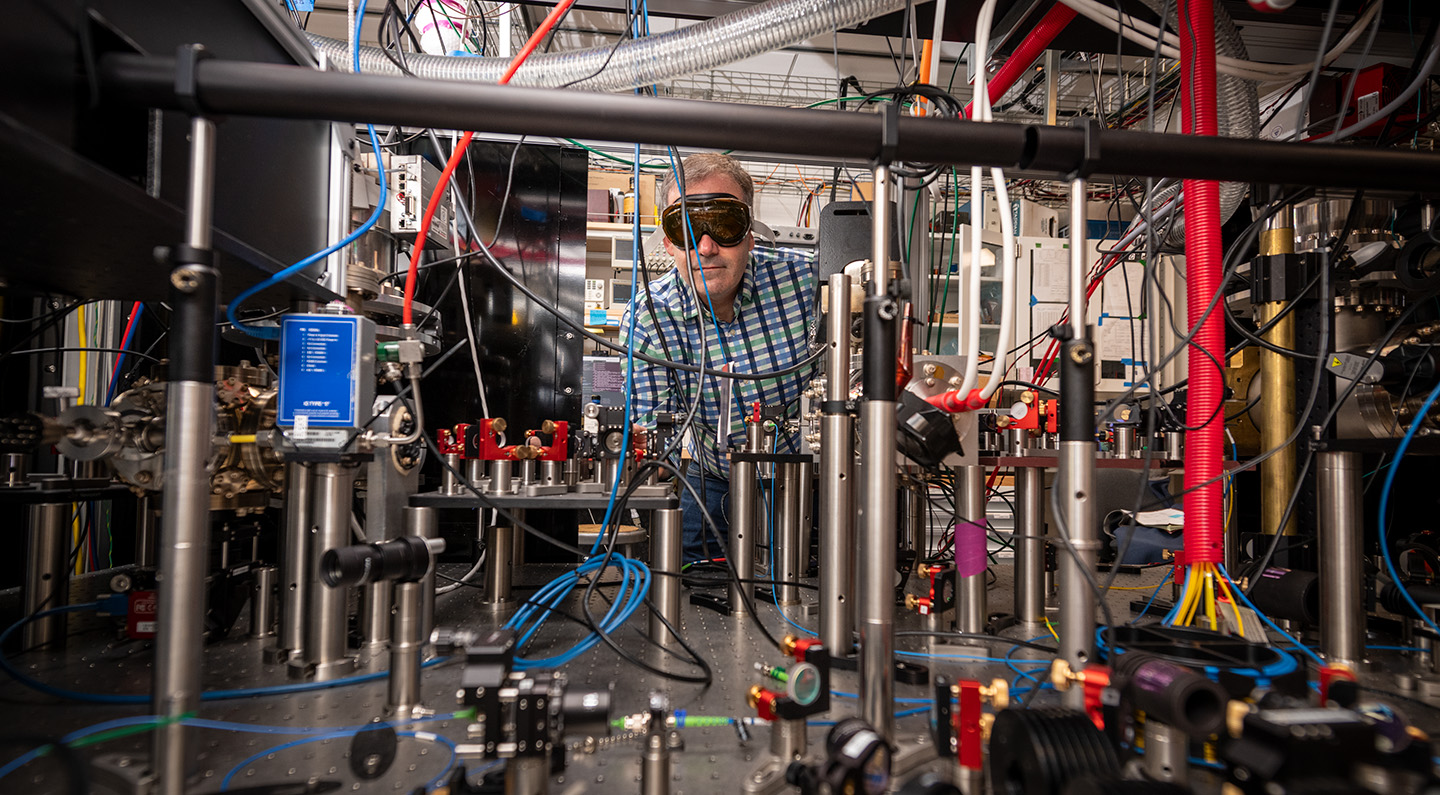
Quantum Application Network Testbed for Novel Entanglement Technology (QUANT-NET)
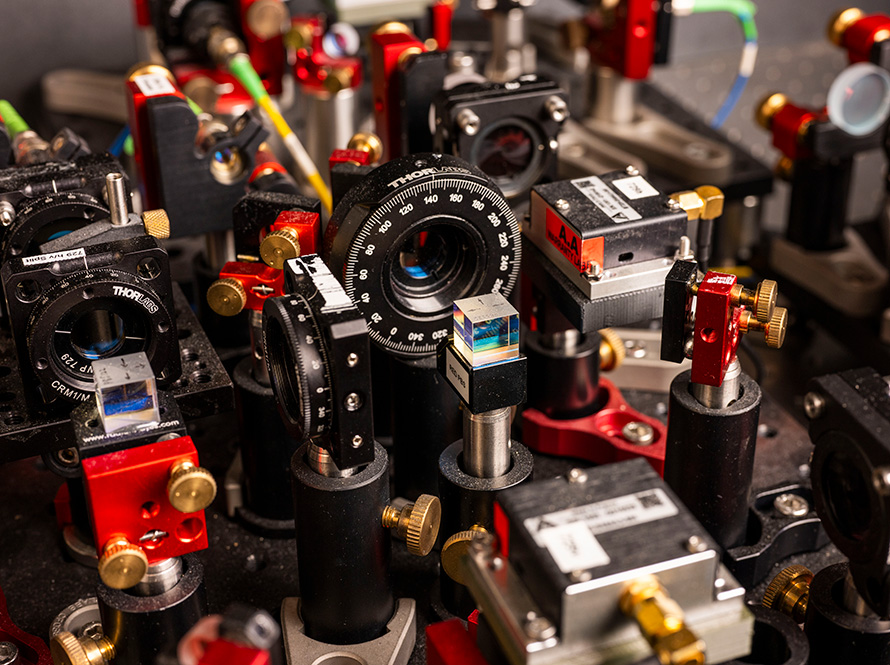
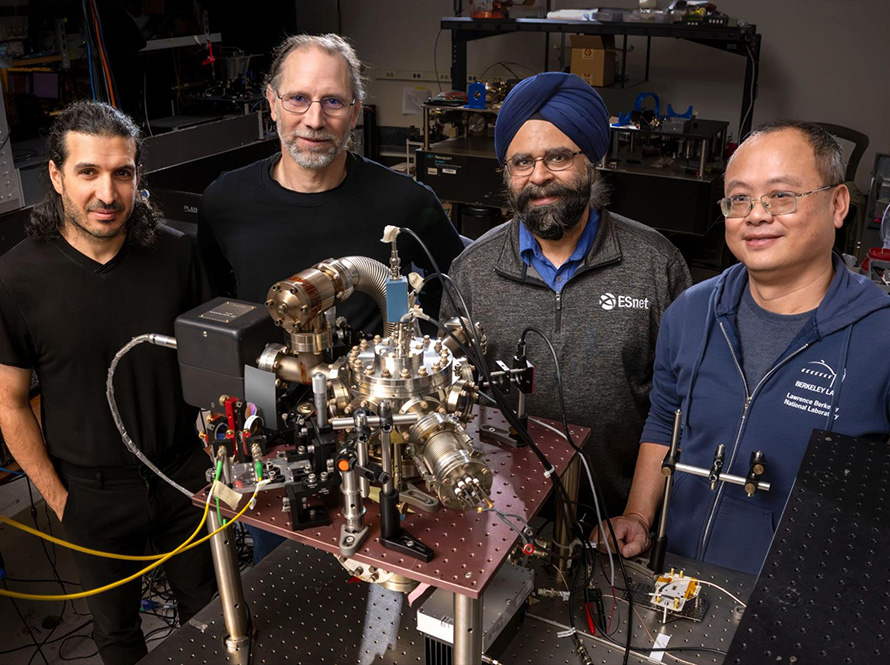
QUANT-NET is building a three-node distributed quantum computing testbed that connects Berkeley Lab with UC Berkeley, distributing quantum entanglement across 5 km of fiber. The project is led by researchers at Berkeley Lab and ESnet, working with co-PIs from UC Berkeley, the California Institute of Technology, and the University of Innsbruck. It is DOE’s only testbed devoted to distributed quantum computing. The QUANT-NET team collaborates with industry partners to develop and deploy their relevant components on the testbed, provides its modular software for use with other quantum networks, and shares technology advancements made on the testbed with the research community.
The team has made significant progress toward a practical, scalable quantum network. The testbed currently offers custom-built ion-trap quantum computing nodes, with leading 3-D printed micro-traps optimized for quantum communications. The team also deployed quantum frequency conversion to telecom frequencies, and they developed an innovative modular quantum network software platform with a two-level framework that automates quantum network operations. This two-level approach recently won the best paper award for the quantum networking & communications track at the IEEE Quantum Week 2025 conference.
Quantum Systems Accelerator (QSA)
The Quantum Systems Accelerator (QSA), led by Berkeley Lab in partnership with Sandia National Laboratories, is one of five DOE national quantum information science research centers. Established in 2020 and renewed in 2025, QSA brings together experts from leading academic institutions, industry, and national laboratories to develop quantum devices capable of tackling scientific problems beyond the reach of conventional computers, using three leading qubit technologies: trapped ions, superconducting systems, and neutral atoms.
Through these multi-sector collaborations, QSA’s scientific breakthroughs — such as reconfigurable array systems of neutral atoms — have been adopted by industry, with hardware deployed by companies like QuEra and commercial licensing of flex cable technologies. QSA has demonstrated a 256-atom quantum simulator, advancing the scalability and capabilities of quantum hardware for real-world applications. The open-source QubiC control system, also leveraged by industry collaborators like NVIDIA’s NVQLink, supports scalable device benchmarking and algorithm development.
QSA’s innovation ecosystem includes dedicated industry roundtables, and partners benefit from access to broader resources, such as world-class quantum foundries and national user facilities, open-access software, and rapid design qubit capabilities. These resources offer clear entry points for industry collaboration and have enabled successful partnerships with both established companies and startups.
National Energy Research Scientific Computing Center (NERSC)
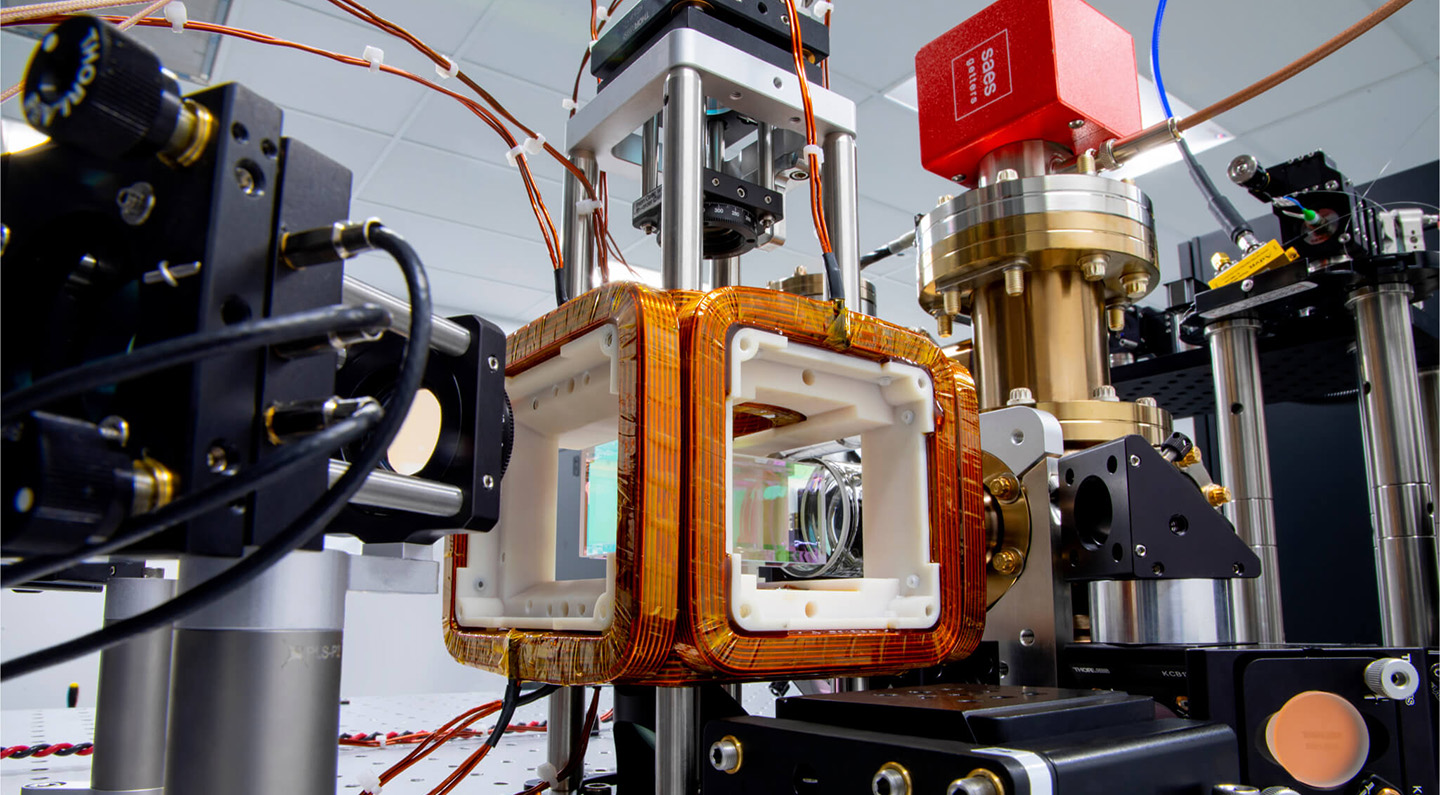
The National Energy Research Scientific Computing Center (NERSC) enables the work of over 11,000 science researchers through high performance computing. Since 2022, NERSC’s QIS @ Perlmutter program, which supports projects in quantum information science with compute time and expertise, has awarded more than half a million compute hours to more than 30 QIS project teams across national labs, industry and academia. Additionally, NERSC’s Quantum Computing Access program offers some users access to quantum computers at IBM and QuEra Computing for use in their research. Collaborating with companies like NVIDIA, QuEra, Xanadu, Rigetti, and others on projects in quantum simulation, error mitigation, chemistry, materials science, and condensed matter physics, NERSC is accelerating quantum simulations at supercomputing scale.
Molecular Foundry
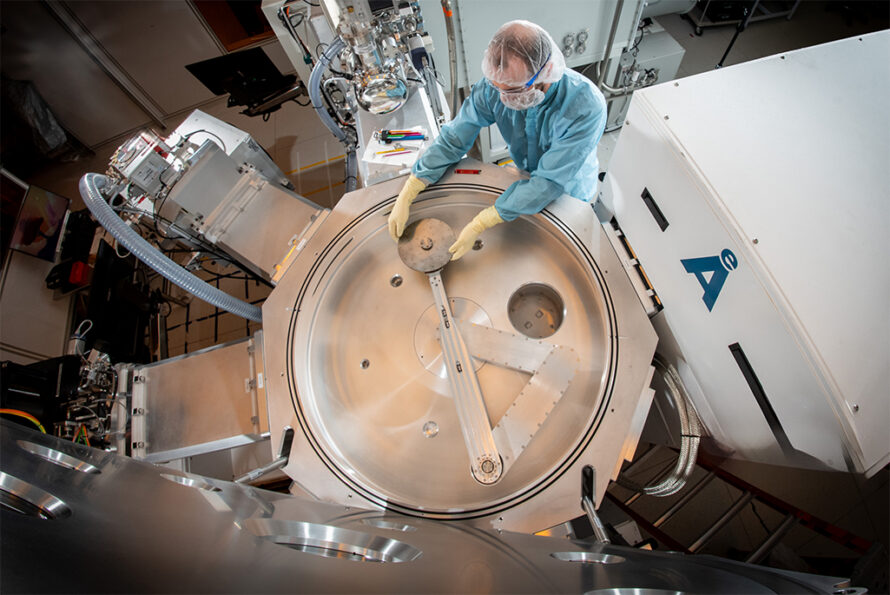
The Molecular Foundry provides access to expertise, instrumentation, and tool development for research at the smallest scales. Since phenomena at the nanoscale touch nearly every field of science, the Foundry brings together a broad range of capabilities, all under one roof. Researchers here are working to improve fundamental understanding of quantum phenomena in materials, targeting breakthroughs in coherence and scalability in quantum computing and sensing. Industry researchers can collaborate with staff who integrate atomic-scale synthesis and design, multimodal characterization, AI accelerated theory, and device feedback to achieve these goals. Available tools include a QIS cluster tool that enables researchers to experiment with dozens of materials and methods for making qubit components in a single automated system, and a soon-to-be-delivered dilution refrigerator that will enable high-throughput analysis of qubits.
Advanced Light Source
The Advanced Light Source (ALS) produces bright beams of X-ray, ultraviolet, and infrared light for cutting-edge research. Each year, as many as 2,000 scientists from industry, academia, and national labs use the ALS to probe materials with atomic precision — work that underpins technologies from semiconductors to energy storage. ALS capabilities are advancing the quantum frontier by enabling visualization and control of quantum states in new materials, including superconductors, topological insulators, and atomically thin magnets — helping industry accelerate innovation in next-generation electronics and quantum devices.
Preparing Tomorrow’s Workforce
As cutting-edge quantum research pushes the boundaries of technology, national labs are also helping to build a future workforce ready for the rapidly evolving field. At the forefront of this effort is QSA, which trains over 150 graduate students and 100 postdoctoral students annually, building a robust pipeline of quantum talent to keep American businesses and research organizations at the forefront of the field.
Complementing QSA’s efforts at Berkeley Lab, internships and hands-on research projects at the Advanced Quantum Testbed (AQT) prepare students, postdocs, and early-career researchers for careers in fields such as quantum device design and fabrication, cryogenic engineering, and scalable quantum software. Alumni go on to lead innovation at technology companies, startups, and research institutes. Through collaborative R&D, hardware partnerships, and skilled talent, AQT strengthens America’s leadership in transformative quantum technologies.
Building on this strong foundation of graduate and postdoctoral training, efforts are also underway to engage students much earlier in their educational journeys. Berkeley Lab’s Academic Learning Internships and Faculty Training Office (formerly Workforce Development & Education and K–12 STEM Education programs), in collaboration with partners such as Sandia National Laboratories, is developing programs that introduce high school students and educators to quantum concepts well before career paths are firmly set. The aim is to spark curiosity, build foundational skills, and create pathways into future quantum careers.
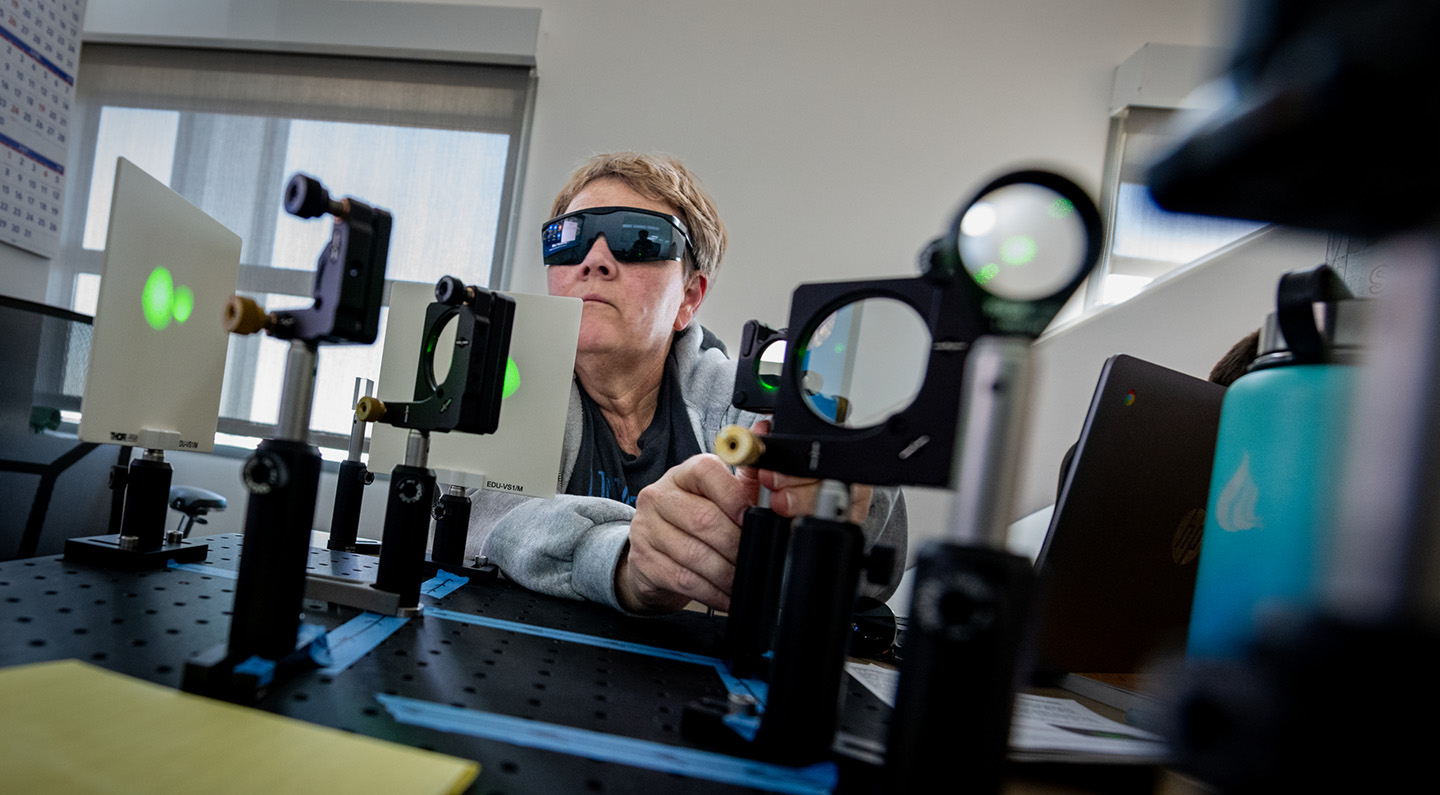
One such pioneering initiative for high school students and educators is QSA’s Quantum Computing Mathematics and Physics Summer Camp (QCaMP). What began as a series of short online sessions has evolved into comprehensive, in-person programs. To date, QCaMP has reached more than 300 educators as well as over 200 students nationwide. Many alumni — both students and teachers — have returned to Berkeley Lab as quantum research interns. Building on this momentum, Berkeley Lab plans to deepen partnerships with community colleges and universities in 2026, with an increased emphasis on workforce readiness.
The Advanced Light Source, NERSC, and the Molecular Foundry are DOE Office of Science user facilities located at Berkeley Lab.
###
Lawrence Berkeley National Laboratory (Berkeley Lab) is committed to groundbreaking research focused on discovery science and solutions for abundant and reliable energy supplies. The lab’s expertise spans materials, chemistry, physics, biology, earth and environmental science, mathematics, and computing. Researchers from around the world rely on the lab’s world-class scientific facilities for their own pioneering research. Founded in 1931 on the belief that the biggest problems are best addressed by teams, Berkeley Lab and its scientists have been recognized with 17 Nobel Prizes. Berkeley Lab is a multiprogram national laboratory managed by the University of California for the U.S. Department of Energy’s Office of Science.
DOE’s Office of Science is the single largest supporter of basic research in the physical sciences in the United States, and is working to address some of the most pressing challenges of our time. For more information, please visit energy.gov/science.
What’s the Problem with Quantum Noise?
A ‘Robot Pizza Chef’ Serving Up Better Quantum Computers