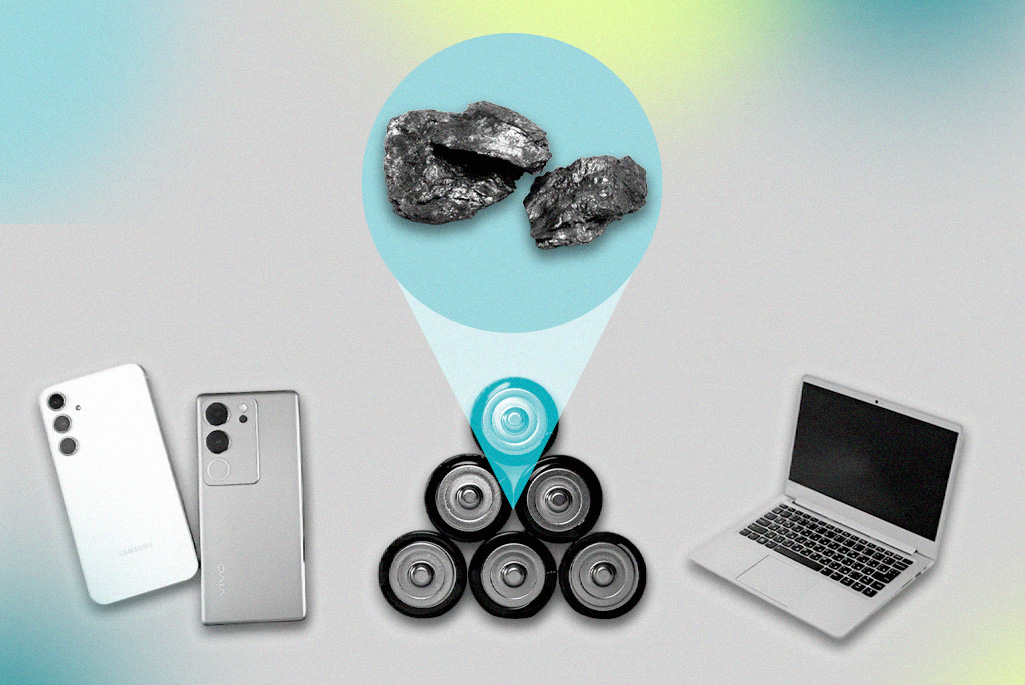
Graphite, the carbon center of your humble #2 pencil, is also an essential component in technologies such as batteries, smartphones, laptops, and industrial power equipment. Today, nearly all of this critical mineral has to be mined and processed and, in the United States, imported.
But now, researchers at the U.S. Department of Energy’s Lawrence Berkeley National Laboratory (Berkeley Lab), UC Berkeley, and Estonia’s National Institute of Chemical Physics and Biophysics have shown a promising way to convert waste carbon pulled from the air into graphite, opening up a potential alternative to mining. The work was published recently in the journal Nature Communications.
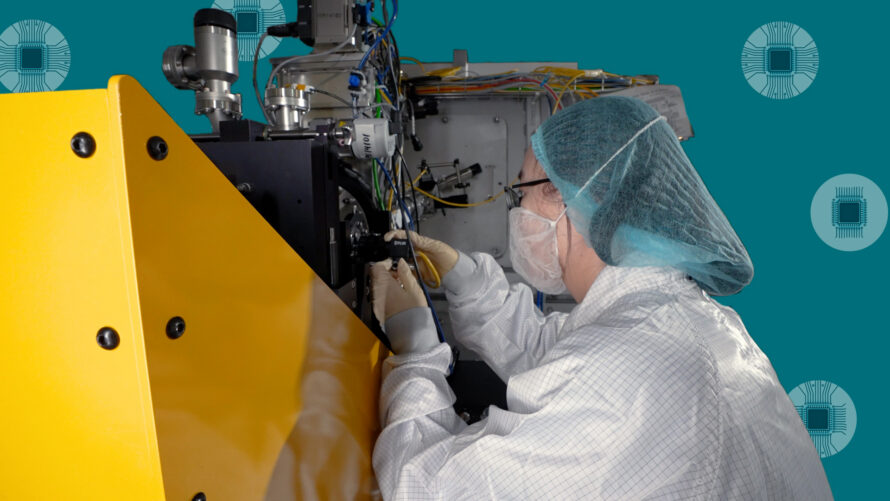
Researchers built a custom microscope setup to watch a process known as molten-salt electrolysis, which uses electricity and hot liquid salts to turn carbon dioxide into solid carbon. For the first time, researchers were able to watch the process in real time inside the corrosive, 500-degree-Celsius molten salts while the system was running.
The observations answered a decades-old question about how the reaction actually occurs at the molecular level, revealing an unexpected two-step process. The researchers also found that the basic chemical reaction remained the same even when they changed the materials used for the electrodes and molten salts. Because different materials produce different carbon structures, scientists should be able to tune the process to make valuable carbon products, with an end goal of making battery-grade graphite.
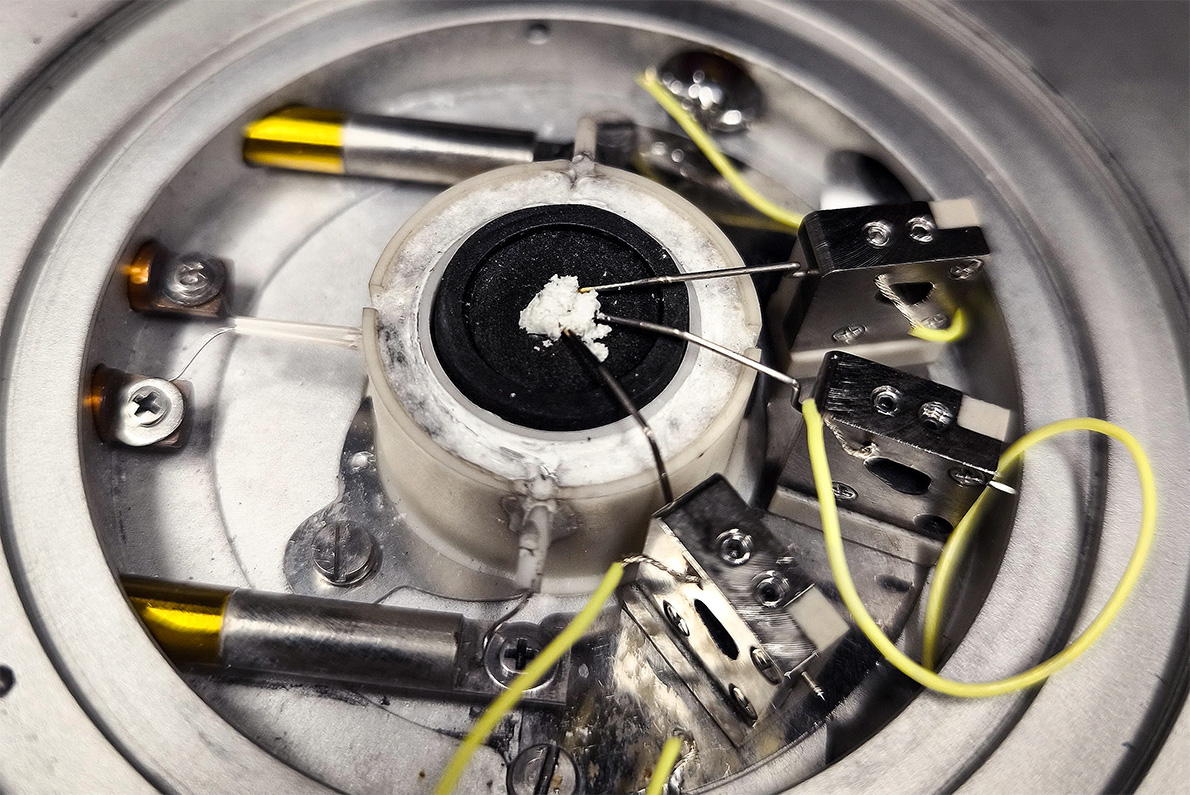
“This is a major win in a larger effort of synthesizing critical materials and battery materials using molten salts,” said Mike Whittaker, a Berkeley Lab scientist who worked on the project. “If you could run this process at low temperatures with really cheap salts, you could have it in a lot of places, and you could generate enough graphite that you could feed into battery supply chains.”
The team’s approach demonstrates a powerful new way to study chemistry inside molten salts, an environment that has been historically difficult to probe directly because of its harsh conditions. The next step is determining the optimal combinations of molten salts, electrode materials, temperatures, and voltages to make graphite and other carbon materials. Researchers will also need to scale up the approach to produce industrially useful amounts.
This work was part of the MINerals for Energy Storage Synthesis (MINES) program funded by the Department of Energy’s Basic Energy Sciences program.
###
Lawrence Berkeley National Laboratory (Berkeley Lab) is committed to groundbreaking research focused on discovery science and solutions for abundant and reliable energy supplies. The lab’s expertise spans materials, chemistry, physics, biology, earth and environmental science, mathematics, and computing. Researchers from around the world rely on the lab’s world-class scientific facilities for their own pioneering research. Founded in 1931 on the belief that the biggest problems are best addressed by teams, Berkeley Lab and its scientists have been recognized with 17 Nobel Prizes. Berkeley Lab is a multiprogram national laboratory managed by the University of California for the U.S. Department of Energy’s Office of Science.
DOE’s Office of Science is the single largest supporter of basic research in the physical sciences in the United States, and is working to address some of the most pressing challenges of our time. For more information, please visit energy.gov/science.

Digging Deep: How Berkeley Lab Advances Subsurface Research for Energy, Water, and More
New Process Uses Microbes to Create Valuable Materials from Urine