All News

Science Power-up: Rewriting the Rules with Quantum Information Science
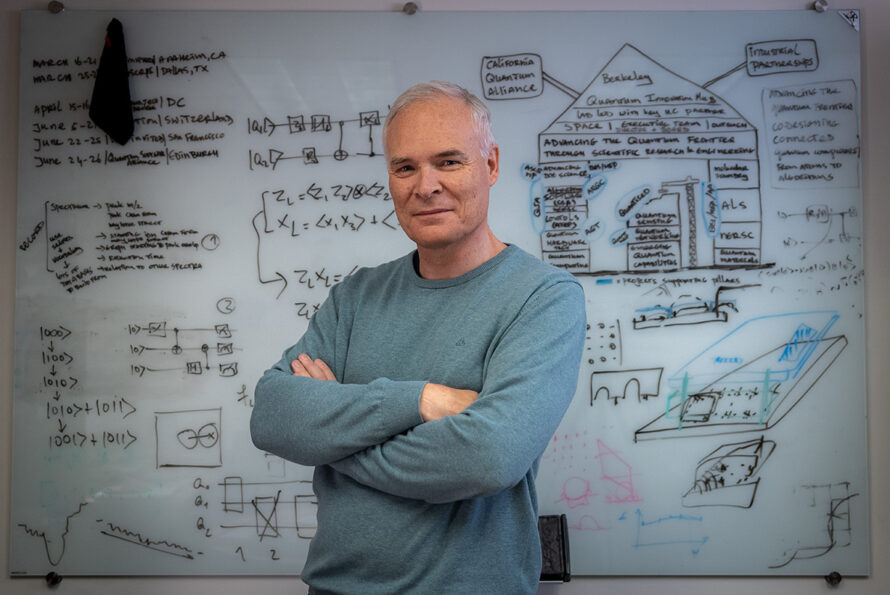
Bert de Jong standing in front of a whiteboard covered in equations.

Seven Ways Berkeley Lab is Pioneering the Quantum Future
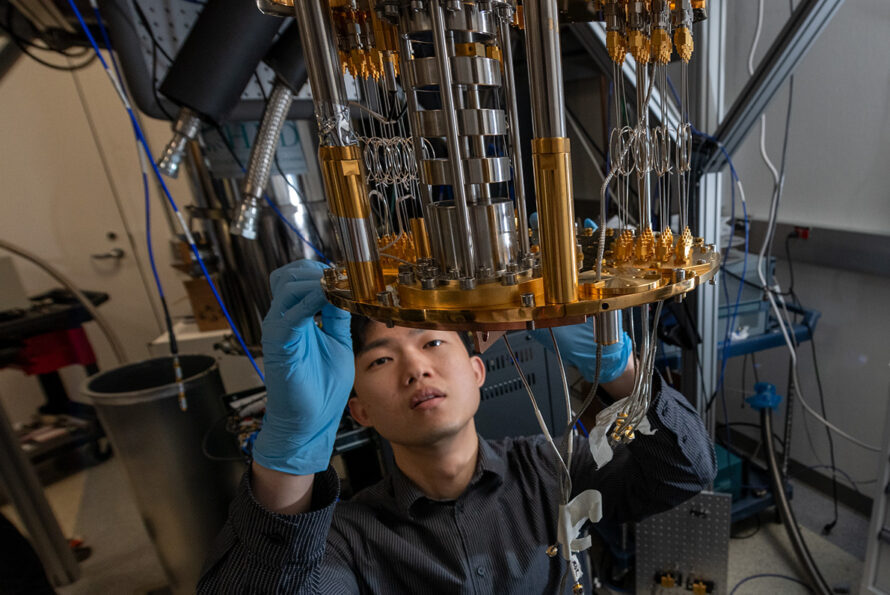
A researcher in a lab crouched below a silver and gold quantum computer. They are making adjustments to the bottom edge.

A Quiet Revolution: New Technique Could Accelerate Noise-Free Superconducting Qubits for Quantum Computing
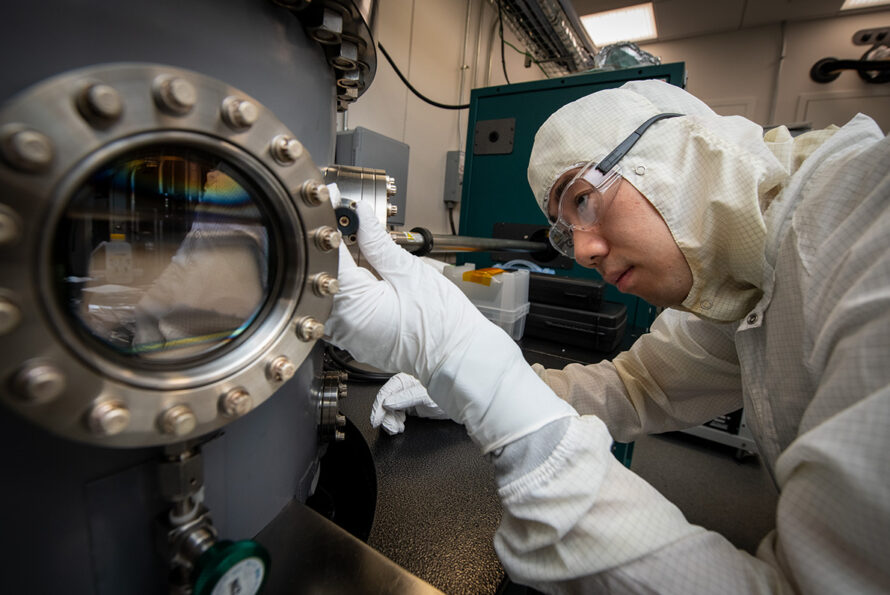
A scientist in a cleanroom suit, gloves, and safety glasses carefully examines a vacuum chamber, with their reflection visible in a round glass window.

Moiré than Meets the Eye

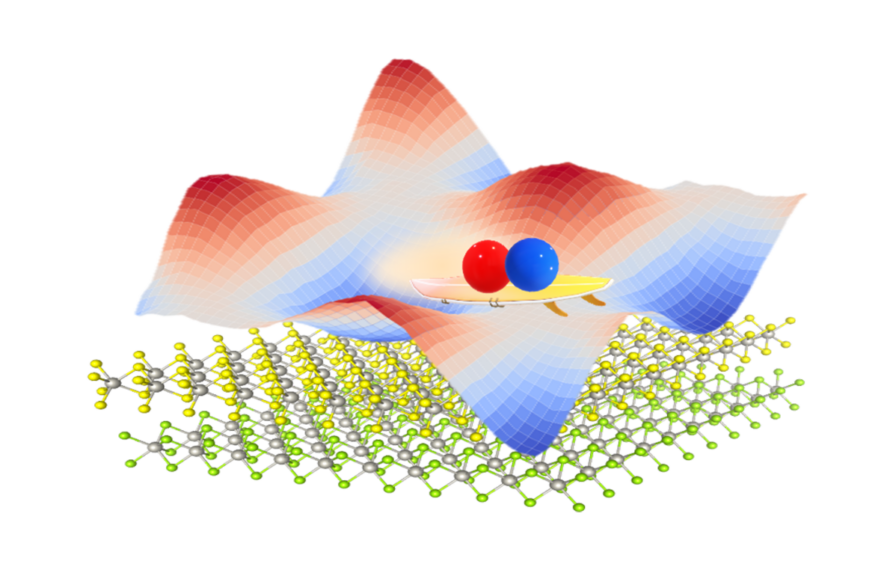
A colorful schematic of an exciton surfing on a red and blue wave graph. A yellow and blue isometric view of molecules is below.

For Better Quantum Sensing, Go With the Flow
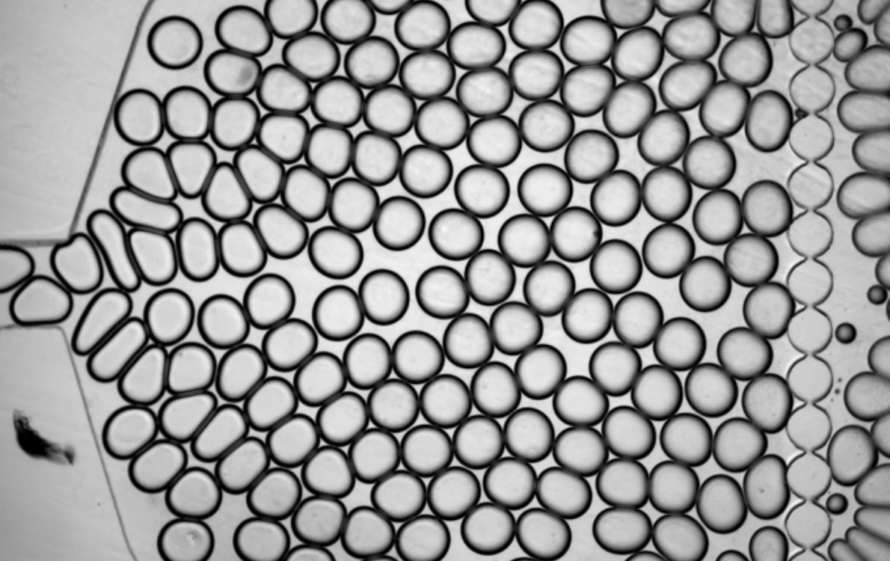
Dozens of droplets clustered together

U.S. Department of Energy National Quantum Information Science Research Centers Celebrate 4-year Milestone, Look Toward Future
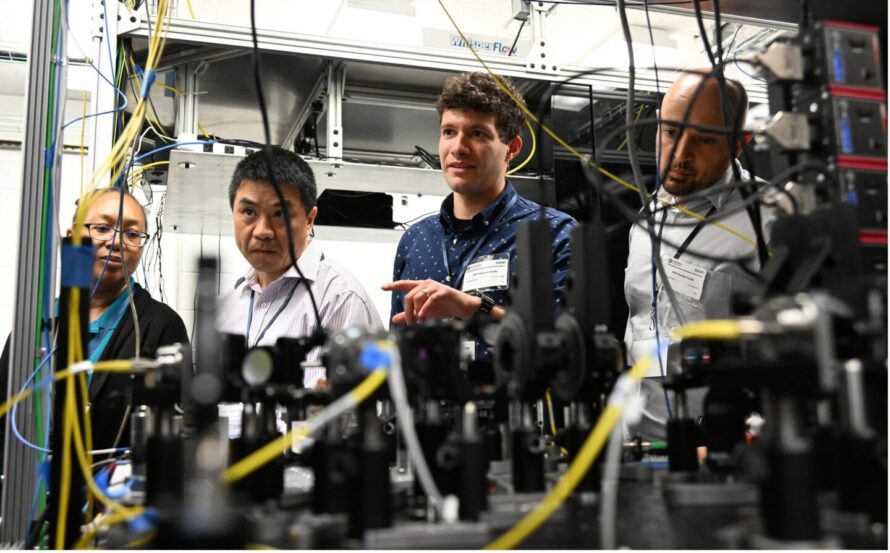
Four people touring the Quantum Network Facility.

Scientists Capture Images of Electron Molecular Crystals
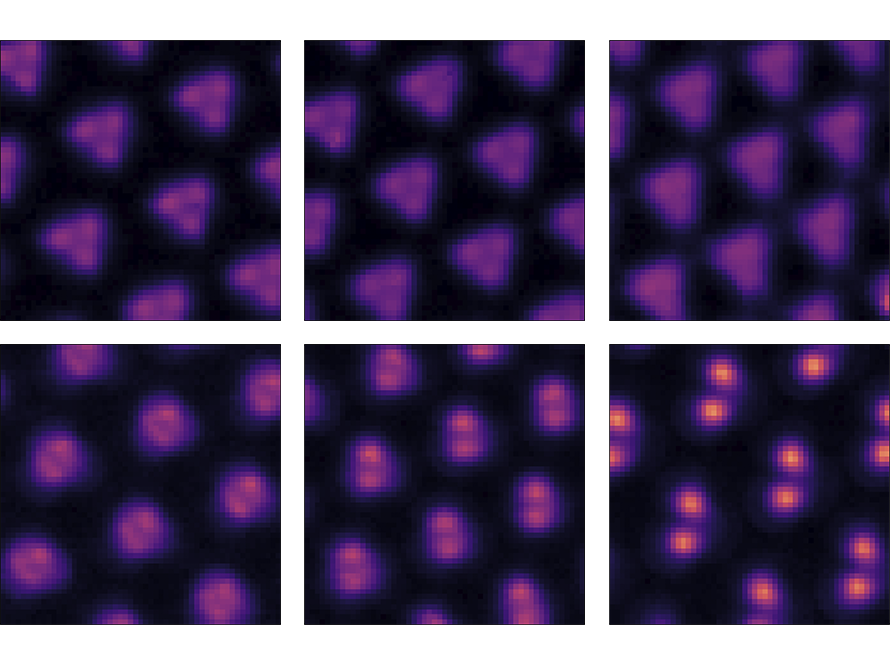
2 rows of 3 scanning tunnel microscope images showing purple shapes against a dark background.

Researchers Succeed in Taking 3D X-ray Images of a Skyrmion
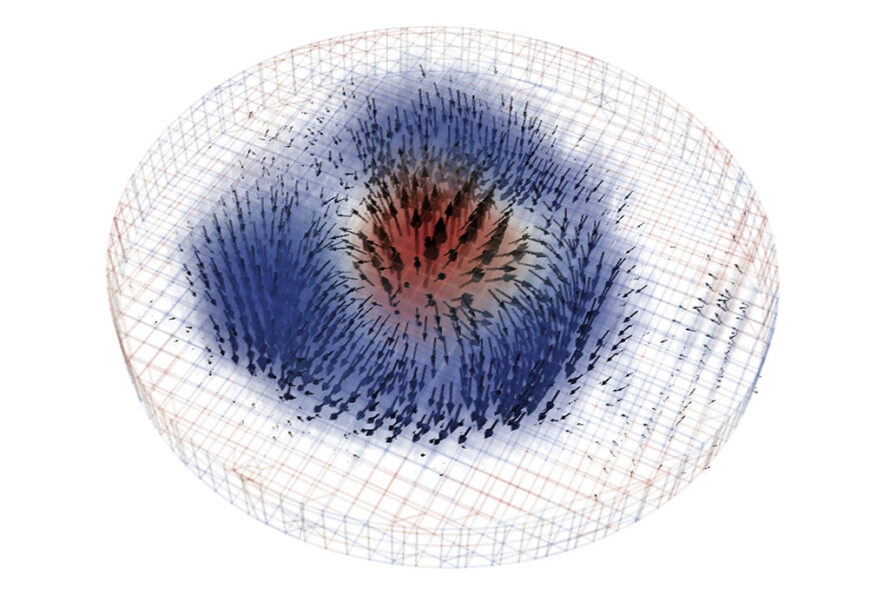
A rendering in paraview of the product of the 3D reconstruction. (Credit: David Raftrey)

Basics 2 Breakthroughs

Researcher working at a laptop. An illustration of a microchip is composited in the background.

Building the Quantum Future, Qubit by Qubit

Portrait of Bert de Jong, a person with short gray hair wearing a black jacket with arms crossed over chest, smiling.

A New Approach to Accelerate the Discovery of Quantum Materials
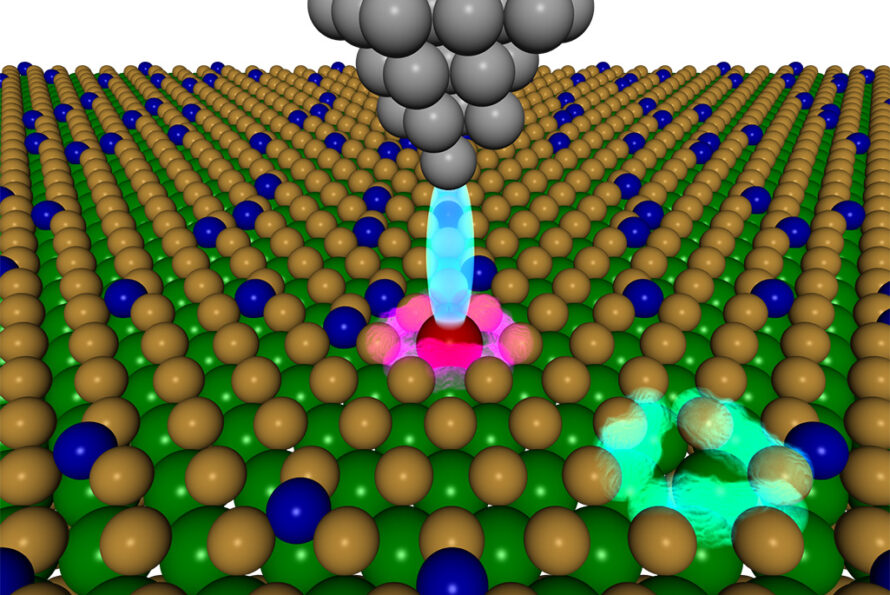
This image shows the cobalt defect fabricated by the study team. The green and yellow circles are tungsten and sulfur atoms that make up a 2D tungsten disulfide sample. The dark blue circles on the surface are cobalt atoms. The lower-right area highlighted in blue-green is a hole previously occupied by a sulfur atom. The area highlighted in reddish-purple is a defect—a sulfur vacancy filled with a cobalt atom. The scanning tunneling microscope (gray) is using electric current (light blue) to measure the defect’s atomic-scale properties.

New Technique Could Help Build Quantum Computers of the Future
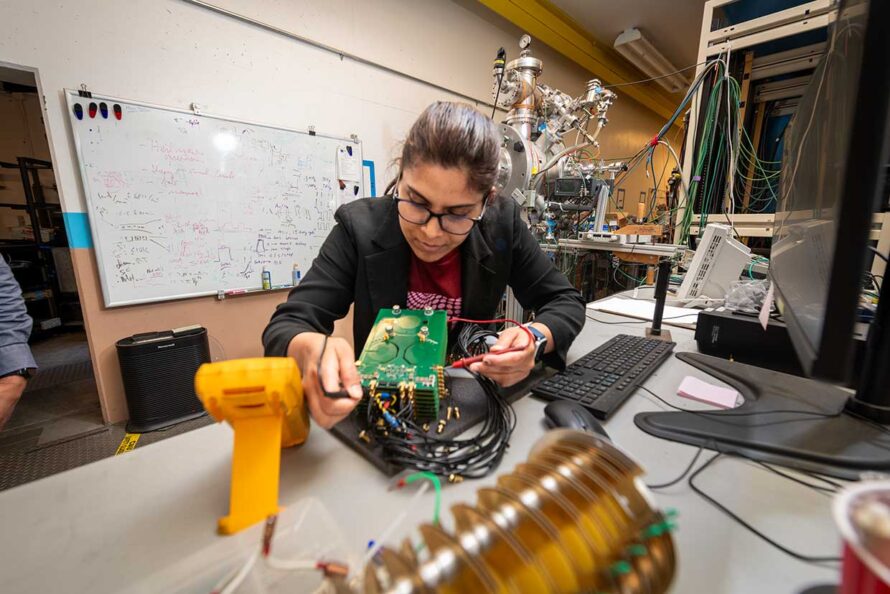
A person testing electronics that are part of the experimental setup used for making qubits in silicon in a lab.