All News

A Quick New Way to Screen Virus Proteins for Antibiotic Properties

A digital illustration showing red virus particles each with a geometrically shaped capsule, stalk, and leg-like appendages attached to the surface of a green bacterium.

Science in Motion: Can enhanced weathering help slow climate change?

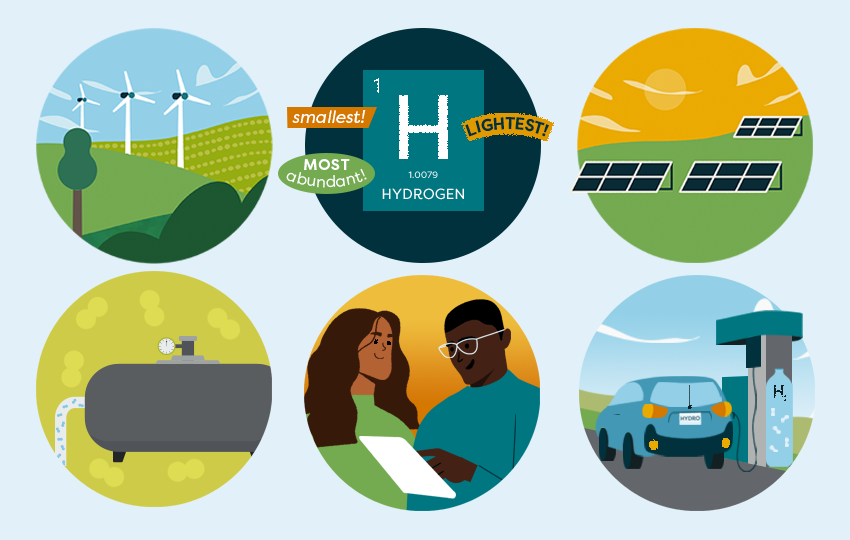
Graphic illustration depicting five separate illustrations.

A Day in the Half-Life

Illustration depicting a three-sectioned recycling sign surrounding a scene of two recycling bins with recyclables at varying states of decay.

Electric Vehicle Batteries Could Get Big Boost With New Polymer Coating

Illustration of a blue electric vehicle with light streaming from it against a black background.

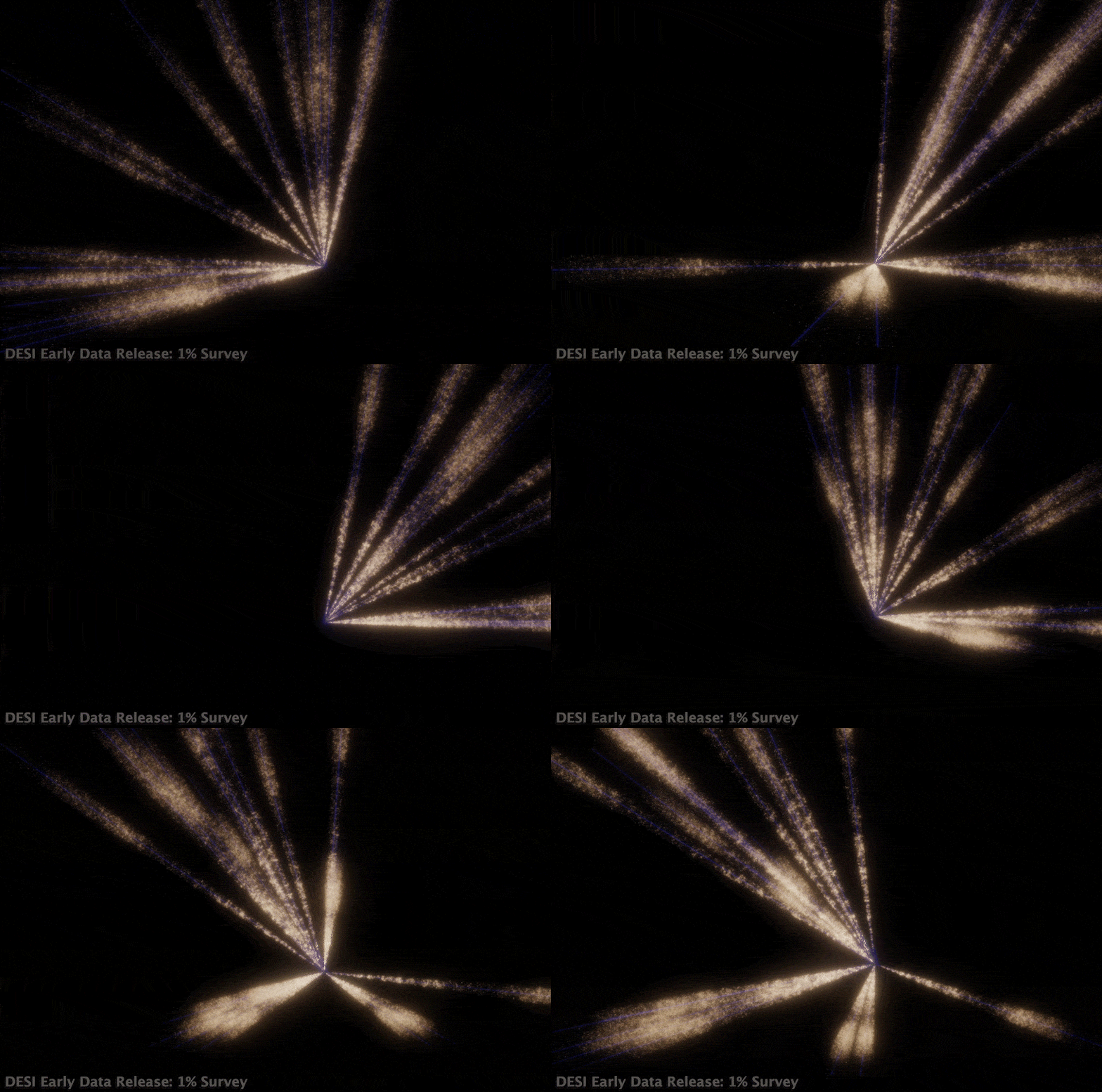
New DESI Planetarium Show to Premiere in Spring 2023

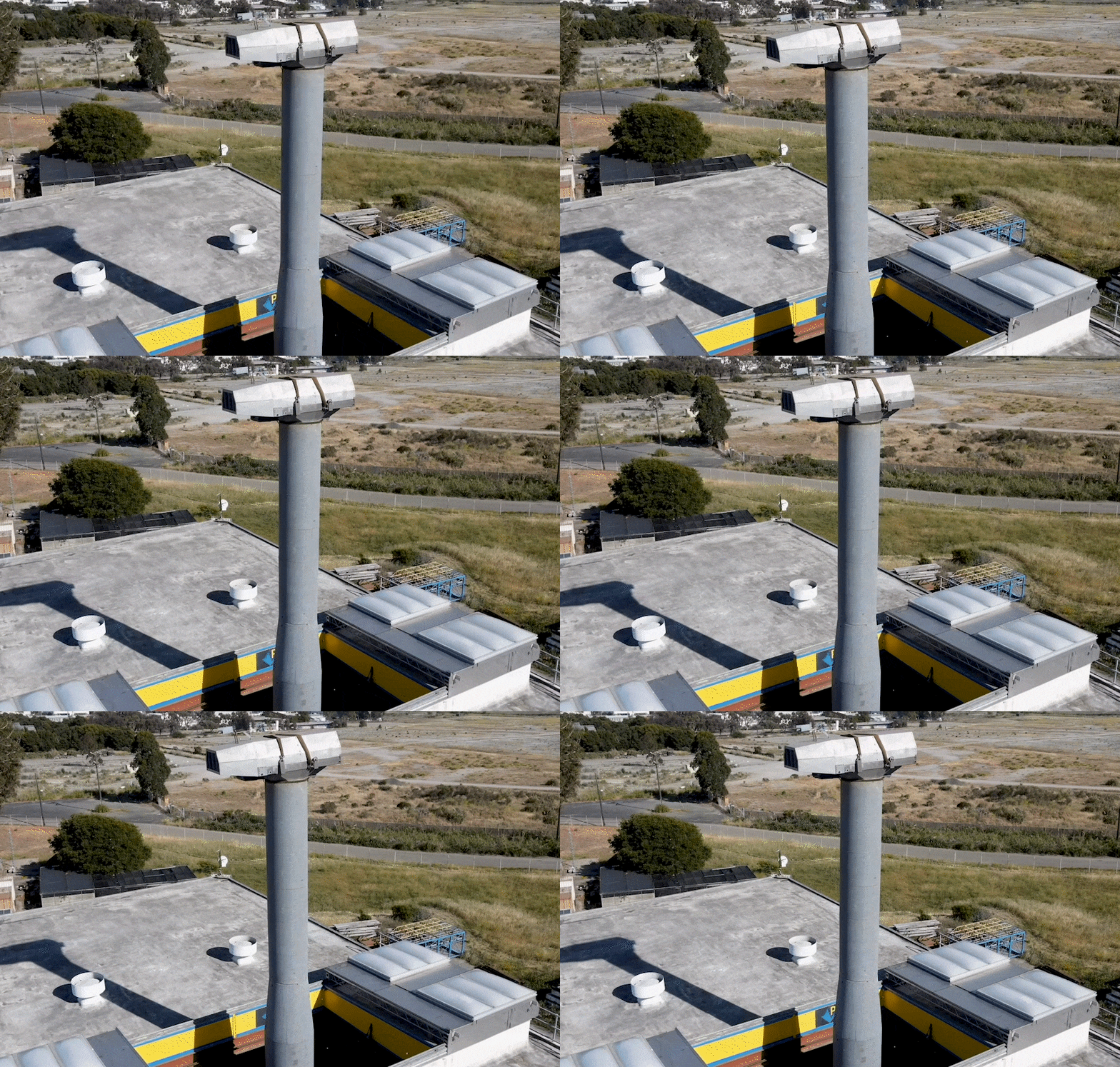
The Dark Energy Spectroscopic Instrument (DESI) atop Kitt Peak.

Berkeley Lab Director Mike Witherell to Serve on Governing Council of the National Academy of Sciences

Person in a black suit and glasses standing cross-armed in front of buildings.

On the Road to Better Solid-State Batteries

Scanning transmission electron microscope images reveal the elemental distribution in a “disordered” solid electrolyte.

How a Record-Breaking Copper Catalyst Converts CO2 Into Liquid Fuels

Artist’s rendering of a copper nanoparticle life cycle during CO2 electrolysis: Copper nanoparticles (left) combine into larger metallic copper “nanograins” (right) within seconds of the electrochemical reaction, reducing CO2 into new multicarbon products.

New Compound That Withstands Extreme Heat and Electricity Could Lead to Next-Generation Energy Storage Devices

A new type of polysulfate compound can be used to make polymer film capacitors that store and discharge high density of electrical energy while tolerating heat and electric fields beyond the limits of existing polymer film capacitors.

Doubling Protected Lands for Biodiversity Could Require Tradeoffs With Other Land Uses, Study Finds

Sunrise over a prairie.

The Most Advanced Bay Area Earthquake Simulations Will be Publicly Available

A small brown wooden model of a house sits on cracked concrete

Microscopy Images Could Lead to New Ways to Control Excitons for Quantum Computing

This electron microscopy-derived composite image shows excitons in green. The moiré unit cell outlined in the lower right of the exciton map is about 8 nanometers in size.