All News

Three Berkeley Lab Researchers Named AAAS Fellows

Three portraits of different scientists on a blue-green gradient background

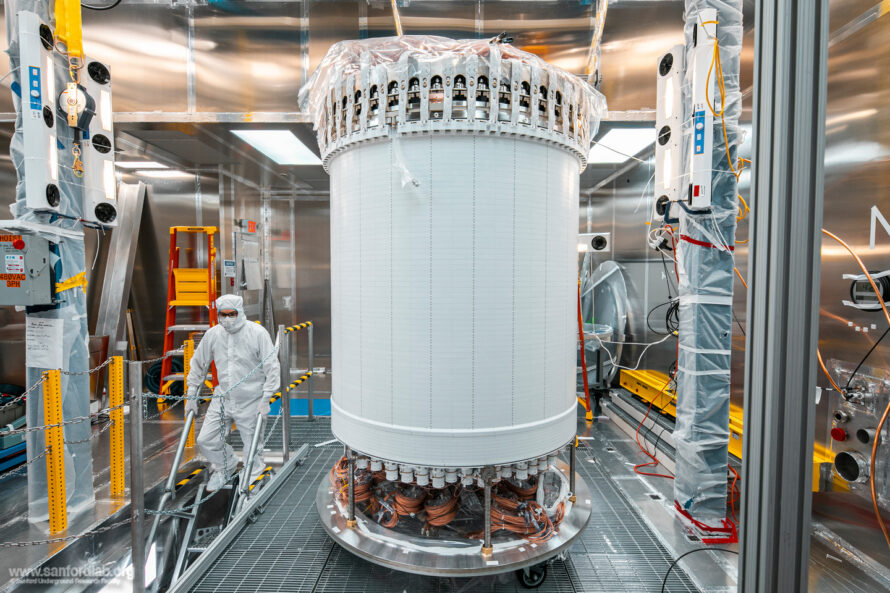
Solving a Mystery in Dark Matter Detectors Could Improve Quantum Computers

Close-up of a hexagonal structure holding two square chips, each with two reflective lines.

Berkeley Lab Takes Major Step Toward Doudna with Delivery of Early Access System, Cech

Thomas Cech in front of an illustration of an RNA molecule.

Improving U.S. Industrial Competitiveness and Productivity

Collage of industrial and technology scenes: rows of servers in a data center, a refinery or power plant with tall stacks, and a food or beverage bottling line, arranged with teal and green graphic blocks.

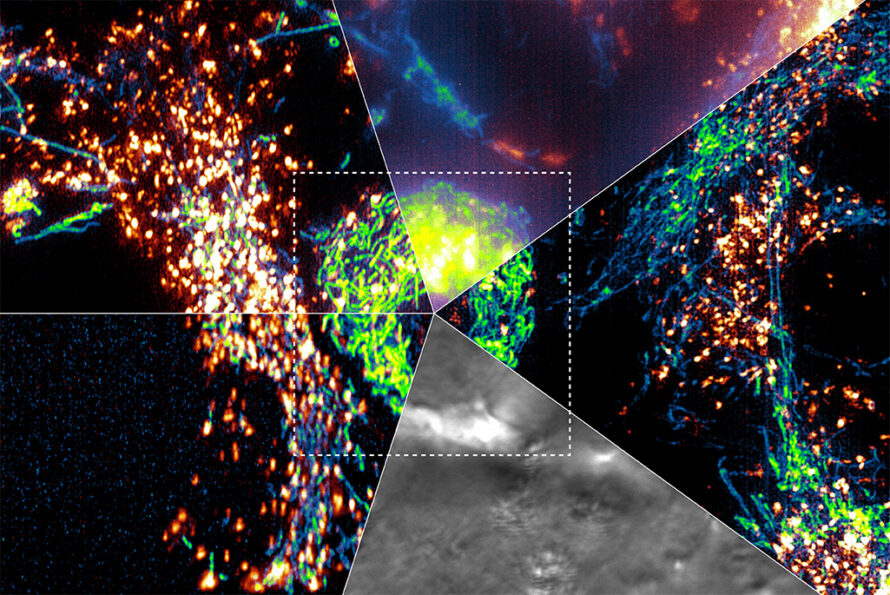
Cracking the Code: Using AI to Solve Difficult-to-Map Proteins

Graphic showing a timeline of progress in protein design from 2010 to 2024. In 2010, labeled “Impossible,” a small chemical structure is shown. In 2012, labeled “Limited,” a simple ribbon-like protein fragment appears. In 2017, labeled “Possible,” a more complex folded protein structure is shown with scissors icons indicating editable segments. In 2024, labeled “Practical,” a large, detailed multi-part protein complex is displayed. The layout visually conveys increasing capability and complexity over time.

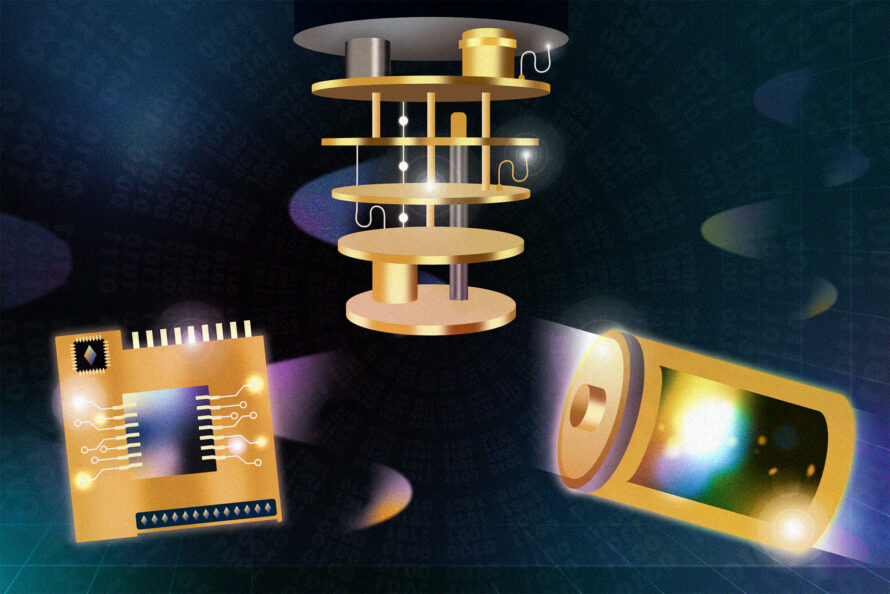
Thermodynamic Computing Advances with Design and Training

A computer processor CPU overheating and smokes around on computer motherboard, blue logic board with microprocessor.

Two Berkeley Lab Scientists Elected to the National Academy of Engineering

A circular photo portrait of a male scientist and a female scientist on a blue-green gradient background.

New Electron Microscopy Technique Reveals Atomic Structures From Nanocrystals Once Considered Unsolvable

Two researchers adjusting the controls of a complex imaging instrument.

Basics 2 Breakthroughs: Optimizing Materials for Next-Generation Microelectronics

A collage image of a research adjusting an experiment. The research and experiment are superimposed over a teal background with a microchips.

Accelerating Science with Digital Twins

A simulation from a digital twin representing a fusion device. Plasma shape and position can be seen in red and yellow.

Five Berkeley Lab Scientists Receive DOE Early Career Research Awards

Five portraits of different scientists on a blue-green gradient background

Science on the Double: How an AI-Powered 'Digital Twin' Accelerates Chemistry and Materials Discoveries

A closeup view of an amber colored sample holder from outside of a viewing window.