All News

Pushing the Boundaries of Moore’s Law: How Can Extreme UV Light Produce Tiny Microchips?

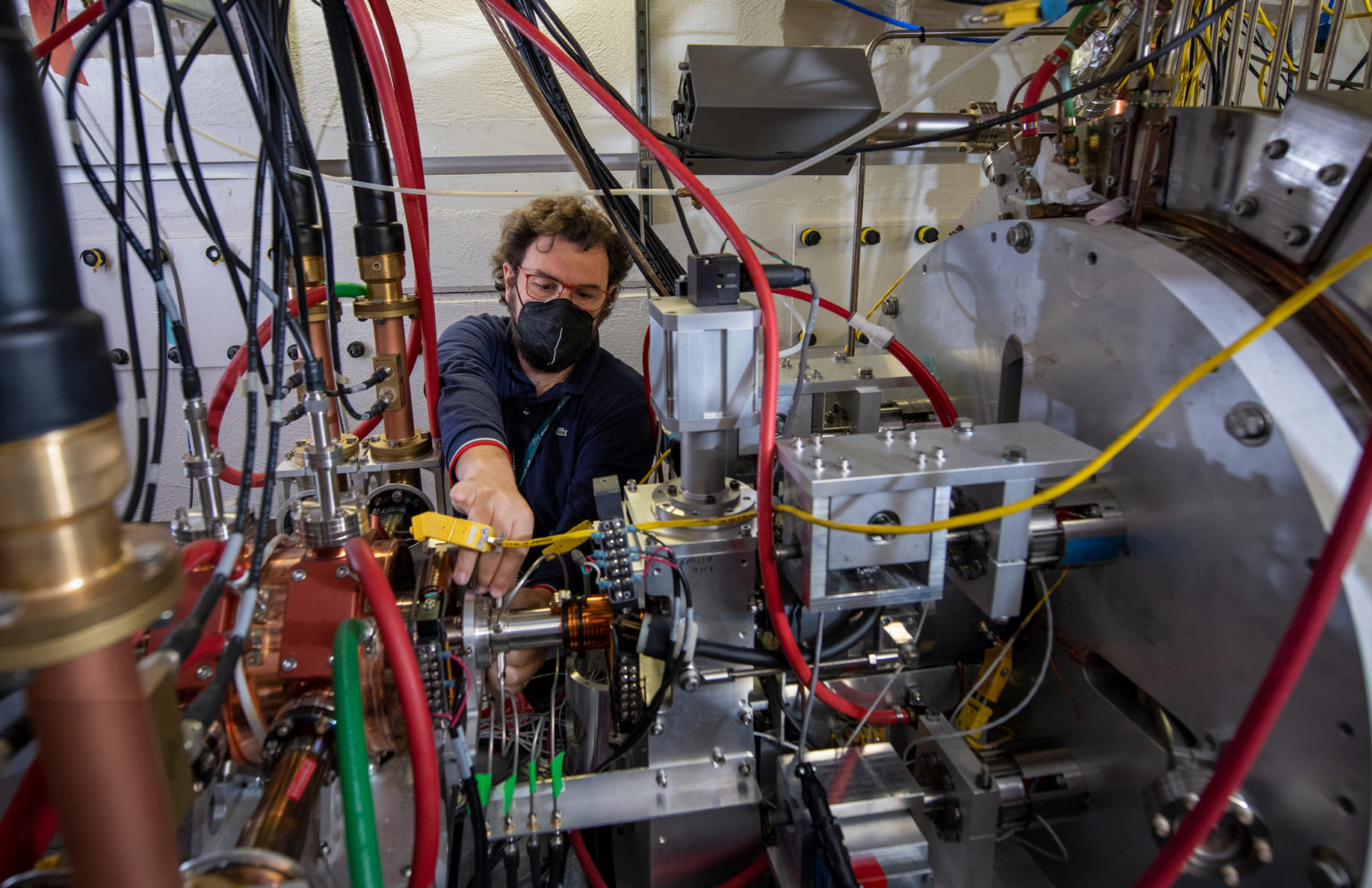
Center of X-Ray Optics laboratory

A 50% Reduction in Emissions by 2030 Can be Achieved. Here’s How

Hand plugs in a blue electric car with reflections of wind turbines.

James Strait Named Project Director of Next Generation Cosmic Microwave Background Project

Smiling person in front of a chalk board

Physicists Announce First Results from Daya Bay’s Final Dataset

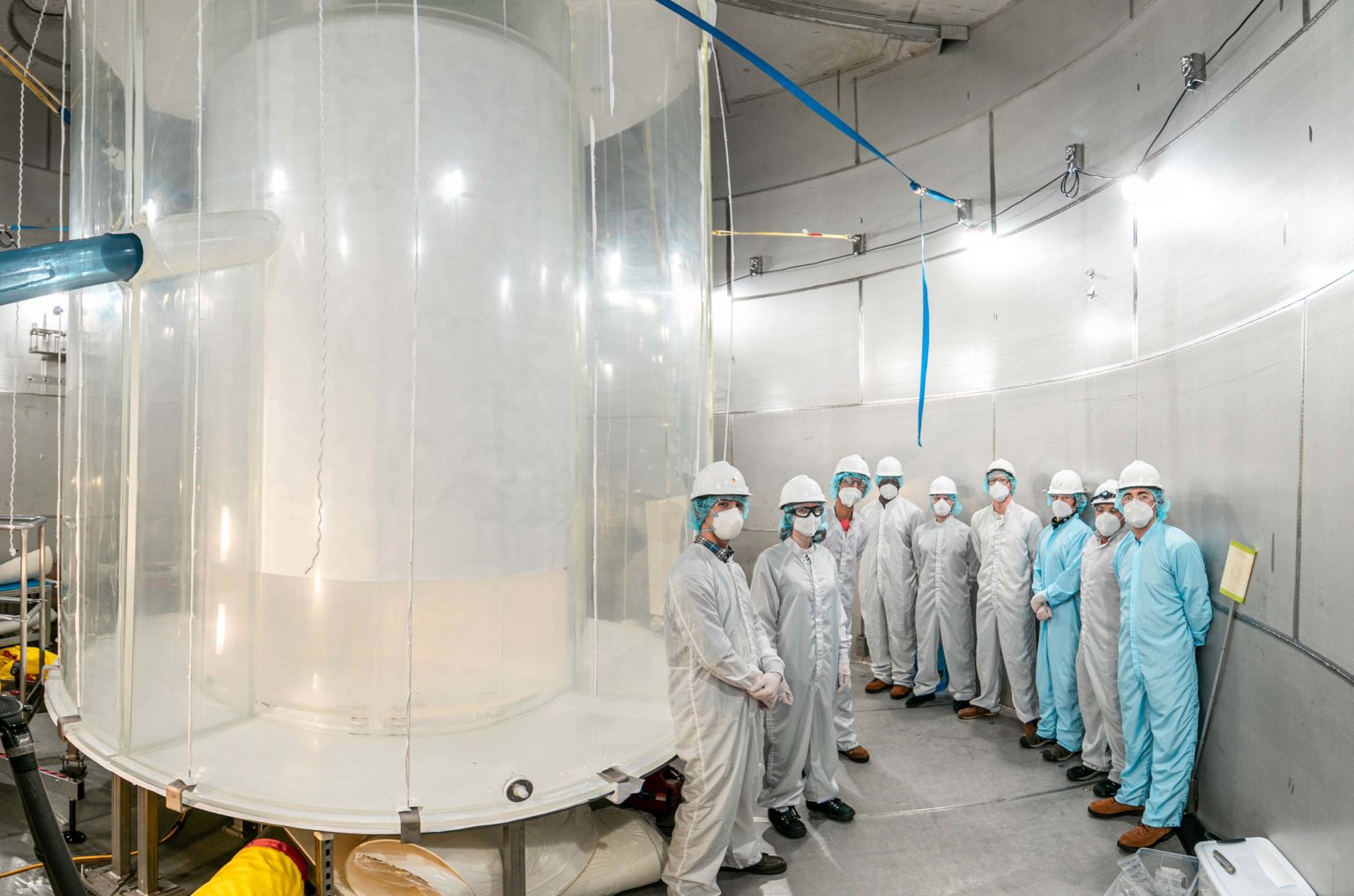
Photomultiplier tubes, designed to pick up faint light signals from particle interactions, line the inside of a detector for the Daya Bay Reactor Neutrino experiment.

Berkeley Lab Researchers to Provide Leadership and Expertise in Net Zero World Action Center

Renewable energy collage; globe on green grass.

Using Microbes to Convert Greenhouse Gases to Valuable Chemicals

Brown-haired person wearing a blue shirt and beige jacket smiles in front of greenery.

New Silicon Nanowires Can Really Take the Heat

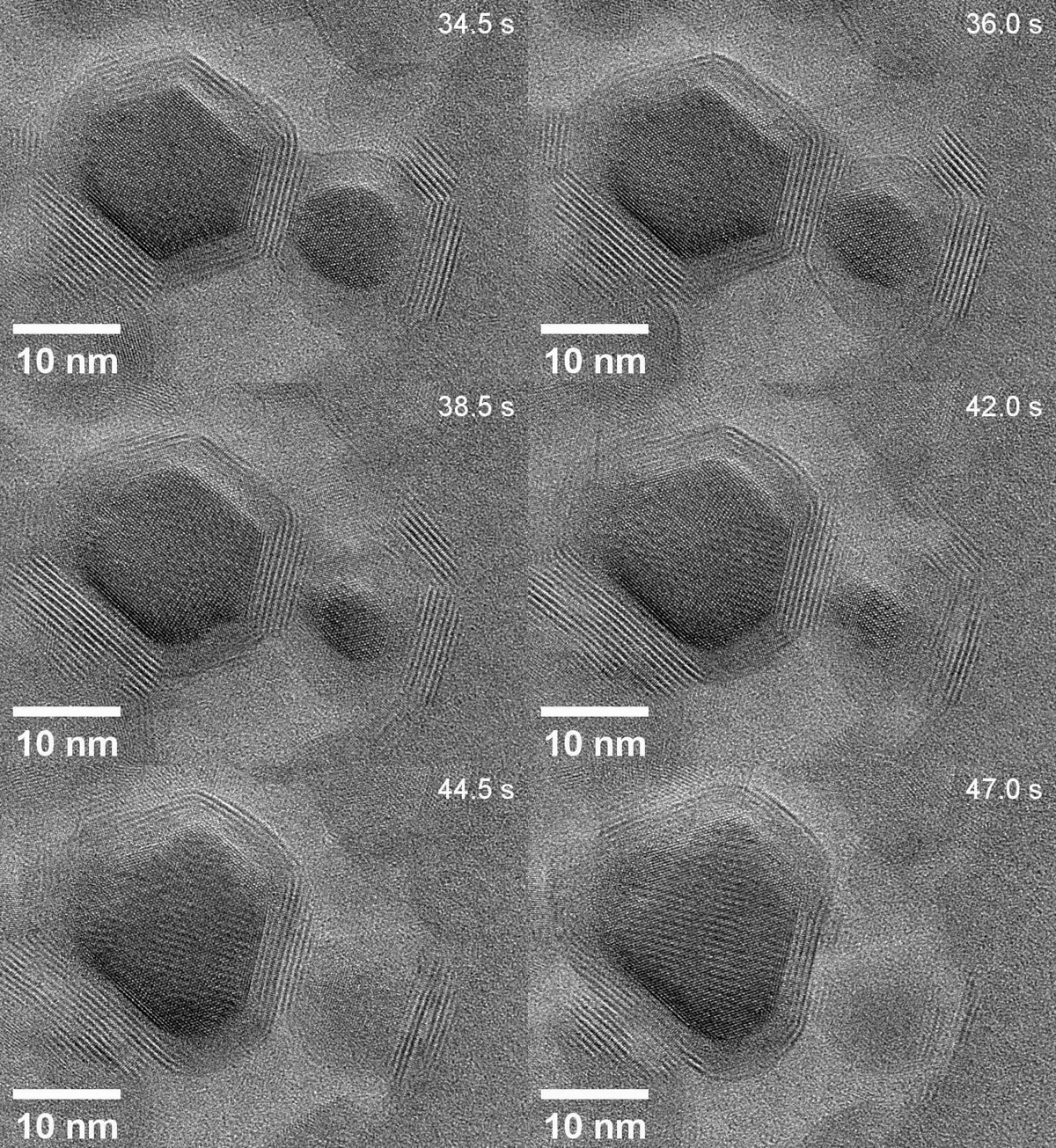
Transmission electron microscopy image showing a silicon-28 nanowire coated with silicon dioxide (SiO2).

Using Bacteria to Accelerate CO2 Capture in Oceans

A scientist wearing gloves handles lab equipment.

Emerging Hydrogen Storage Technology Could Increase Energy Resilience

Cityscape in the dark, with yellow lights shining in one building's windows.

Four Berkeley Lab Scientists Elected to the American Academy of Arts and Sciences

Four headshots aligned in a row. From left, Gerbrand Ceder, Alessandra Lanzara, Ramamoorthy Ramesh, and Pamela Ronald.

2 Berkeley Lab Physicists Elected into the National Academy of Sciences

Collage with Joel Moore, left, and Joseph W. Orenstein on the right.

How Venice, Italy Can Cut Carbon Emissions from Social Housing

A canal cuts through a neighborhood with colorful buildings on each side.